
If you love anime, I have a question for you.
Those distinctive outlines, the flat planes of color, the compositions that seem to freeze a single instant — have you seen them somewhere before?
You have. In ukiyo-e.
Across four hundred years, Edo-period woodblock prints and contemporary anime share a surprising amount of the same visual DNA. Today I’d like to trace that invisible thread.
1. Look at Them Side by Side
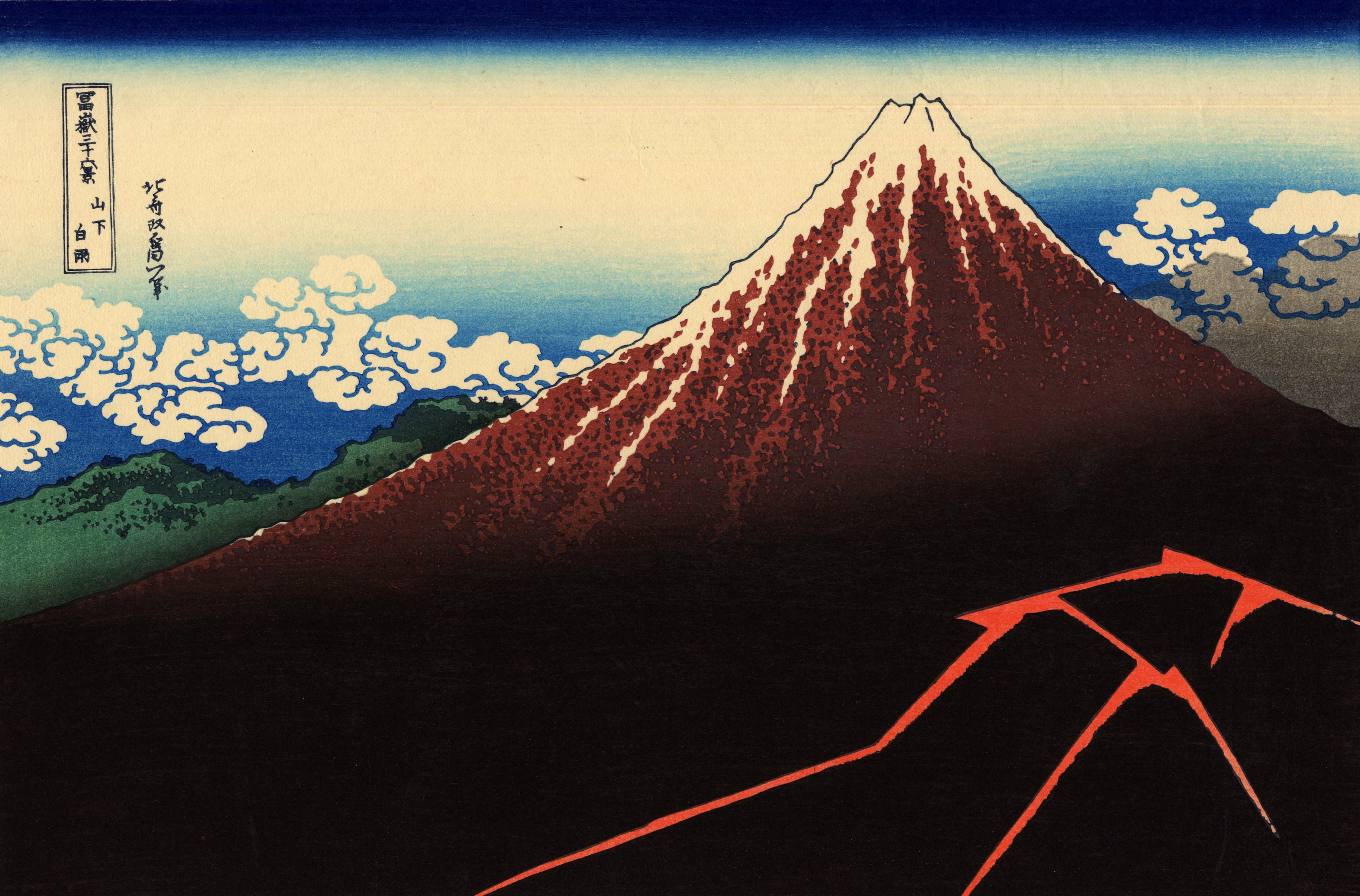
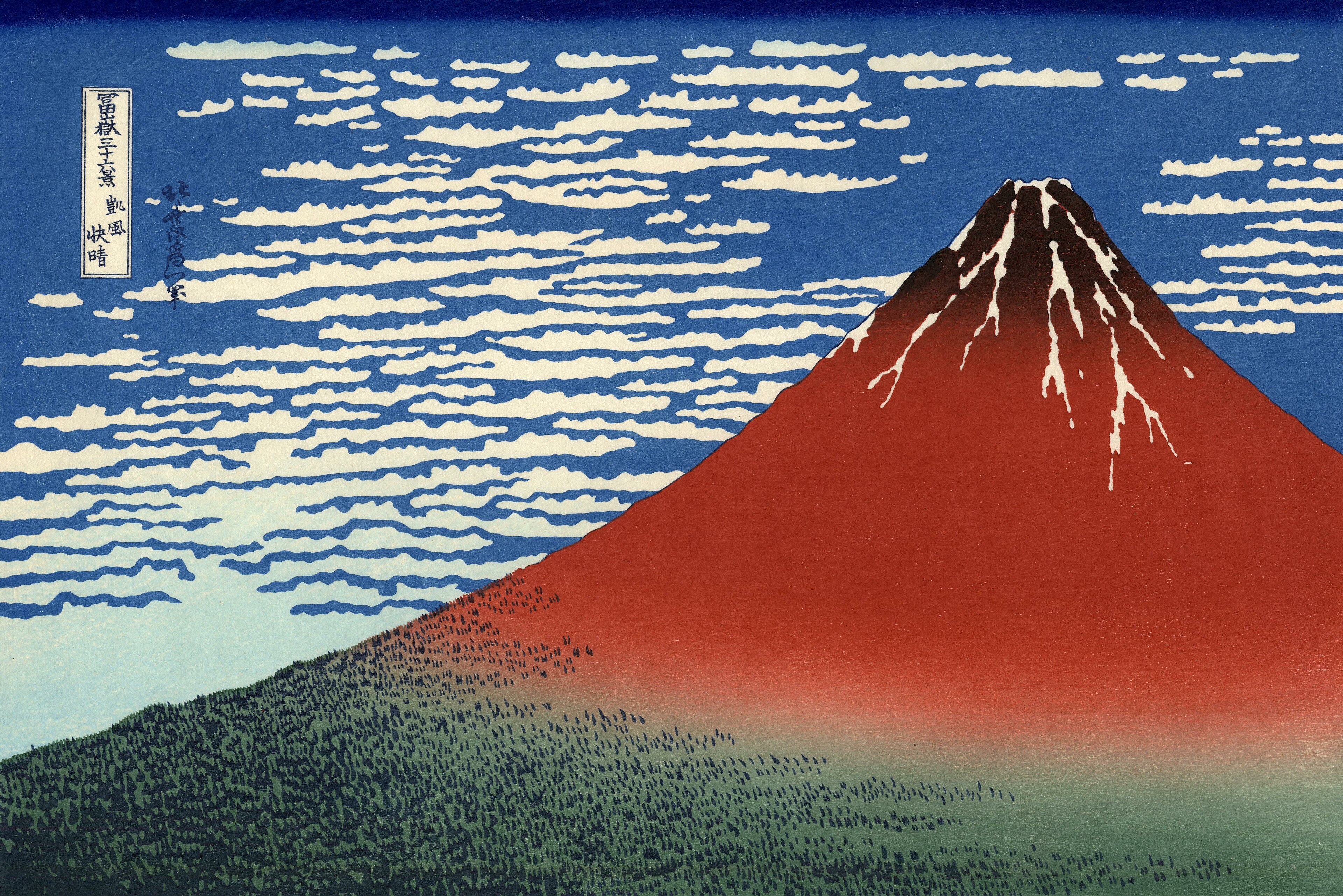
Place a print from Hokusai’s Thirty-Six Views of Mount Fuji next to a frame from a Miyazaki film — the approach to composition, the rendering of nature, the relationship between figures and background — and many people feel the resemblance immediately.
This is no coincidence. Miyazaki Hayao has spoken repeatedly about his debt to ukiyo-e. Hokusai’s waves and clouds are among the sources that Studio Ghibli’s art directors have returned to throughout their careers.
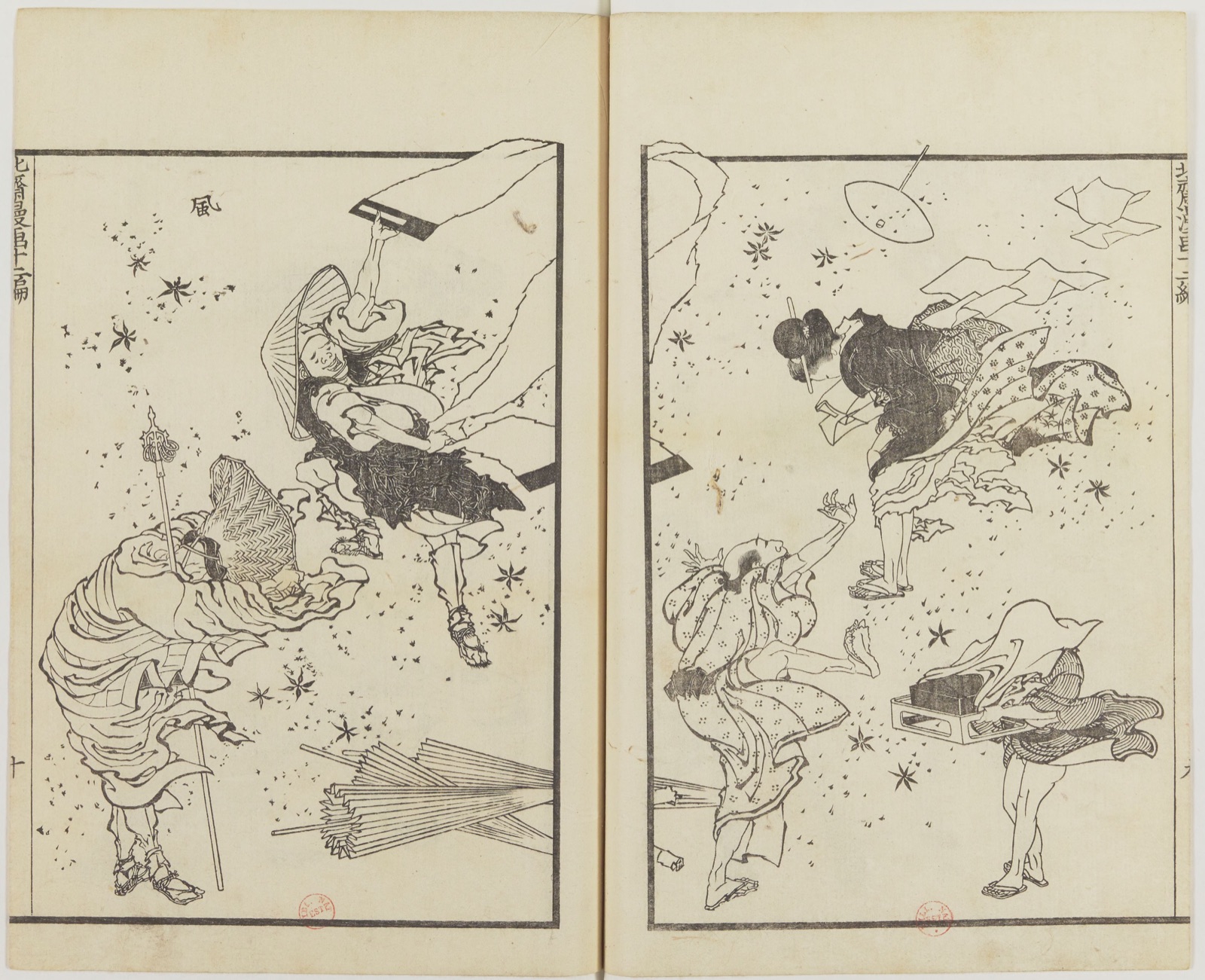
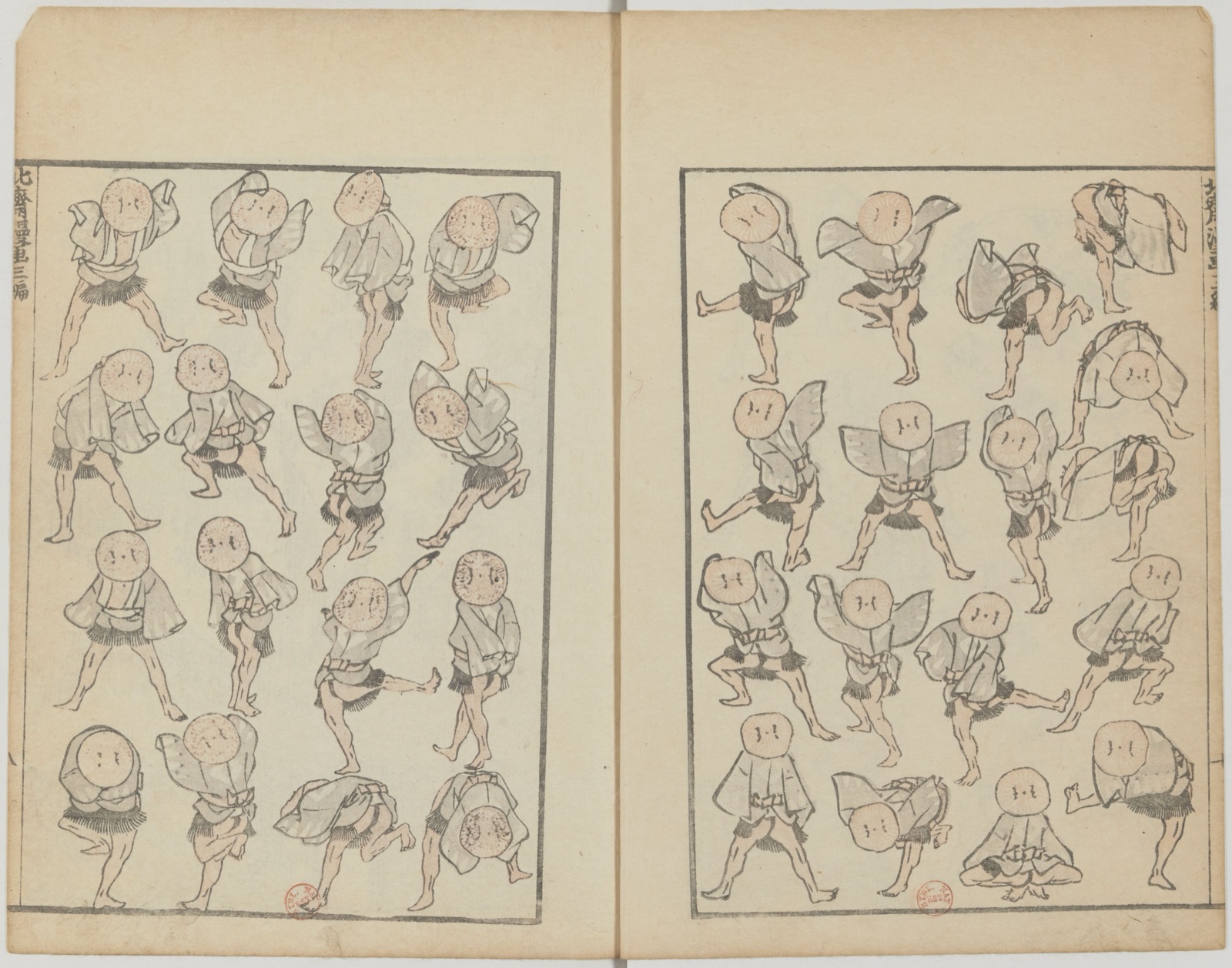
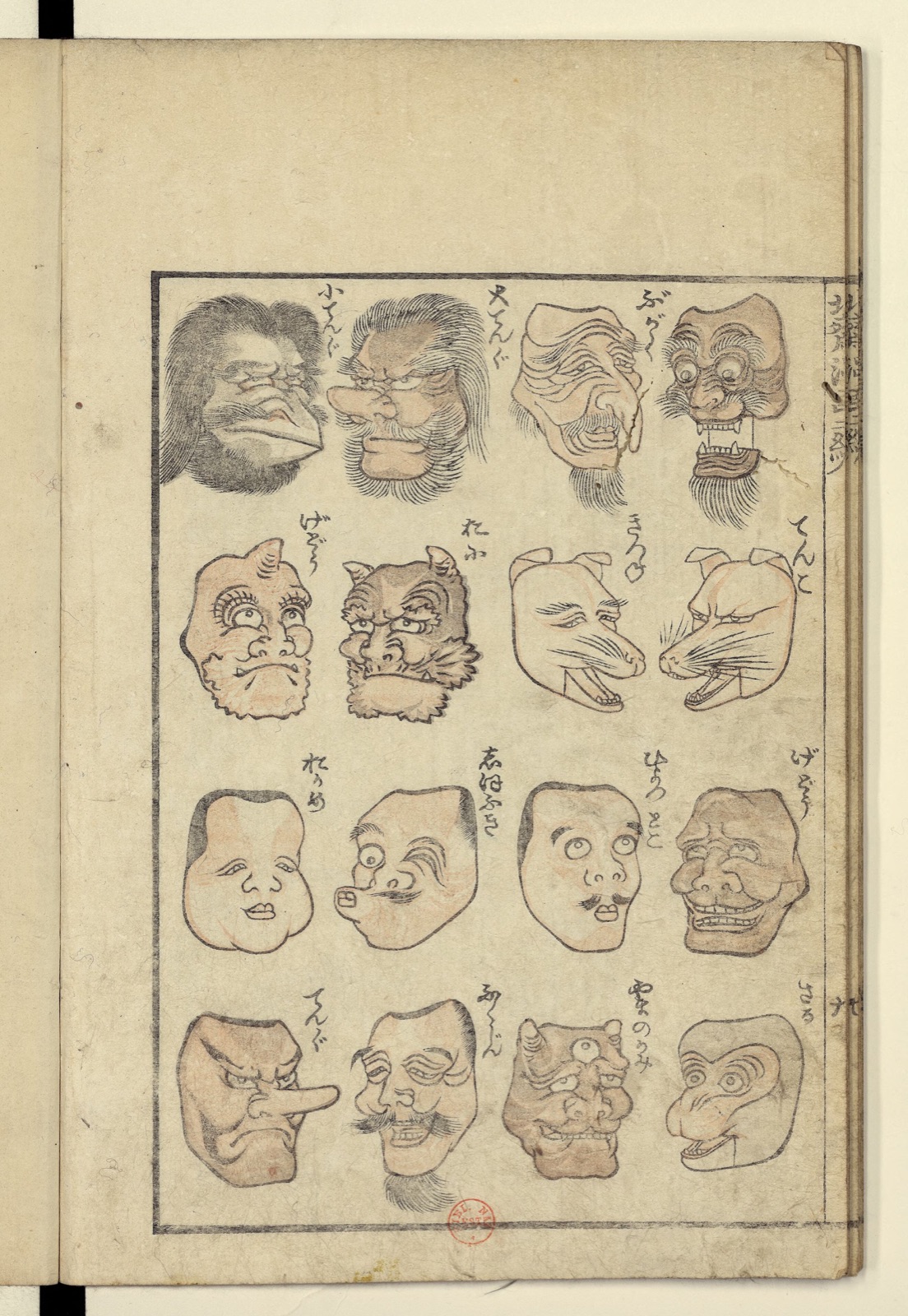
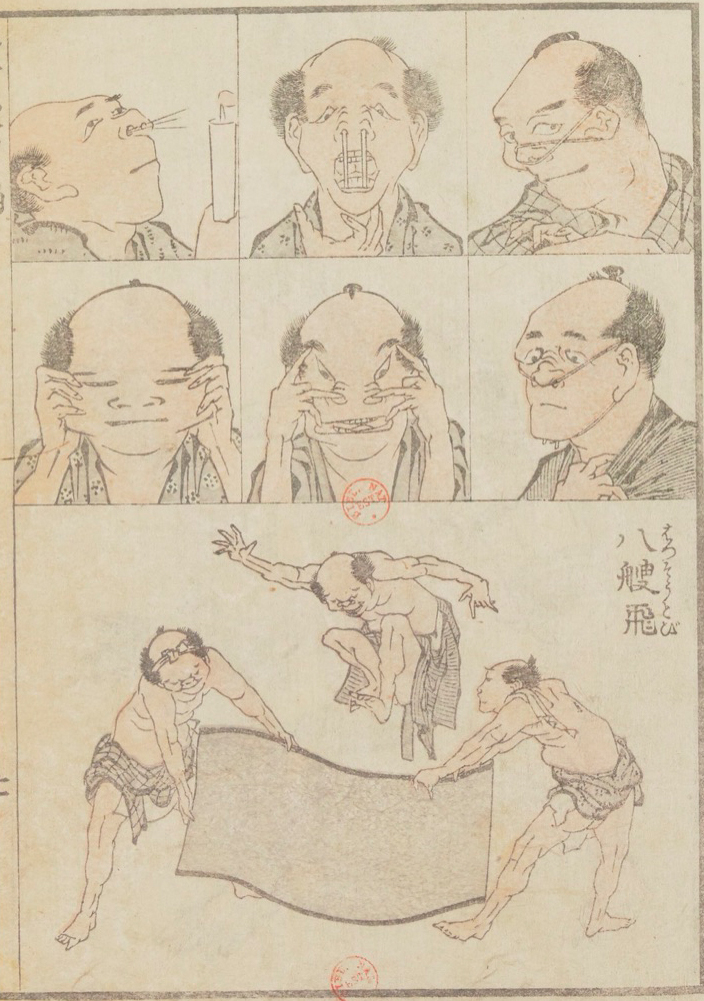
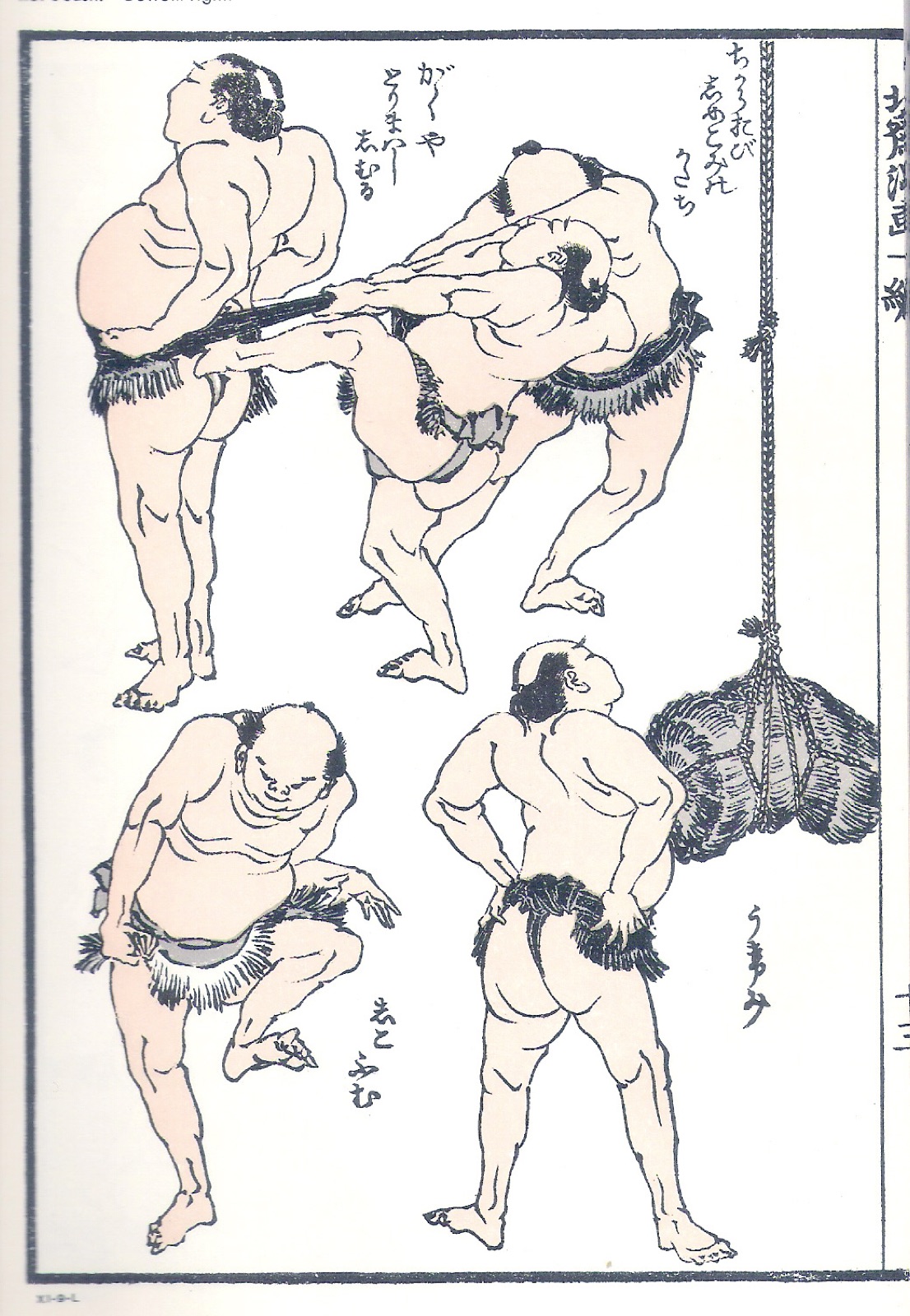
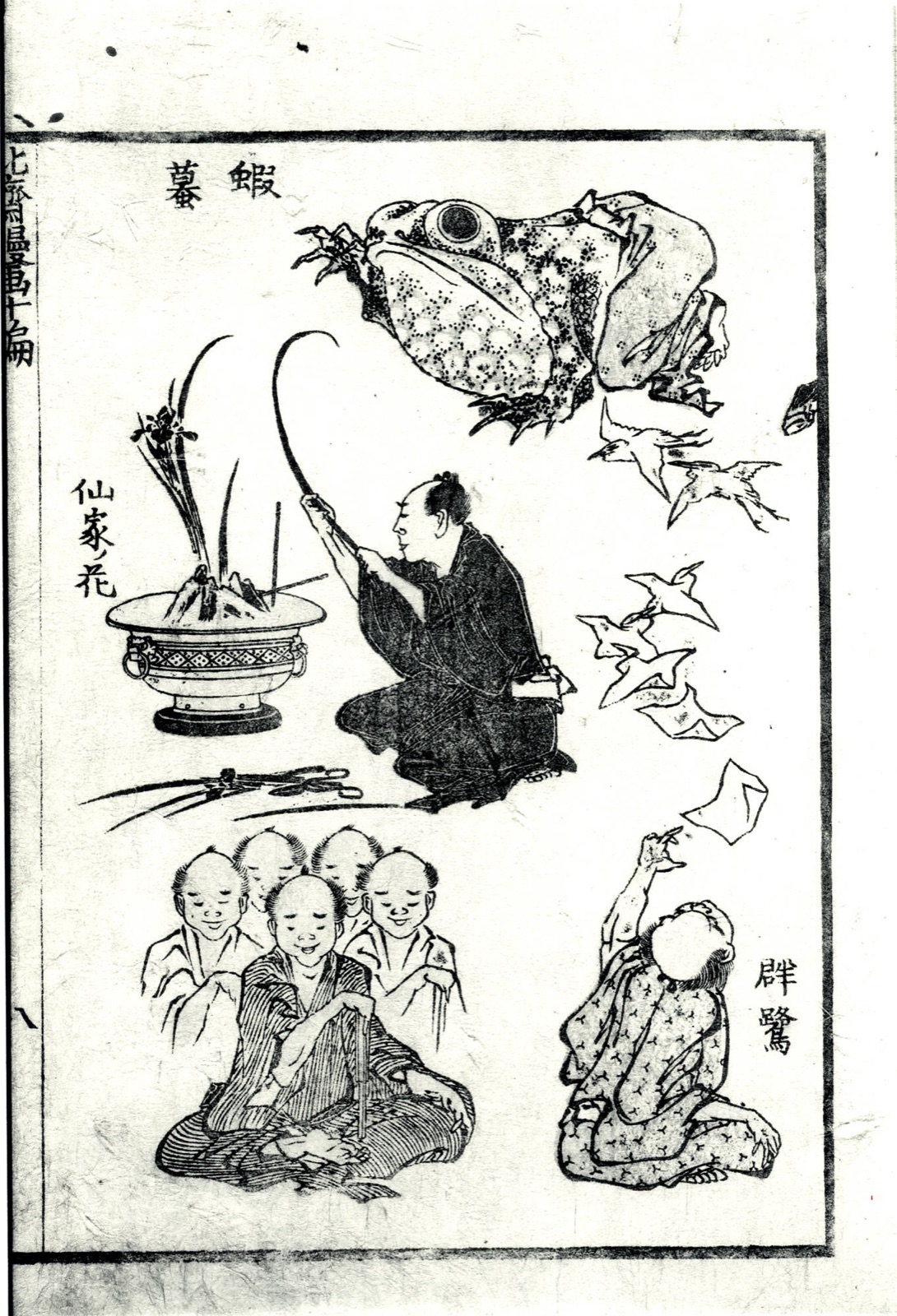
And the origin point for that influence is impossible to discuss without Hokusai Manga (1814–1878).
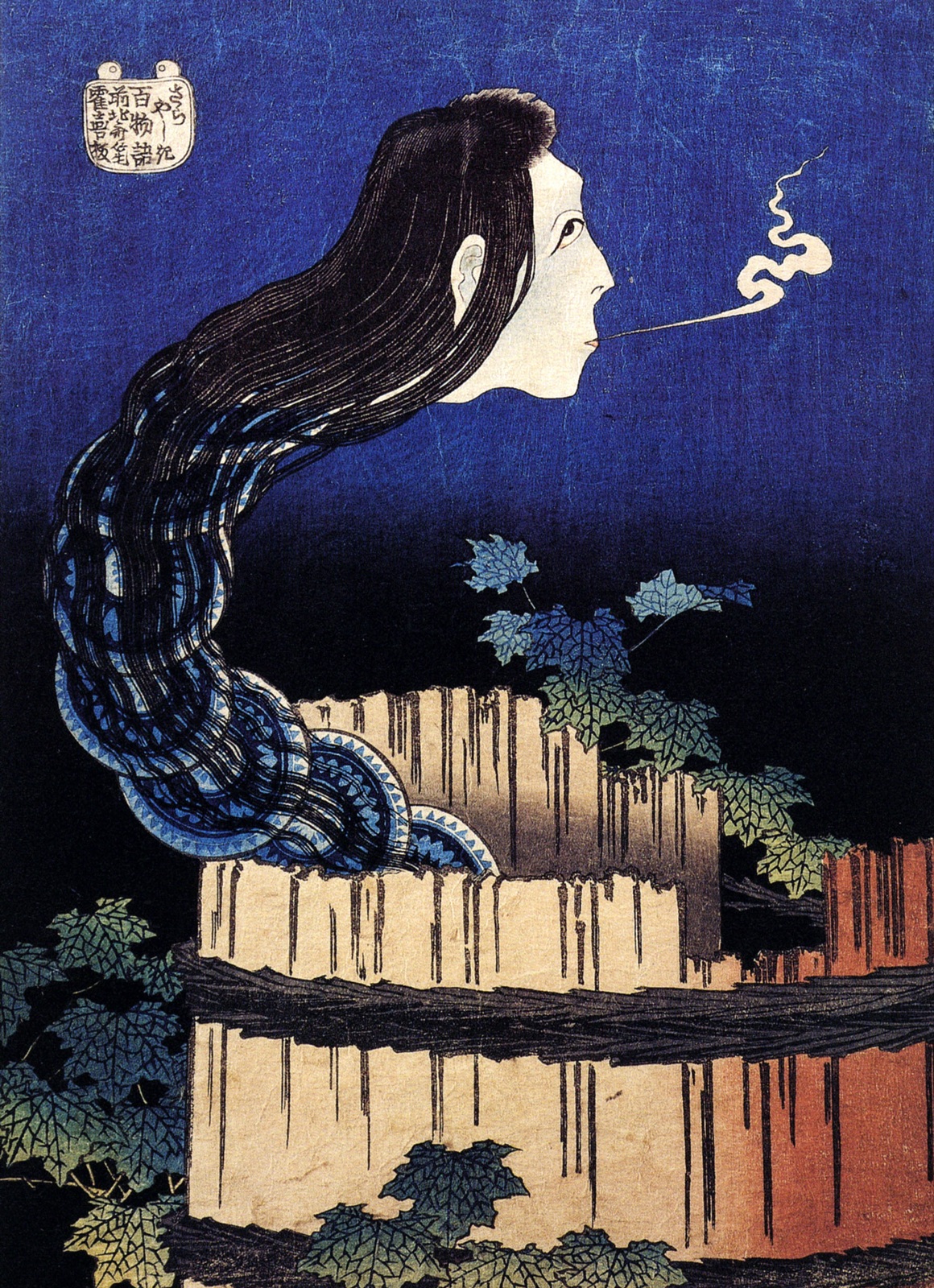
This sketchbook series, compiled by Hokusai in his later years, is a vast visual encyclopedia: people, animals, plants, buildings, waves, clouds, ghosts — all of it, across fifteen volumes and more than four thousand drawings. Hokusai is also credited with first using the word manga itself. The series is often described as a spiritual source for Japanese comics and animation: the character expressions, the exaggerated poses, the sequential panel-like flow of images — the echoes with modern manga storytelling run throughout.
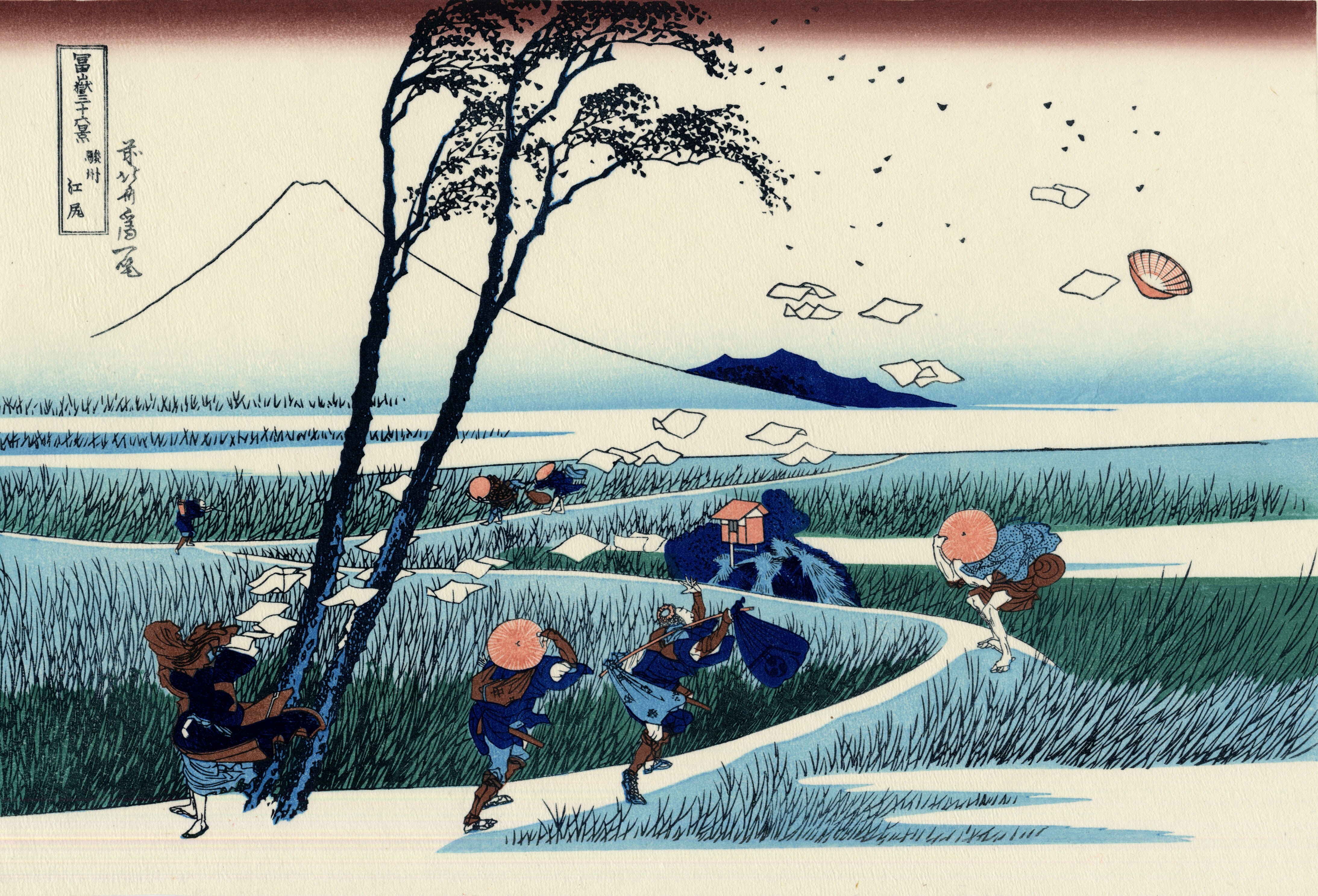
2. Outline: A Shared Visual Language
The most visible connection between ukiyo-e and anime is the outline.
Western realist painting works to dissolve outlines. Form is created through transitions of light and shadow; edges are softened, blended.
Ukiyo-e does the opposite. Bold black lines dominate the frame and define every form. The strength and beauty of those lines are the skeleton of the image.
Anime works the same way. From the cel animation era onward, characters have been drawn with clear, defining outlines. The weight, shape, and movement of that line is where much of an animator’s expressive power lives.
3. Flatness as an Aesthetic Choice
Ukiyo-e has almost no depth. Figures and backgrounds exist on the same flat plane.
This is not a limitation — it is a deliberate aesthetic decision. These artists knew about perspective and chose not to use it. Within that “flat” surface, a distinct sense of space emerges.
Anime makes the same choice. It consistently prioritizes visual beauty on the screen over realistic three-dimensionality. Stylized characters, symbolic expressions — everything moves toward being legible, communicative, and beautiful.
The lineage of this aesthetic runs directly from ukiyo-e to anime.
4. Character Culture as Continuity
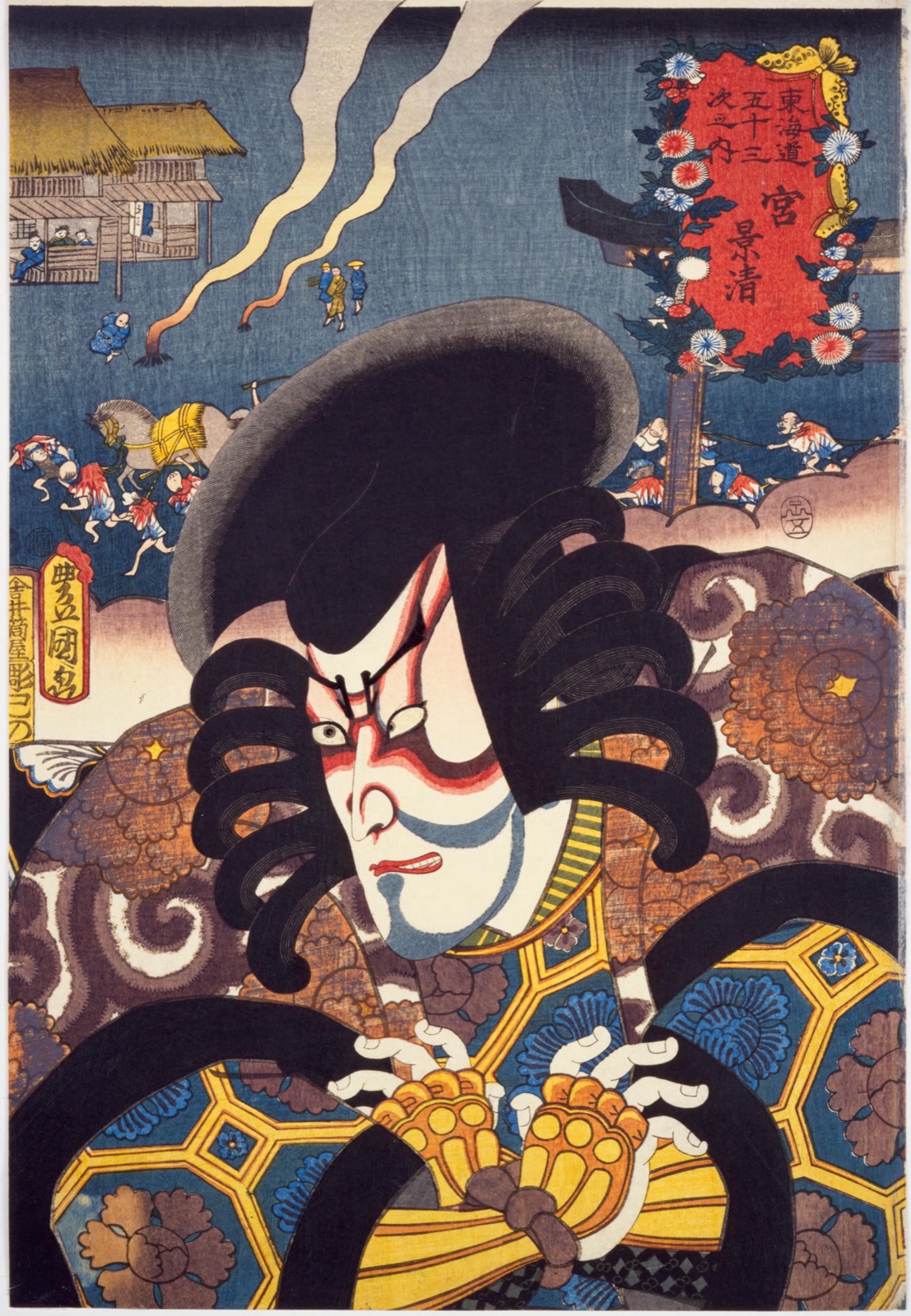
When ukiyo-e was at its most popular in the Edo period, yakusha-e — portraits of kabuki actors — served the same function as today’s idol merchandise.
Buying a print of your favorite actor, displaying it at home, discussing the new release when it came out — the cultural logic is strikingly similar to the anime character goods and fan culture of today.
The culture of devotion to characters may be a distinctly Japanese trait that runs unbroken from the Edo period to the present.
5. Kuniyoshi’s Humor and the Internet Meme
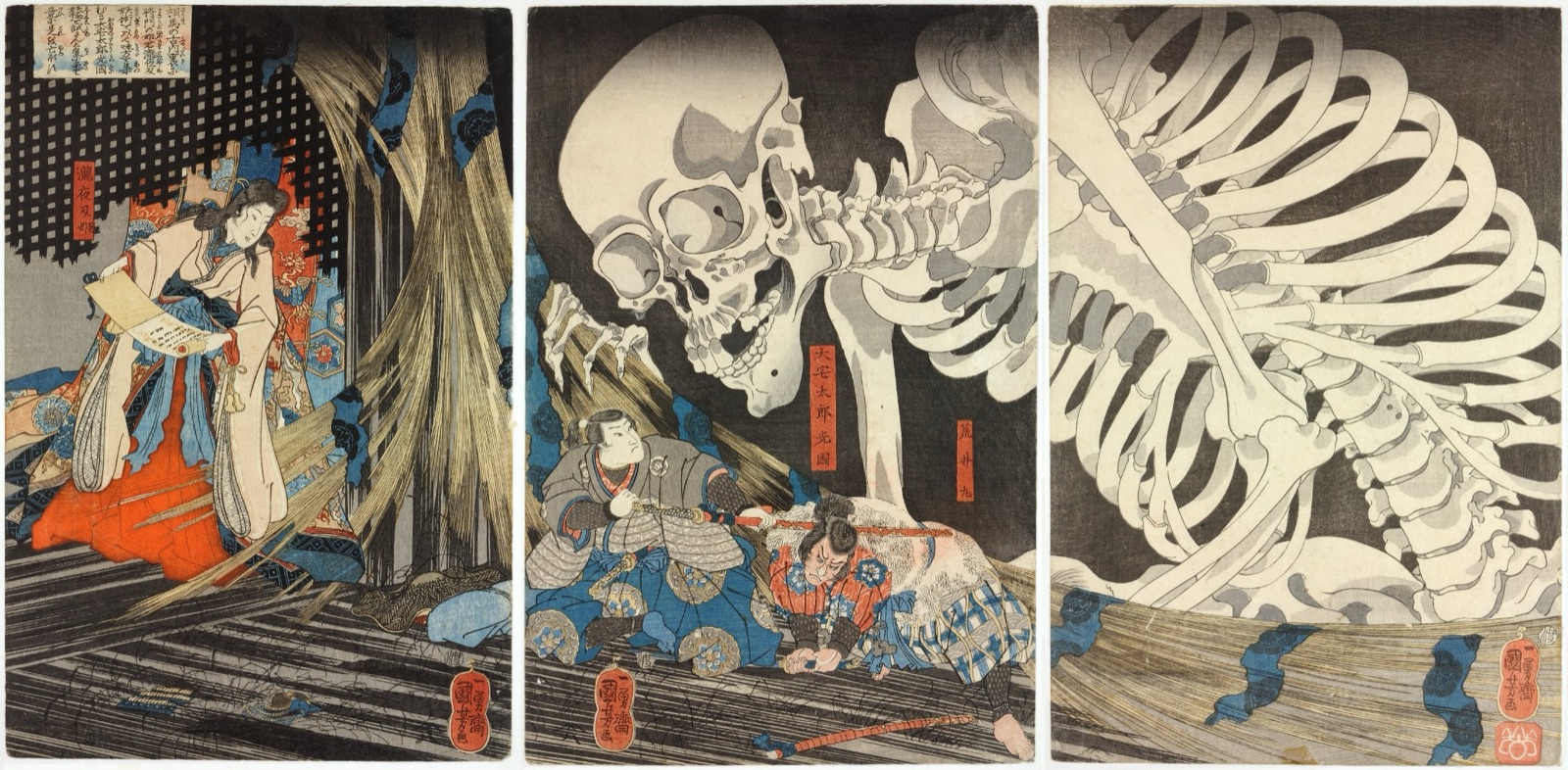
If you’ve come across the work of Utagawa Kuniyoshi, you may have been startled by how strange it is.
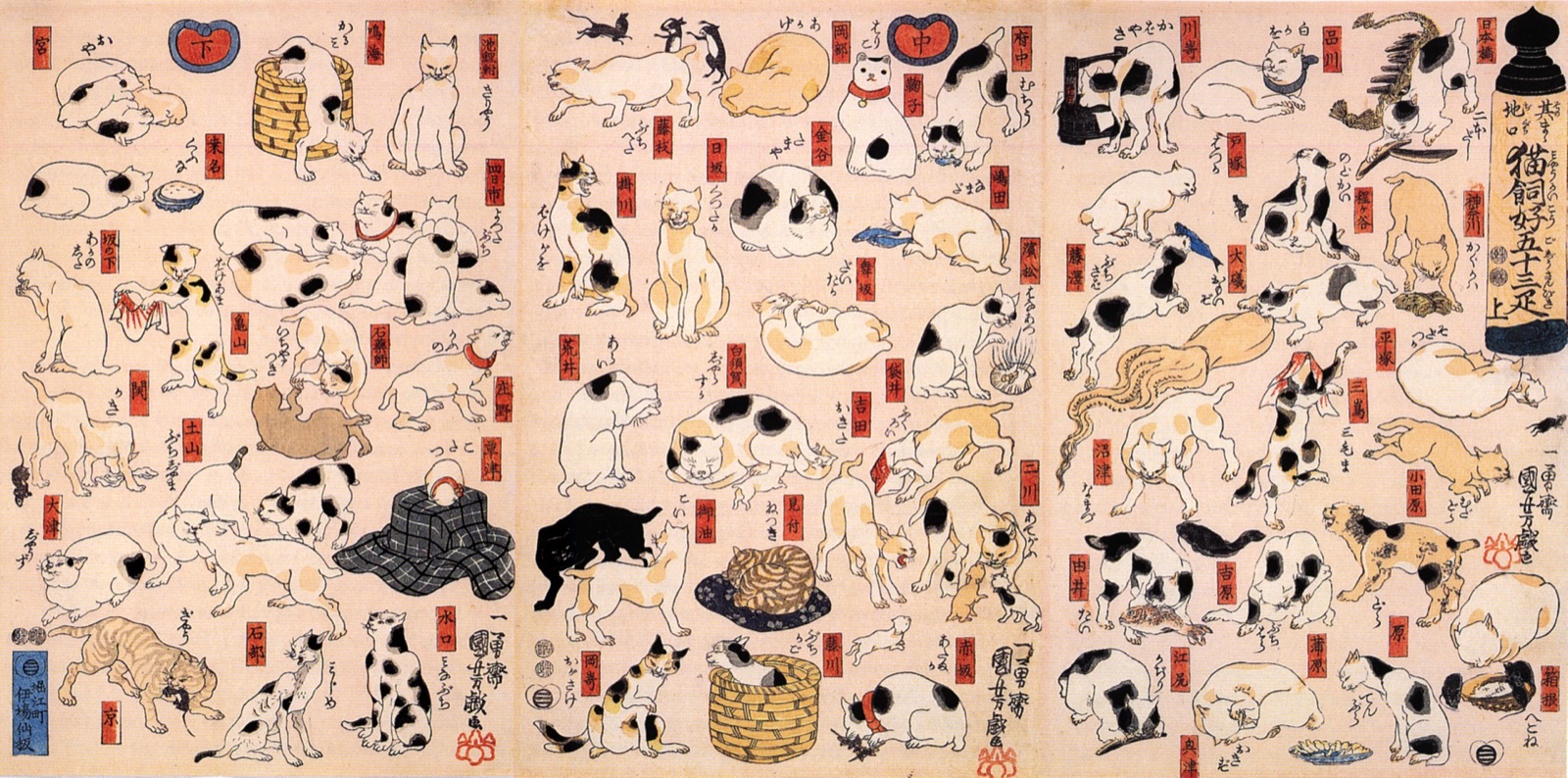
Skeletons menacing the living, cats conducting themselves like humans, crowds of tiny figures pressing together to form the shape of a daruma doll — a satirical workaround for Edo-era censorship. Kuniyoshi’s sensibility, finding ways through restriction with humor and absurdity, resonates with internet meme culture in an almost uncanny way.
The impulse to make something funny and spread it widely may be one of the permanent features of human nature, independent of time.
6. Knowing Ukiyo-e Makes Anime Richer
Once you know the aesthetic language of ukiyo-e, you start to find it everywhere in anime.
This composition echoes Hokusai’s wave. This color palette is the logic of nishiki-e. The way this character stands is the posture of bijin-ga. Those new layers of recognition accumulate.
Four-hundred-year-old Edo prints and contemporary moving images, connected by the same thread. That feeling is what makes ukiyo-e feel less like an ancient art form and more like a living culture.
A Final Thought
Ukiyo-e and anime, though they take different forms, have always been answering the same question.
How do we capture the beauty of this moment? That question sent Edo artists to the woodblock, and it sends contemporary animators to the drawing tablet. The thread between them is real.
References
- Studio Ghibli-related interviews (Miyazaki Hayao, Takahata Isao), various
- The Japan Foundation, “The Influence of Ukiyo-e on Manga and Anime” resources
- Frederik Schodt, Manga! Manga! The World of Japanese Comics, Kodansha, 1983
Image Credit
- Cover image: Utagawa Kuniyoshi, In the Haunted Palace at Soma (相馬の古内裏), c. 1845 — Public domain via Wikimedia Commons
_;_ch%C5%8Dk%C5%8D_Egawa_Tomekichi_-_btv1b10525661k_(13_of_35).jpg)


_-_btv1b105257164_(26_of_42).jpg)


