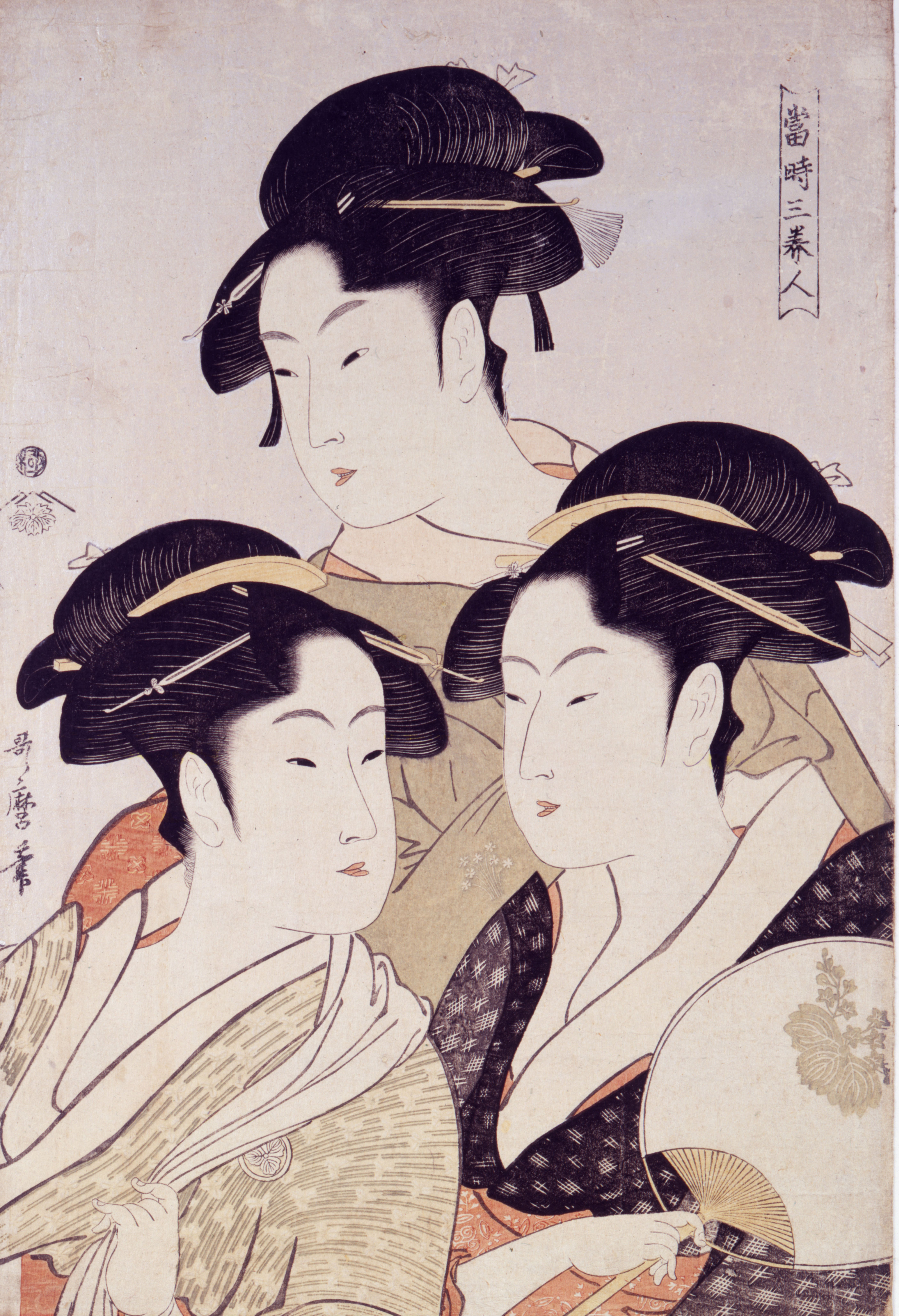
The culture of devoted fandom is older than you might think.
Buying prints of your favorite actor, displaying them at home, talking about every new production — this was Edo, three hundred years ago. The structure of that enthusiasm is almost identical to what surrounds today’s pop stars and screen actors. Kabuki performers were the celebrities of their era, and the woodblock prints that captured them — yakusha-e, or actor prints — sold as fast as they could be made.
Ukiyo-e and kabuki were inseparable. They still are, in a way.
1. What Kabuki Actually Is
The first thing most people notice about kabuki is the sheer visual impact.
Elaborate costumes, highly stylized movement, and — most immediately striking — the bold face makeup known as kumadori. The effect is arresting even in photographs. In person, on a stage, it’s something else entirely. “I didn’t understand a word,” people often say afterward, “but I was completely absorbed.” That, I think, is exactly the point.
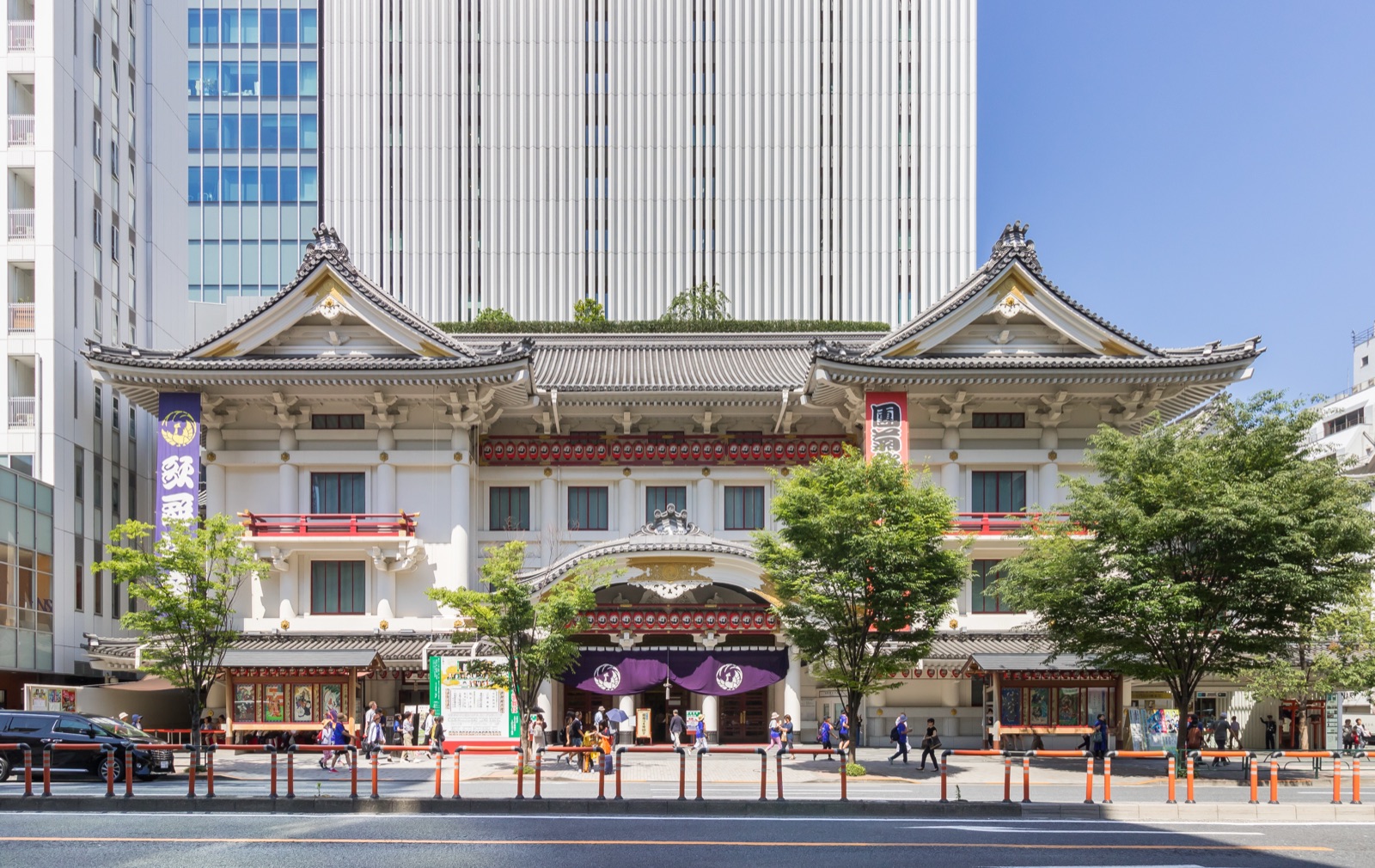
Kabuki was born in the early seventeenth century and grew into a beloved popular entertainment, crossing class lines from samurai to townspeople. In recent years, overseas visitors to Tokyo have discovered kabuki in growing numbers — the Kabuki-za theater in Ginza offers English-language earphone guides and single-act tickets (hitomakumi seki) that let you experience one scene without committing to a full program. It’s a much more accessible entry point than most people expect.
2. Actor Prints: Ukiyo-e’s Fan Merchandise
The demand for kabuki produced its own visual genre: the actor print.
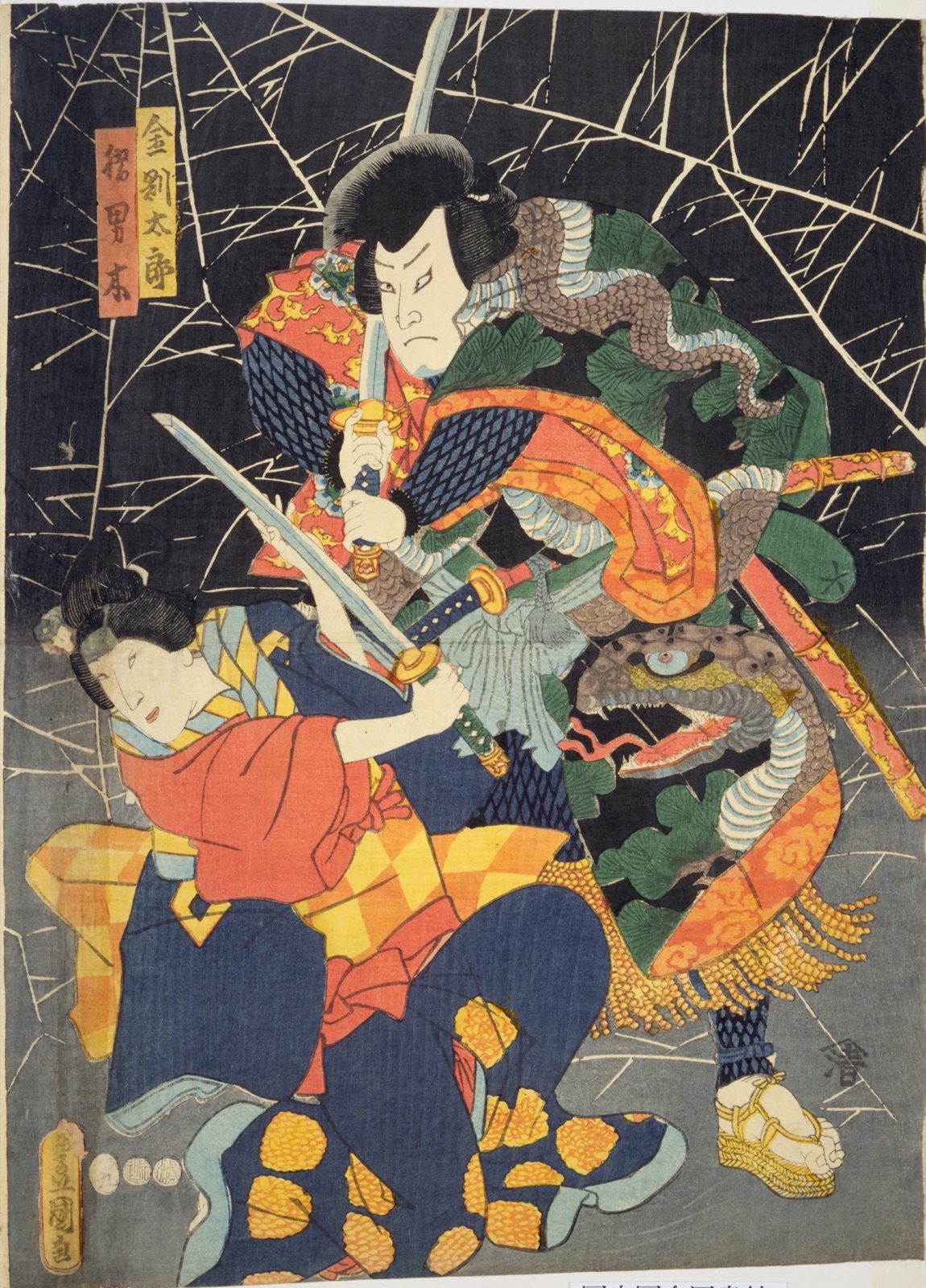
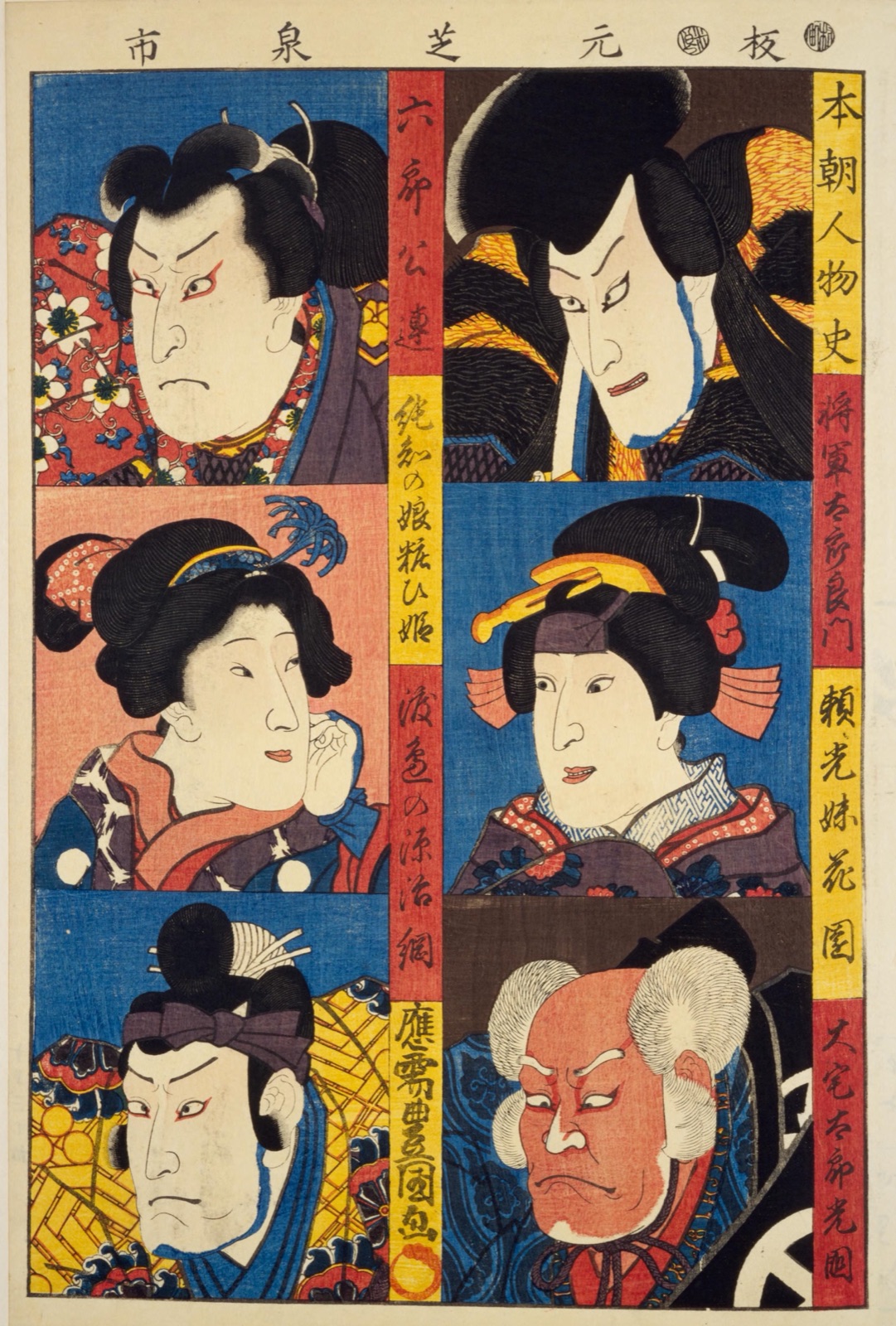
These were not simple portraits. The best ones captured a specific character in a specific scene — the moment of highest emotional intensity, frozen in ink on paper. Think of it like a great live photograph: the image distills what made that performance unforgettable. Fans bought them the way we buy concert posters or signed merchandise today.
A few artists defined the genre:
Katsukawa Shunshō (1726–93) — Hokusai’s teacher, and the artist who established the conventions of actor portraiture. He had a gift for catching individual personality, and Edo loved him for it.
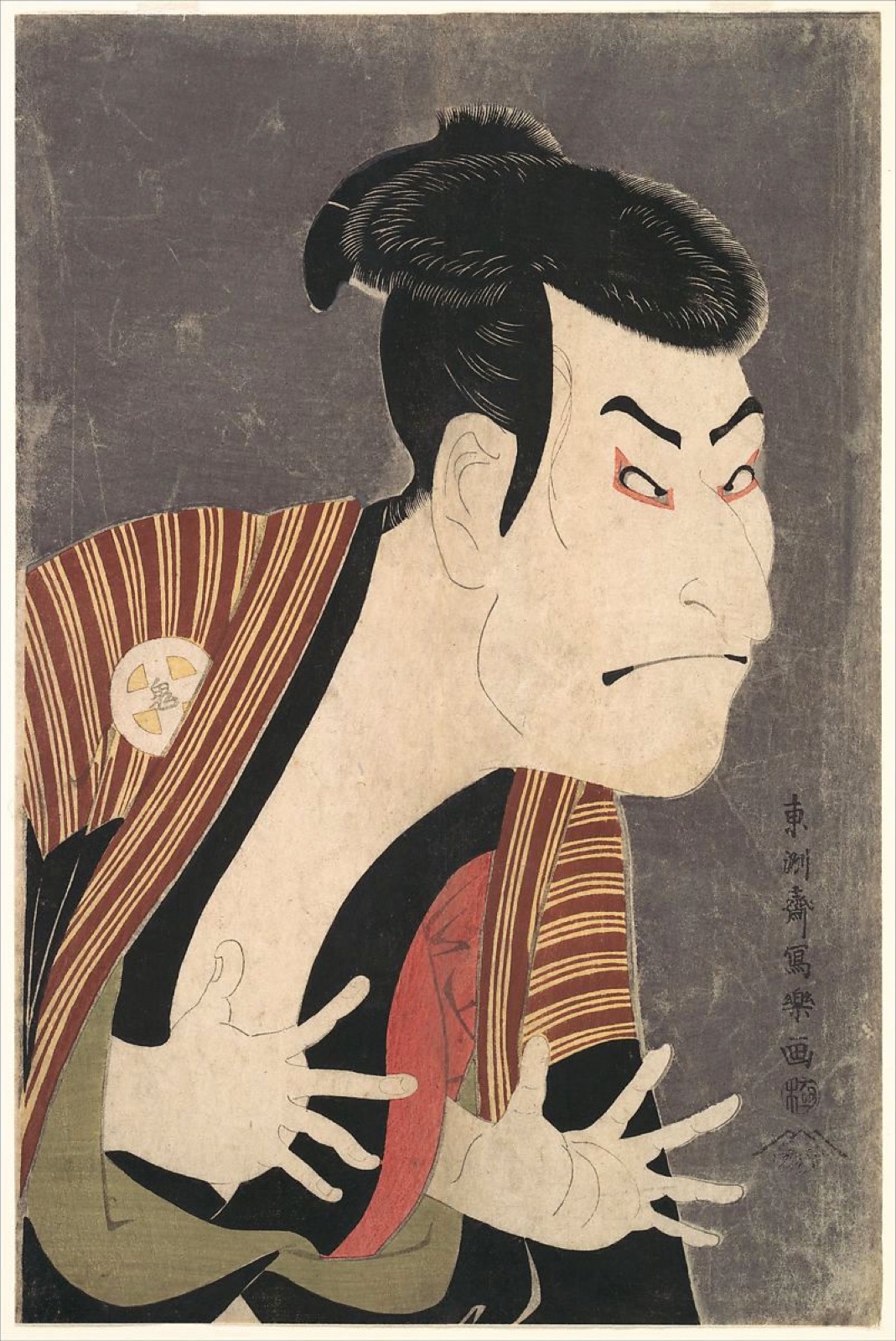
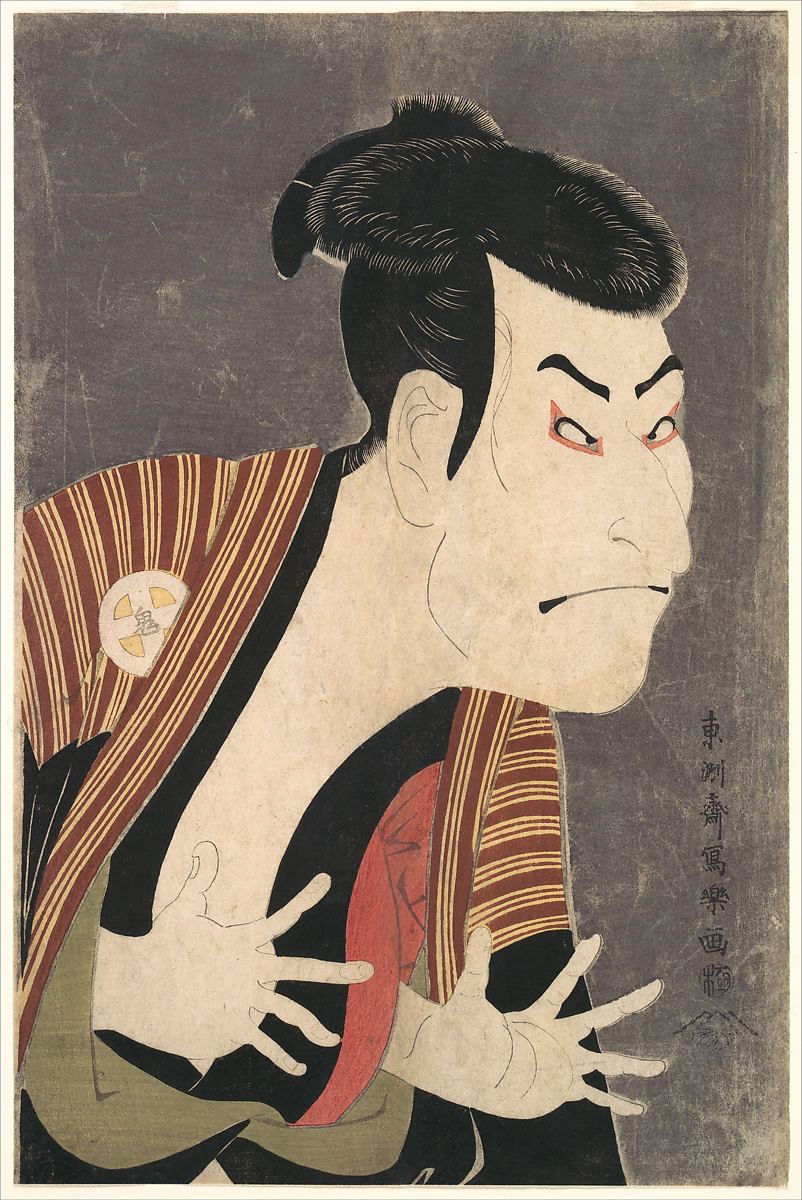
Tōshūsai Sharaku (active 1794–95) — Ten months, around 140 prints, then gone. His refusal to flatter — his insistence on psychological intensity over beauty — makes him unlike anyone else in ukiyo-e history.
Utagawa Toyokuni (1769–1825) — He stepped into the space Sharaku left and filled it with something different: idealized, luminous portraits that Edo found irresistible.
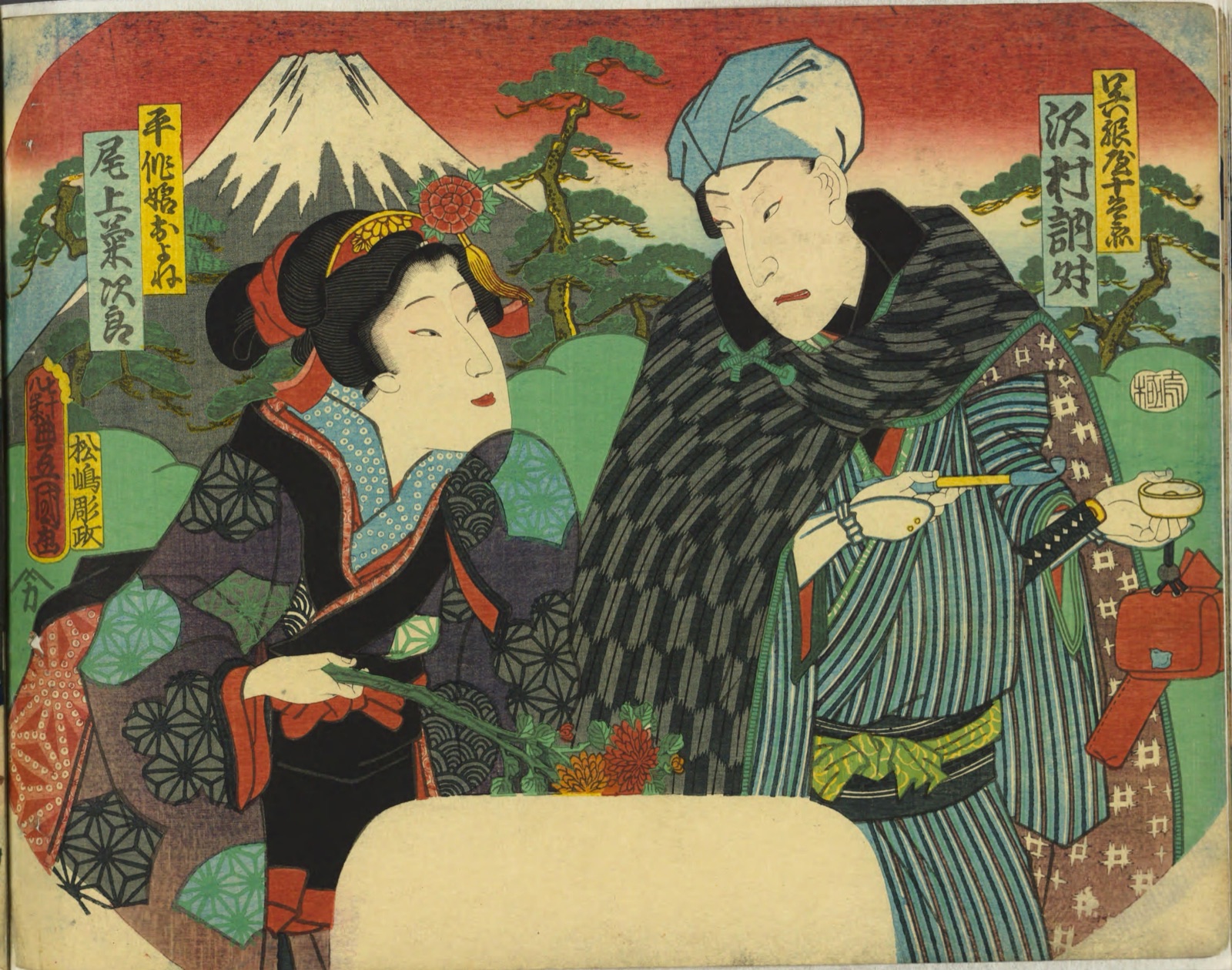
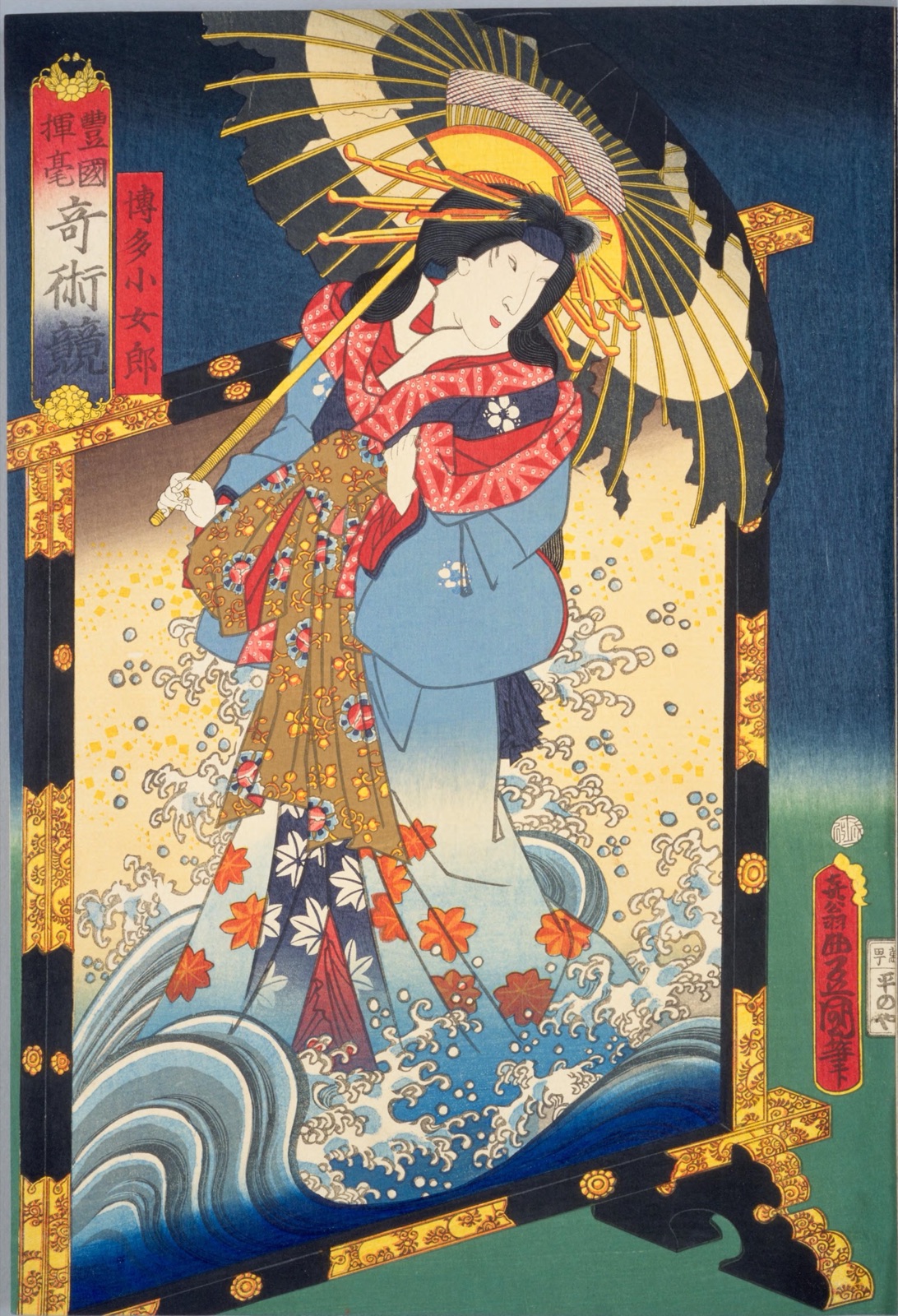
Utagawa Kunisada (1786–1865) — later to take the name Utagawa Toyokuni III, he became one of the most prolific actor-print artists of the nineteenth century, carrying the genre forward long after Sharaku and the first Toyokuni had defined it.
3. Kumadori and the Aesthetics of Ukiyo-e
Kabuki makeup and ukiyo-e share something fundamental in how they see the world.
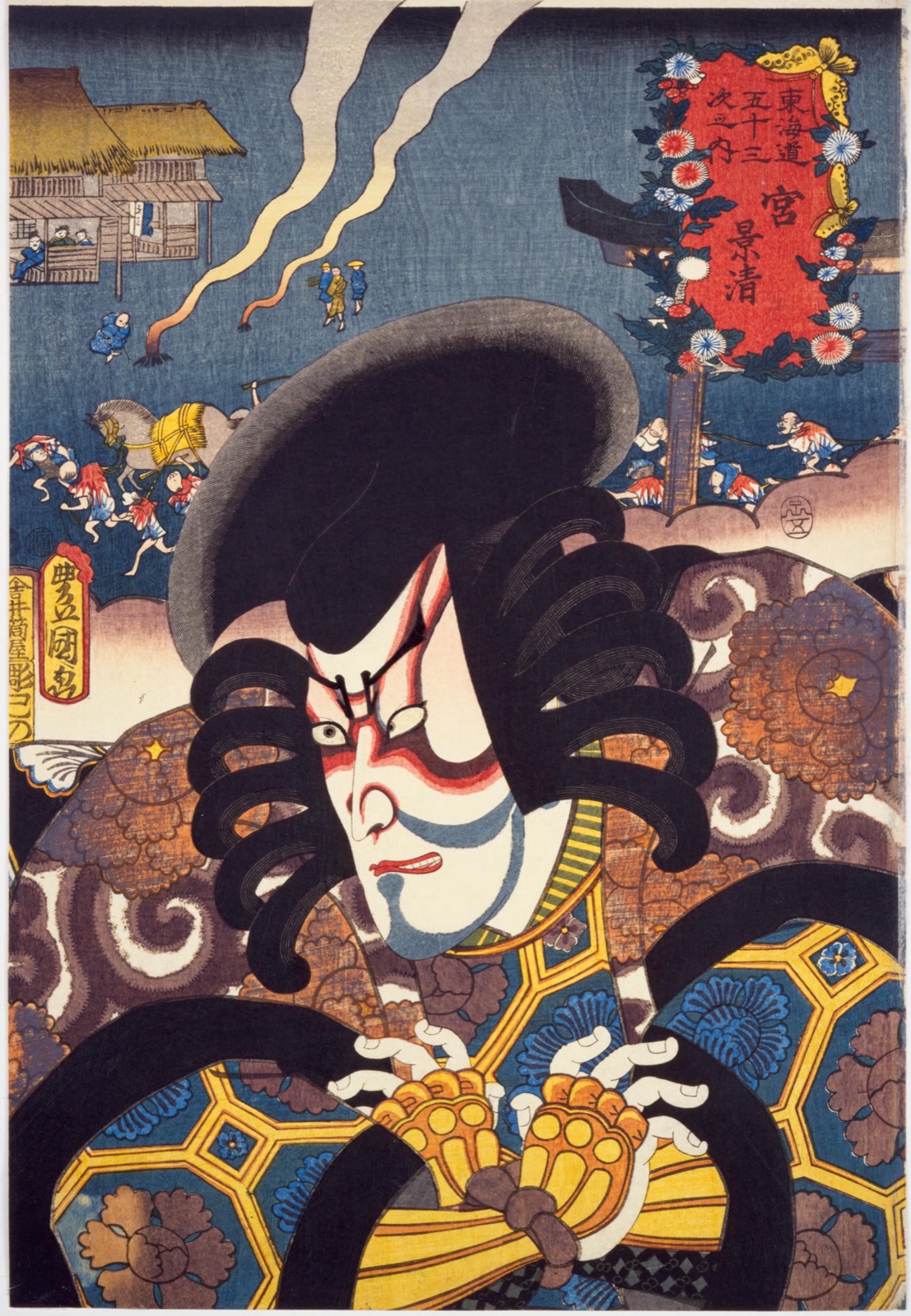
Kumadori uses exaggerated lines — red for anger, blue for cold or supernatural characters, brown for old age or animals — to make emotion visible from the back of a theater. It doesn’t try to look natural. It tries to look true.
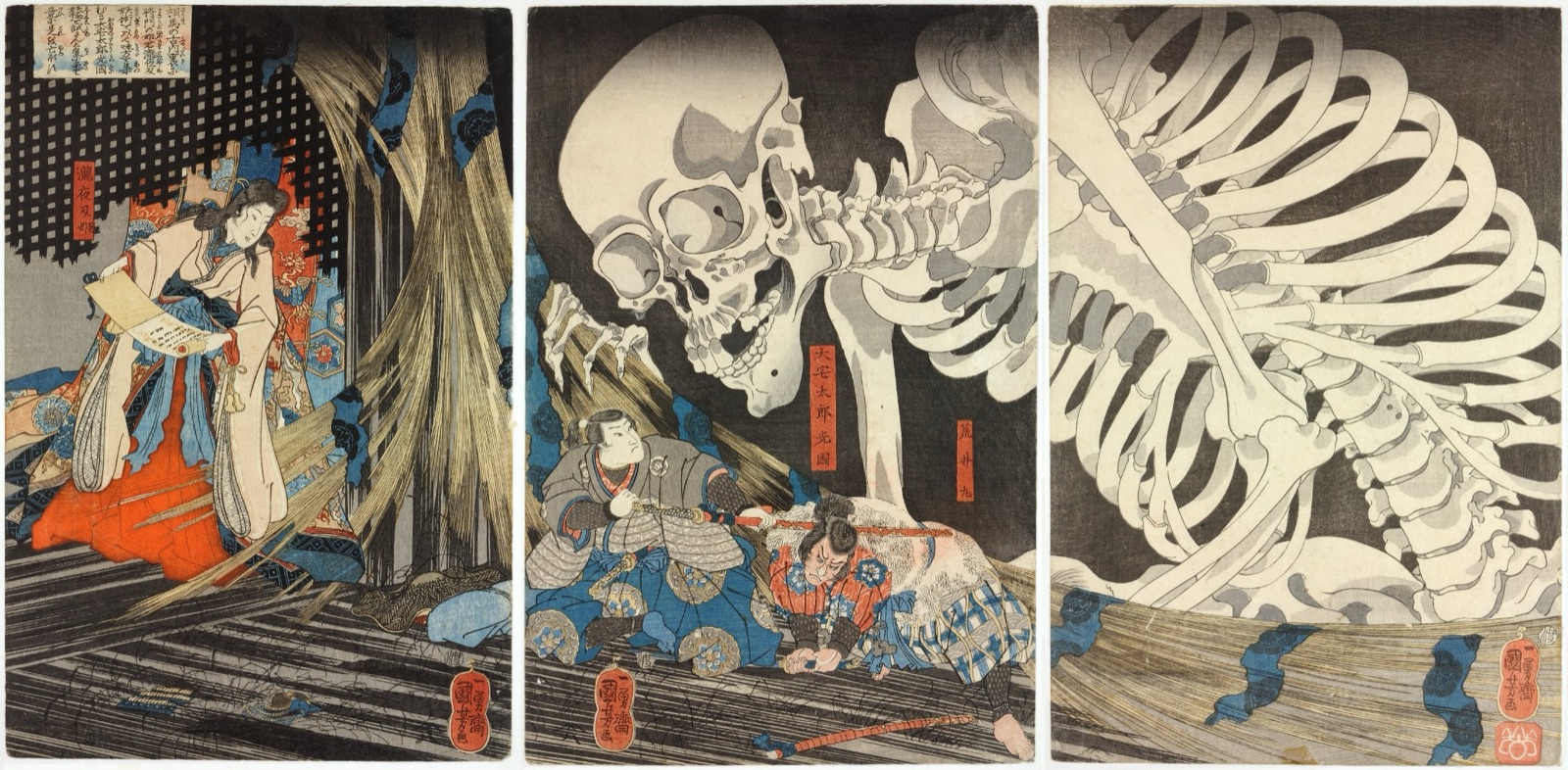
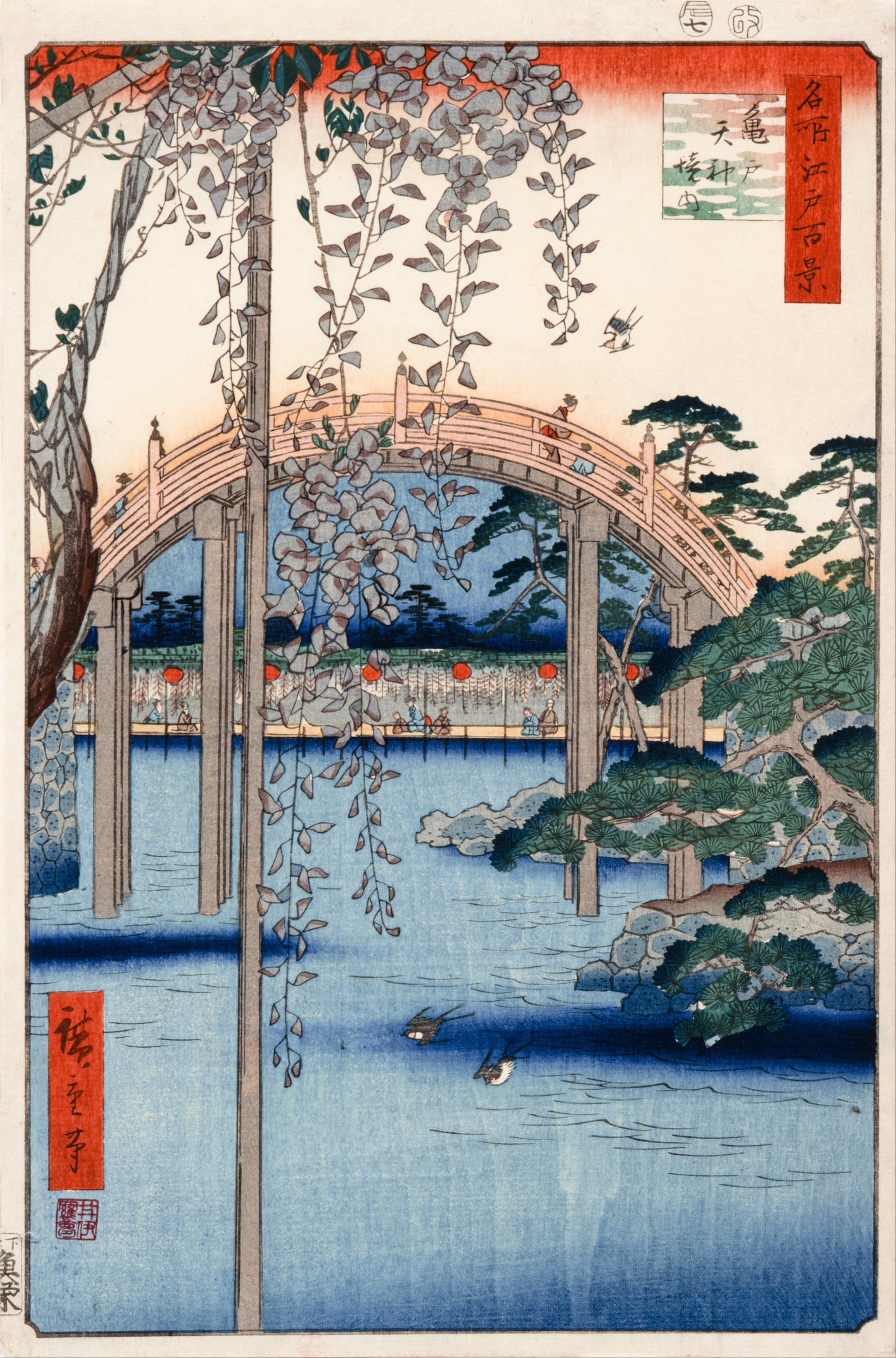
Ukiyo-e works the same way. Bold outlines, flat planes of color, figures that don’t pretend to exist in three-dimensional space — not because the artists couldn’t observe reality, but because they were after something more essential. Not more realistic. More itself. That’s why these images don’t age — or so it seems to me.
4. Edo Fan Culture, Then and Now
Laid out plainly, the parallels are hard to ignore.
New productions brought new merchandise. Fans collected obsessively. Popular actors at the height of their fame would sometimes withdraw from the stage — and their fans grieved, loudly. Sound familiar? (Some things really don’t change.) The whole apparatus of devotion — the buying, the displaying, the talking endlessly about it — was already fully formed in Edo.
The word oshi, which describes deep personal investment in a favorite performer or character, has become part of everyday vocabulary in contemporary Japan. But the practice itself is three hundred years old. Actor prints from ukiyo-e are one of its earliest surviving records. Once you see that connection, doesn’t ukiyo-e feel a little closer to home?
5. Kabuki and Ukiyo-e Together
Tokyo offers a particular pleasure: seeing kabuki and ukiyo-e in the same visit.
The Kabuki-za in Ginza runs regular programs, with single-act seats available for the curious and unhurried. After a performance — or before — the Ota Memorial Museum of Art in Harajuku, a short train ride away, holds excellent actor print collections and regular exhibitions. Seeing a living kabuki performance and then standing in front of a two-hundred-year-old portrait of the same theatrical world is a combination I’d recommend to anyone.
A Final Thought
Ukiyo-e and kabuki were the twin engines of Edo’s entertainment world.
Actors became immortal through prints; prints carried the actors’ brilliance into everyday life. The relationship between them maps almost exactly onto stars and social media, idols and merchandise. The mechanics of fandom haven’t changed much.
Which is, I find, a quietly comforting thought.
References
- The Metropolitan Museum of Art, “Kabuki and Ukiyo-e” — metmuseum.org
- Kabuki-za official site — kabuki-za.co.jp
- Donald Keene, The Pleasures of Japanese Literature, Columbia University Press, 1988
- Timothy Clark, Drama and Desire, British Museum Press, 1995
Image Credits
- Cover image: Utagawa Kunisada (Toyokuni III), Miya: Kagekiyo — Public domain via Wikimedia Commons (National Diet Library Digital Collections)
- Tōshūsai Sharaku, The Actor Ōtani Oniji III as Edobei, 1794 — Public domain via Wikimedia Commons
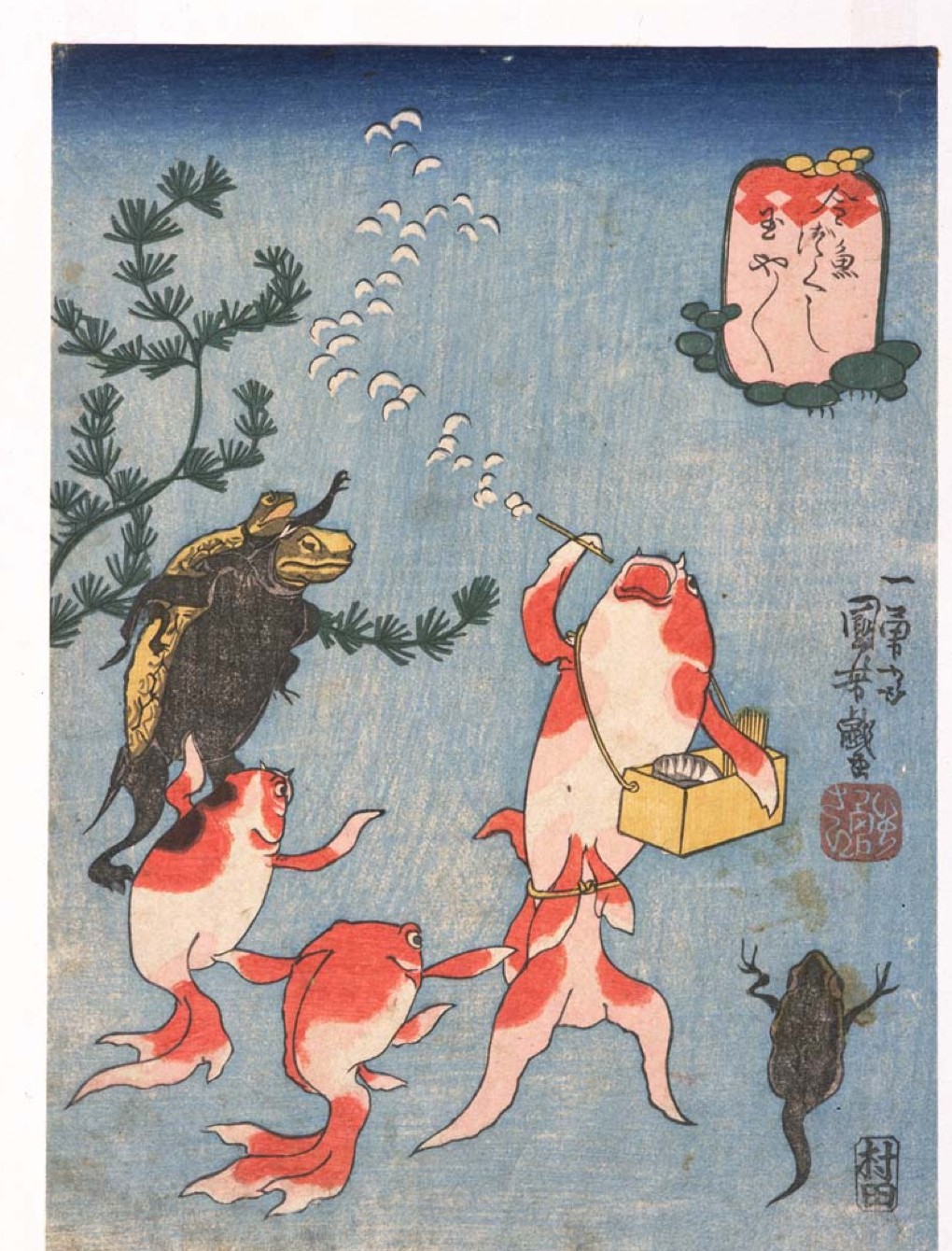
- Utagawa Kunisada (Toyokuni III), Actor Fan Paintings — Public domain via Wikimedia Commons (National Diet Library Digital Collections)
- Utagawa Kunisada (Toyokuni III), A Contest of Magic Scenes by Toyokuni: Hakata Kojorō — Public domain via Wikimedia Commons (National Diet Library Digital Collections)
- Utagawa Kunisada (Toyokuni III), Kongō Tarō and Others, 1853 — Public domain via Wikimedia Commons (National Diet Library Digital Collections)
- Utagawa Kunisada (Toyokuni III), A History of Japanese Figures, c. 1850 — Public domain via Wikimedia Commons (National Diet Library Digital Collections)
- Kabuki-za Theatre, Ginza, Tokyo — Photo by Kakidai, CC BY-SA 4.0, via Wikimedia Commons