The first time I really looked at a Kitagawa Utamaro print, I felt something I hadn’t quite expected.
The subject is a woman of Edo — a courtesan, perhaps, or the daughter of a teahouse. But her face holds something that doesn’t feel like a posed subject. There’s an inner life there. Something present behind the eyes.
Bijin-ga — “beautiful woman pictures” — is its own world within ukiyo-e. Today I’d like to explore it, with Utamaro as our guide.
1. What Is Bijin-ga?
The term translates literally as “pictures of beautiful women,” but these were never simply records of female appearance.
In Edo, “beautiful” described not just how a woman looked, but how she carried herself — her manners, her education, her refinement. Bijin-ga portrayed that ideal, and at the same time served as a kind of fashion media, transmitting the latest trends in hairstyles, kimono patterns, and obi knots. They played the role that fashion magazines play today.
2. The Revolution Utamaro Brought: Ōkubi-e
The history of bijin-ga changed with Kitagawa Utamaro (1753–1806).
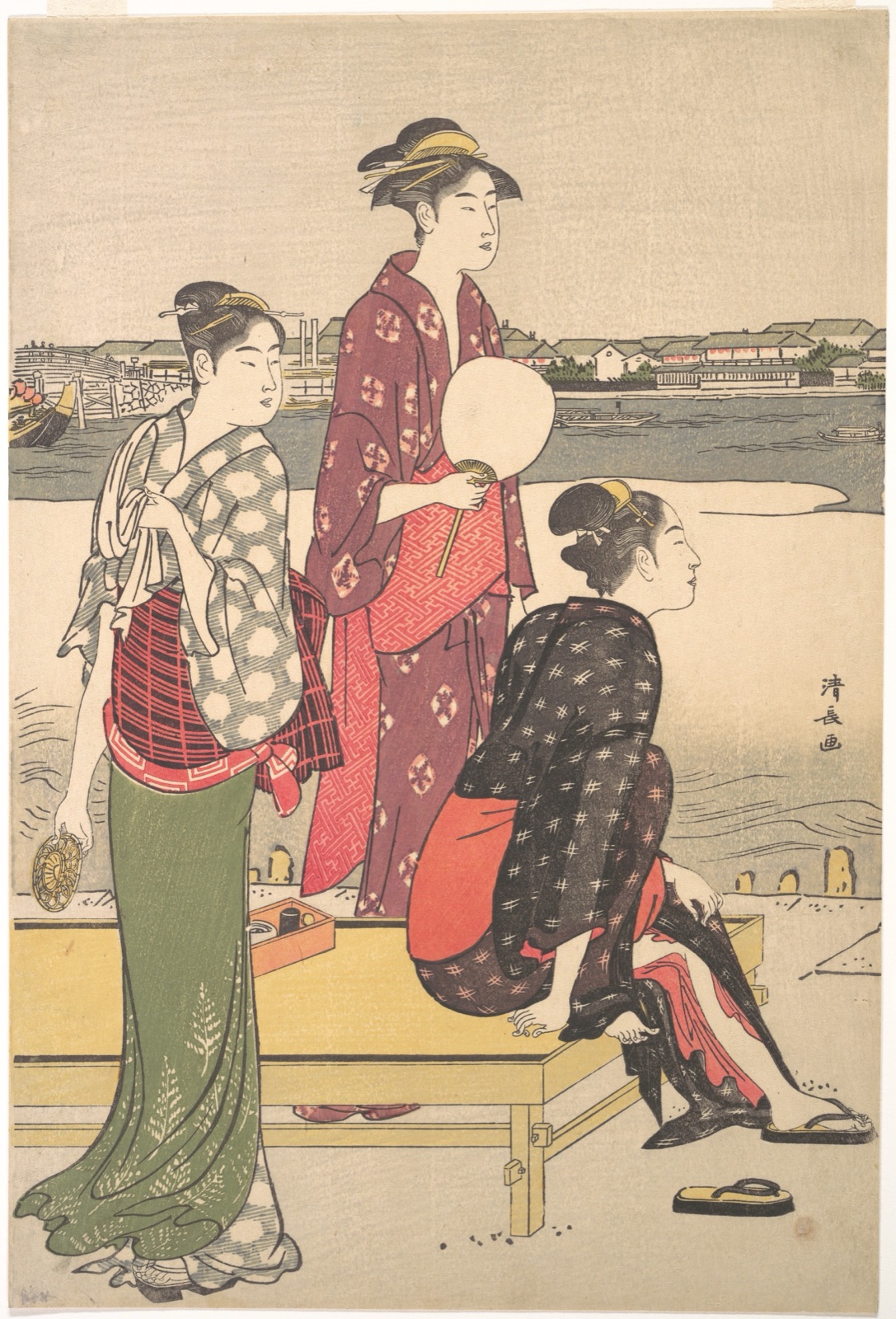
Before him, the standard format was the full-length figure — elegant, graceful, and viewed from a polite distance, like Torii Kiyonaga’s strollers on the banks of the Sumida River.
What Utamaro introduced was ōkubi-e — “large-head pictures” — a close-up format that cut the composition just below the chest.
This shift made everything possible. A woman’s expression, her gaze, the slight relaxation of her lips — all the subtle detail that full-length formats couldn’t hold was suddenly vivid and clear. It’s not unlike the logic of the modern portrait photograph.
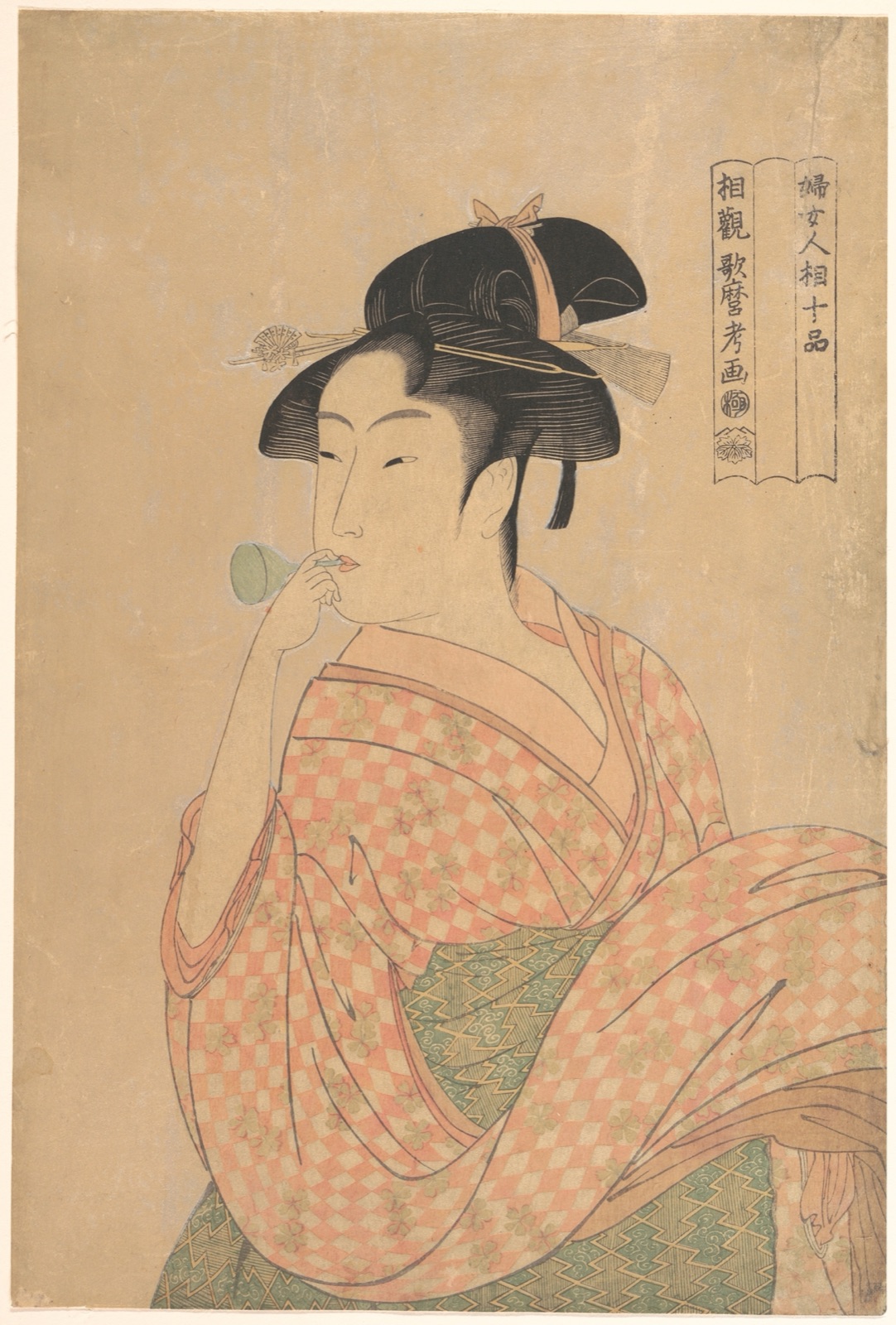
Utamaro’s women are observed — but they are also observing. That returned gaze is what draws viewers in, two hundred years later.
3. What Western Art Shows Us by Comparison
Placing Utamaro’s bijin-ga beside Western portraiture reveals some striking contrasts.
Renaissance and post-Renaissance portraits position figures in three-dimensional space: there is a background, a light source, and the subject exists within a specific “world.”
Utamaro’s backgrounds are largely empty — often a flat grey or gold achieved through mica printing. His figures don’t exist within a space; they are the picture. The emptiness becomes silence. This aesthetic — achieving meaning through subtraction — connects directly to haiku, to ink painting, to a Japanese sensibility that prizes what is left out over what is put in.
In Reflective Love, there is nothing behind the woman at all — just a face caught mid-thought, and the silence around it.
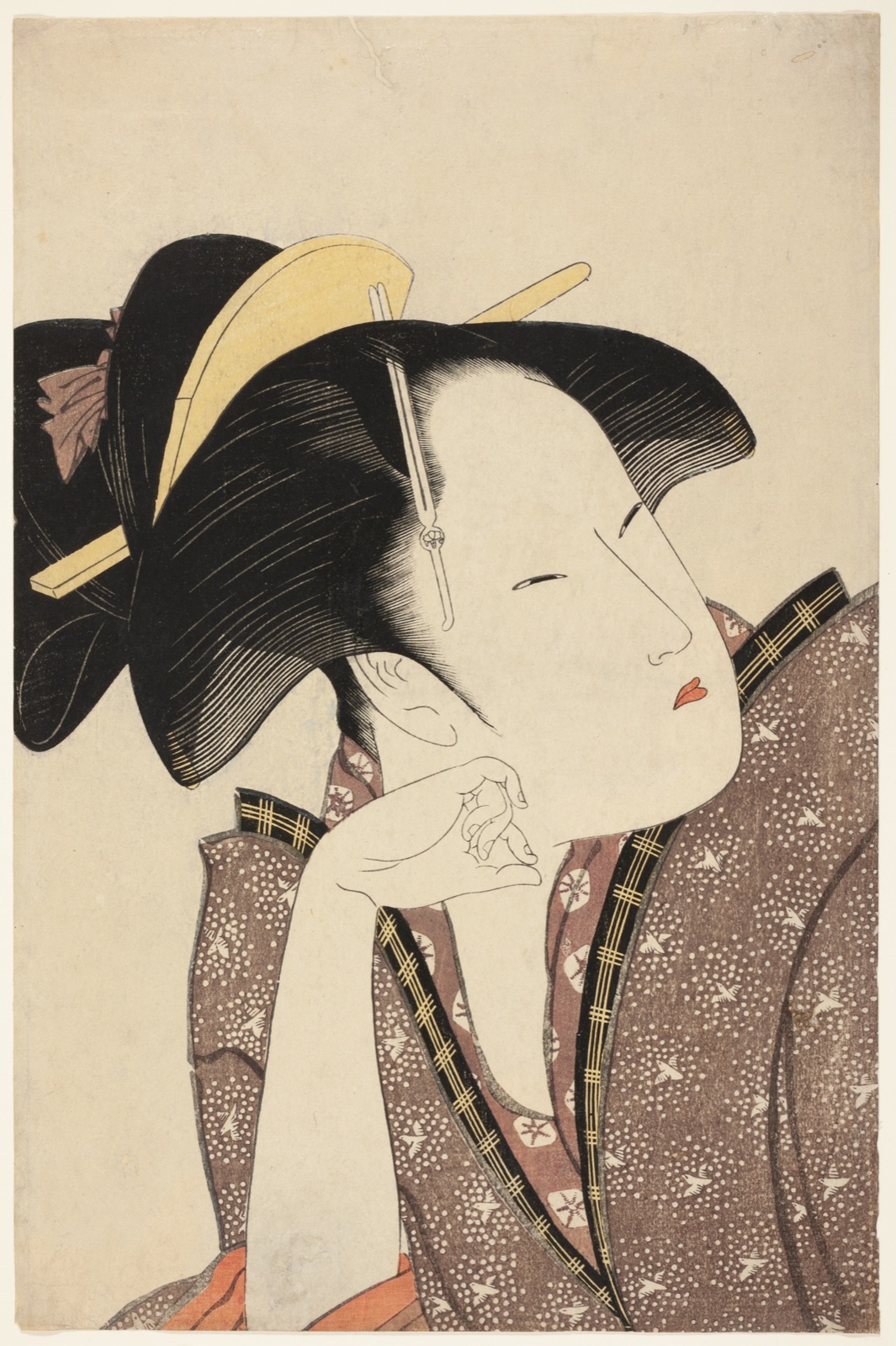
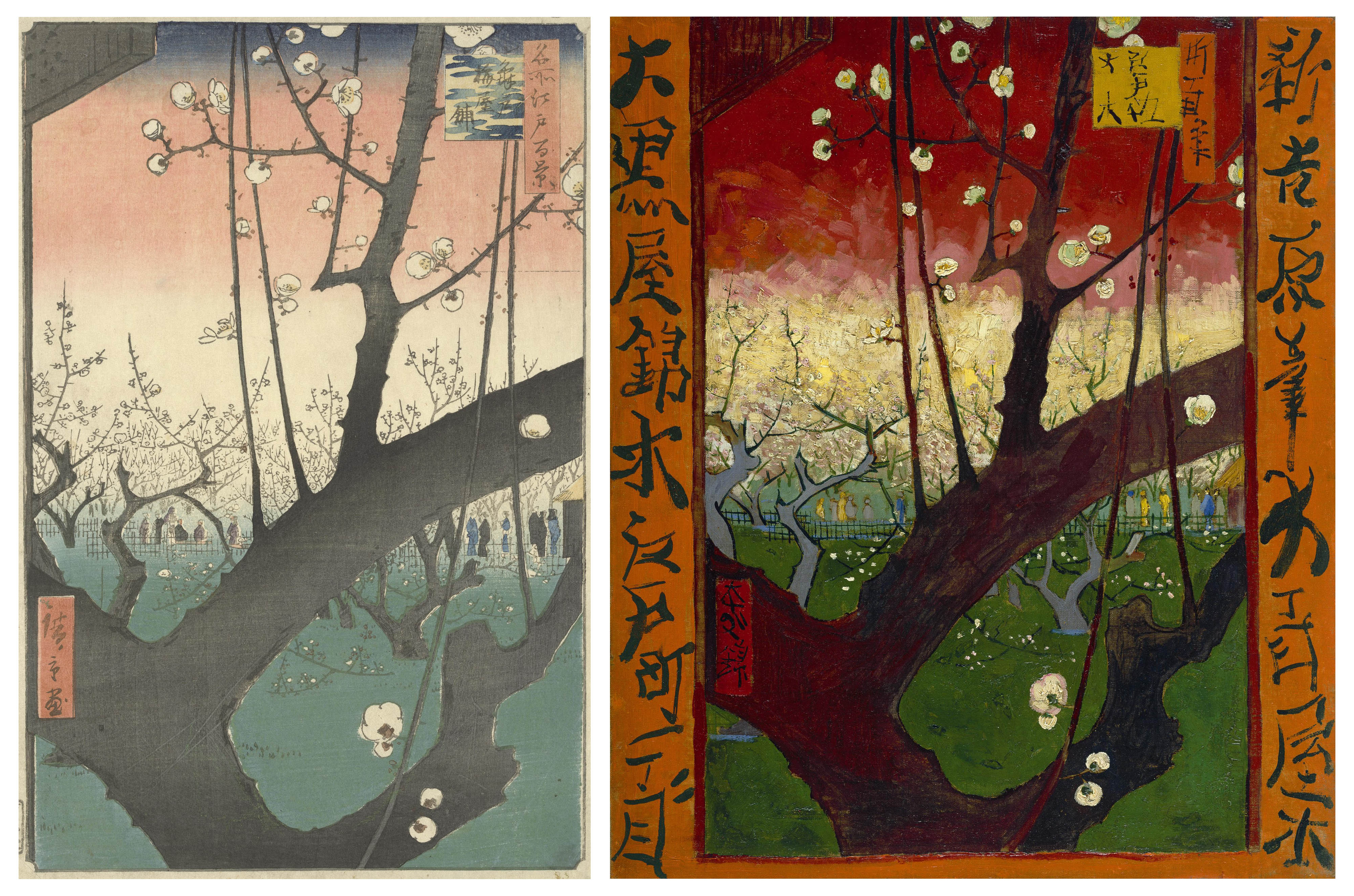
When French painters encountered ukiyo-e, this “flatness” and “the power of empty space” were among the things that stopped them cold.
4. Bijin-ga Through Modern Eyes
Viewed from a contemporary perspective, bijin-ga can raise complex feelings.
Many of the women depicted were residents of the pleasure quarters — women who were not there by free choice, but placed within a social structure not of their making. Utamaro depicted them as ideals of beauty. How we receive that is something each viewer will feel differently.
And yet there is something in Utamaro’s gaze that seems distinct from treating women as objects. His subjects are not passive. Their expressions carry intention; their eyes carry force.
There may be no clean answer here. But I think approaching a work with that kind of question alive in your mind is part of what makes looking at ukiyo-e a deeper experience.
5. Where to See Utamaro’s Work
Utamaro’s major works are in the public domain, and high-resolution images are freely available through the Metropolitan Museum of Art and the British Museum’s online collections.
For viewing the originals in person, the Ōta Memorial Museum of Art in Harajuku, Tokyo, is particularly strong. The museum mounts exhibitions focused on Utamaro with some regularity.
A Final Thought
Utamaro’s bijin-ga still speaks to us across more than two centuries.
Fashion record, projection of an ideal, the close observation of a single artist’s eye — it is all of those things at once. That layering is what lifts these prints beyond the category of “pretty pictures of women.”
References
- The Metropolitan Museum of Art, Utamaro collection — metmuseum.org
- The British Museum, Utamaro collection — britishmuseum.org
- Ōta Memorial Museum of Art official website — ukiyoe-ota-muse.jp
- Richard Lane, Images of the Floating World, Konecky & Konecky, 1978
Image Credit
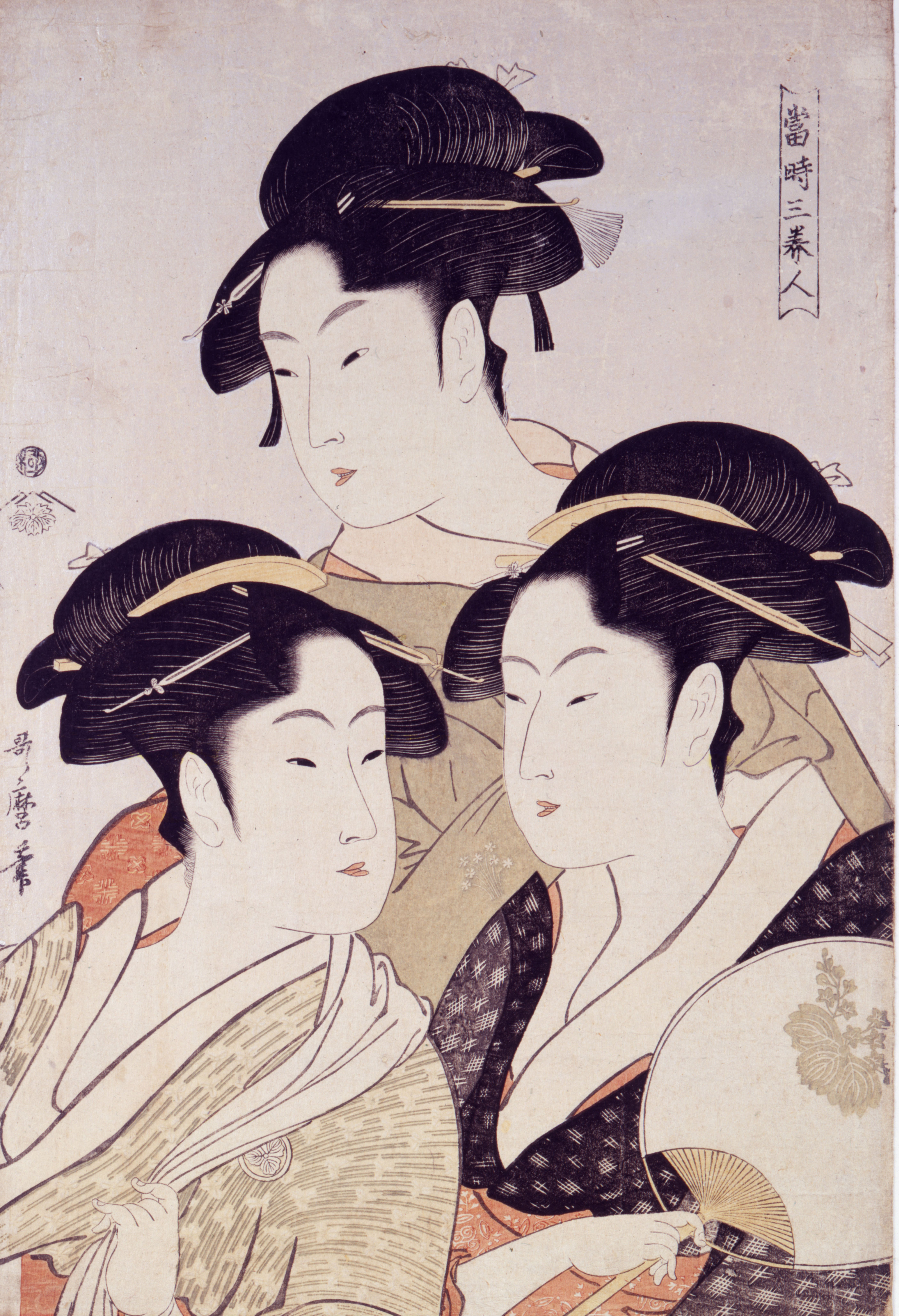
- Cover image: Kitagawa Utamaro, Three Beauties of the Present Day (当時三美人), c. 1793 — Public domain via Wikimedia Commons
- Section 2: Torii Kiyonaga, Evening on the Banks of the Sumida River, c. 1784 — Public domain via The Metropolitan Museum of Art; Kitagawa Utamaro, Young Woman Blowing a Popen, ca. 1792–93 — Public domain via The Metropolitan Museum of Art
- Section 3: Kitagawa Utamaro, Reflective Love (Mono-omou koi), c. 1793/94 — CC0 Public Domain, The Art Institute of Chicago