
Art history has its share of unexplained mysteries.
Why did Vermeer leave so few paintings? What is the Mona Lisa really smiling about? And — who on earth was Tōshūsai Sharaku?
Sharaku appeared in May 1794 without warning. By January 1795, just ten months later, he was gone without a trace. The roughly 140 actor portraits he left behind are still regarded as the most psychologically intense faces in the entire history of ukiyo-e.
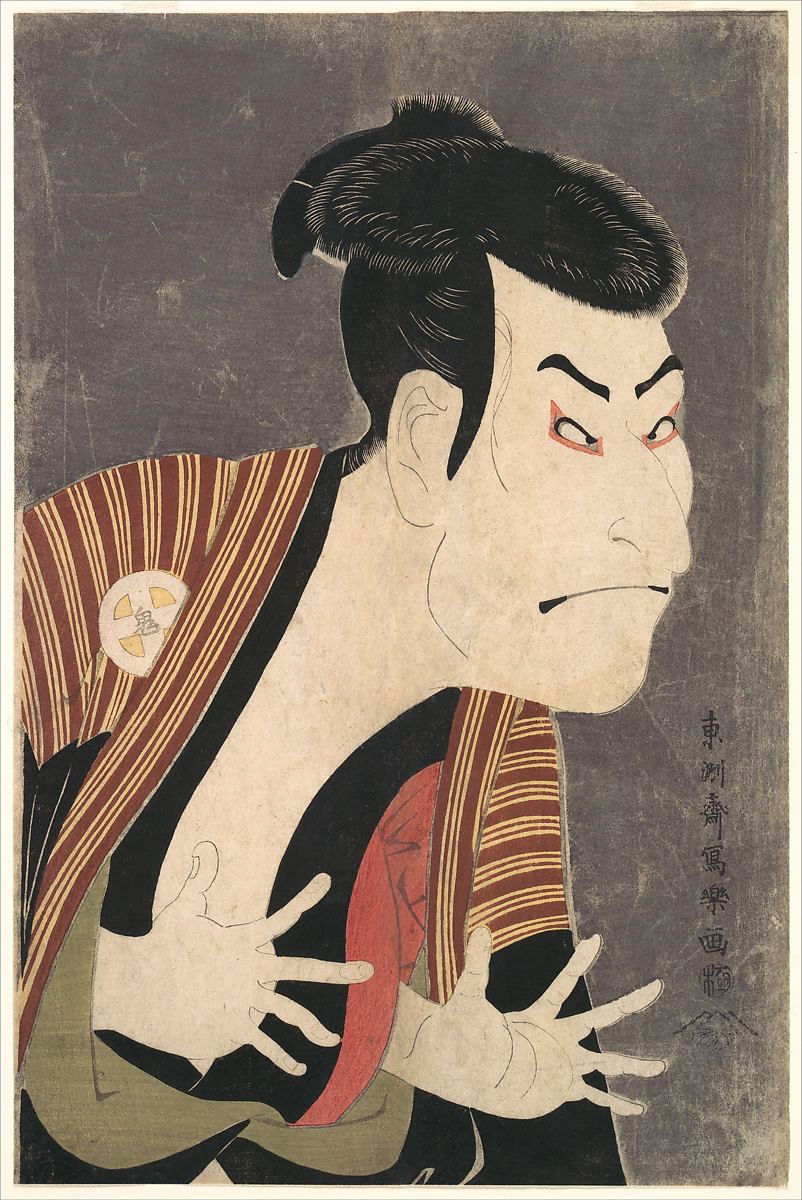
1. A Revolution in Not Making Things Beautiful
The first time you see one of Sharaku’s prints, you might feel a little surprised.
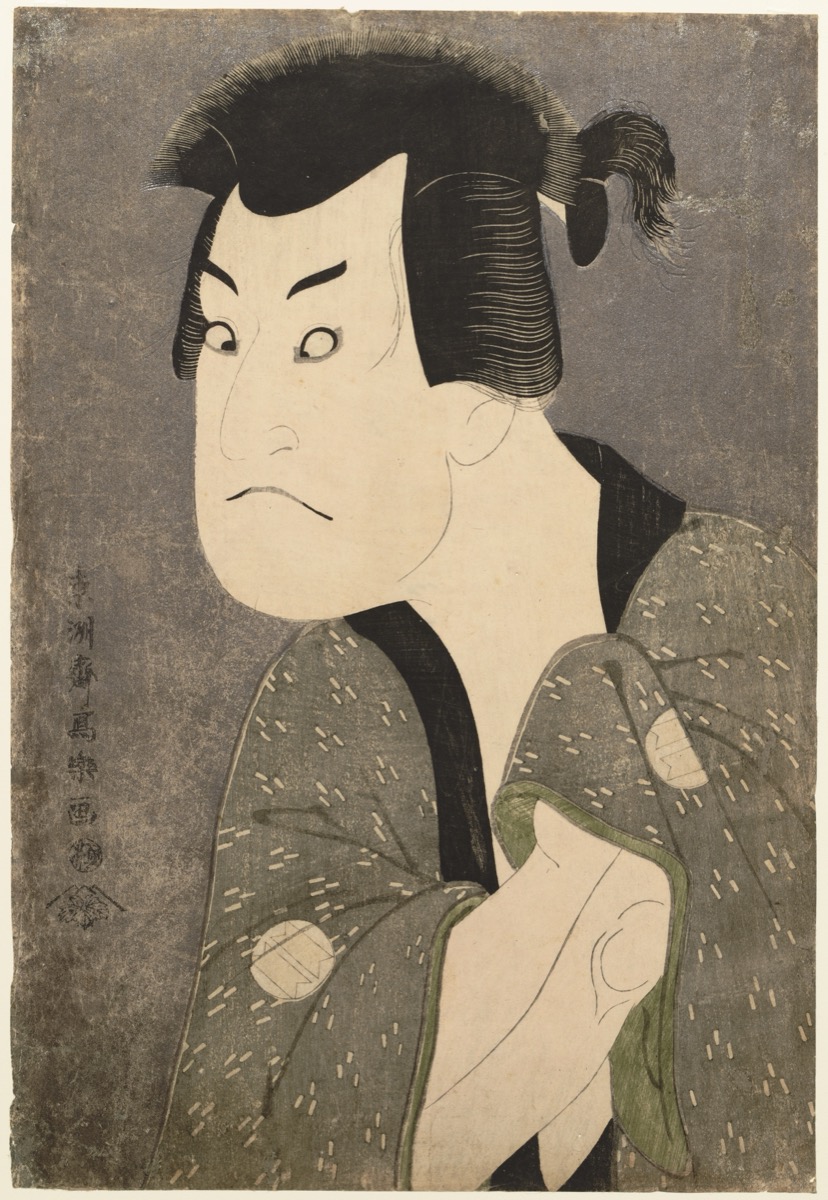
Wide eyes, furrowed brows, mouths twisted mid-expression. These figures are neither beautiful nor glamorous. What you feel instead is the raw tension and emotion of a performance caught in mid-breath — pressed directly into the woodblock and onto the page.
At the time, actor portraits followed an unspoken rule: depict the actor beautifully, ideally. Whatever the reality, the star in the print must always shine. Sharaku ignored this completely.
His most celebrated format is called ōkubi-e — a close-up composition that frames the actor’s face and upper body against a shimmering silver-grey background, produced by a technique called kira-zuri (mica printing). The psychological intensity of these images hasn’t faded one bit in over 200 years. Standing before an original, you feel it catch your breath.
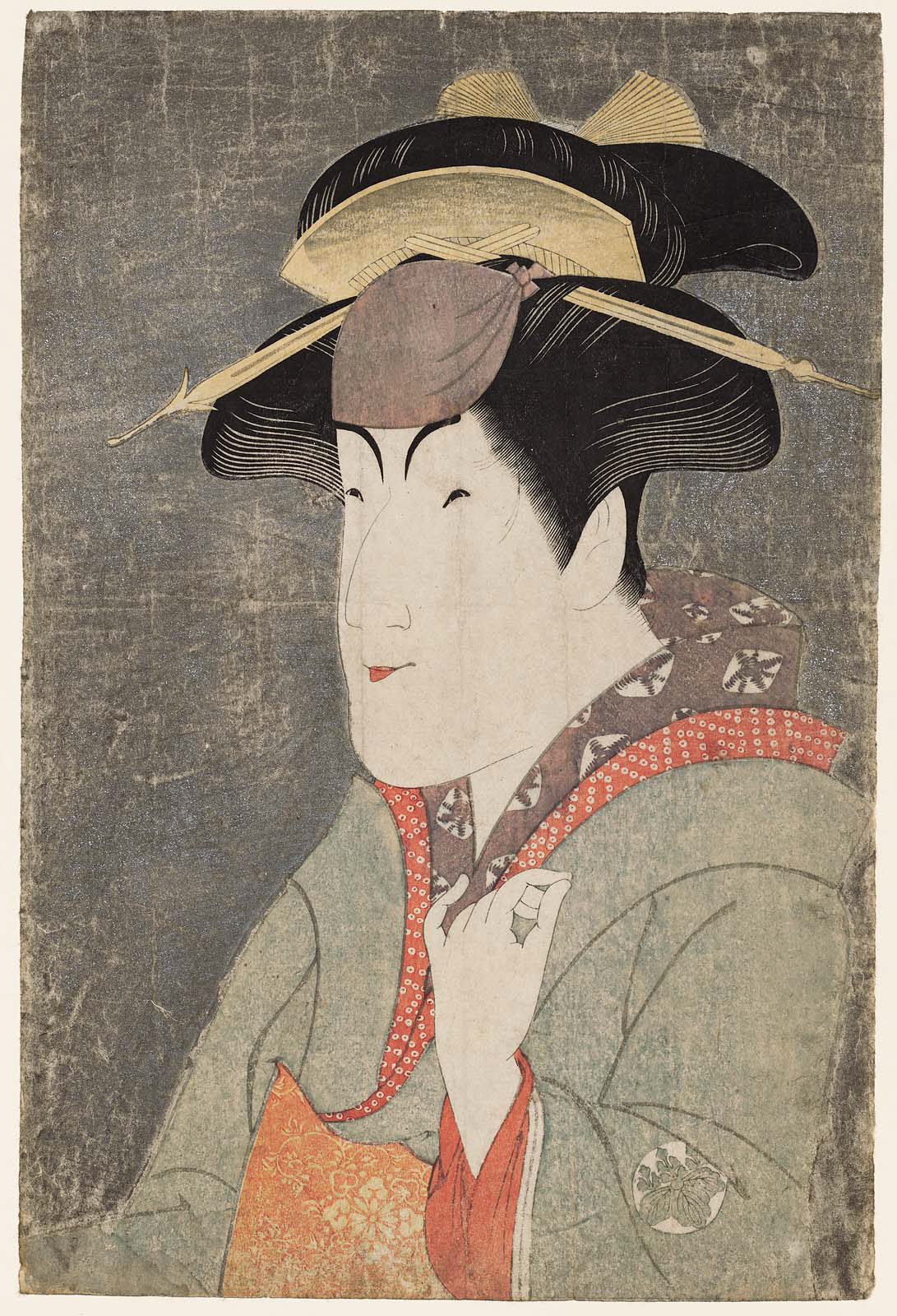
Sharaku also depicted onnagata — male actors who specialized in female roles. These prints show a different side: a quieter intensity, sometimes melancholic, sometimes strikingly beautiful.
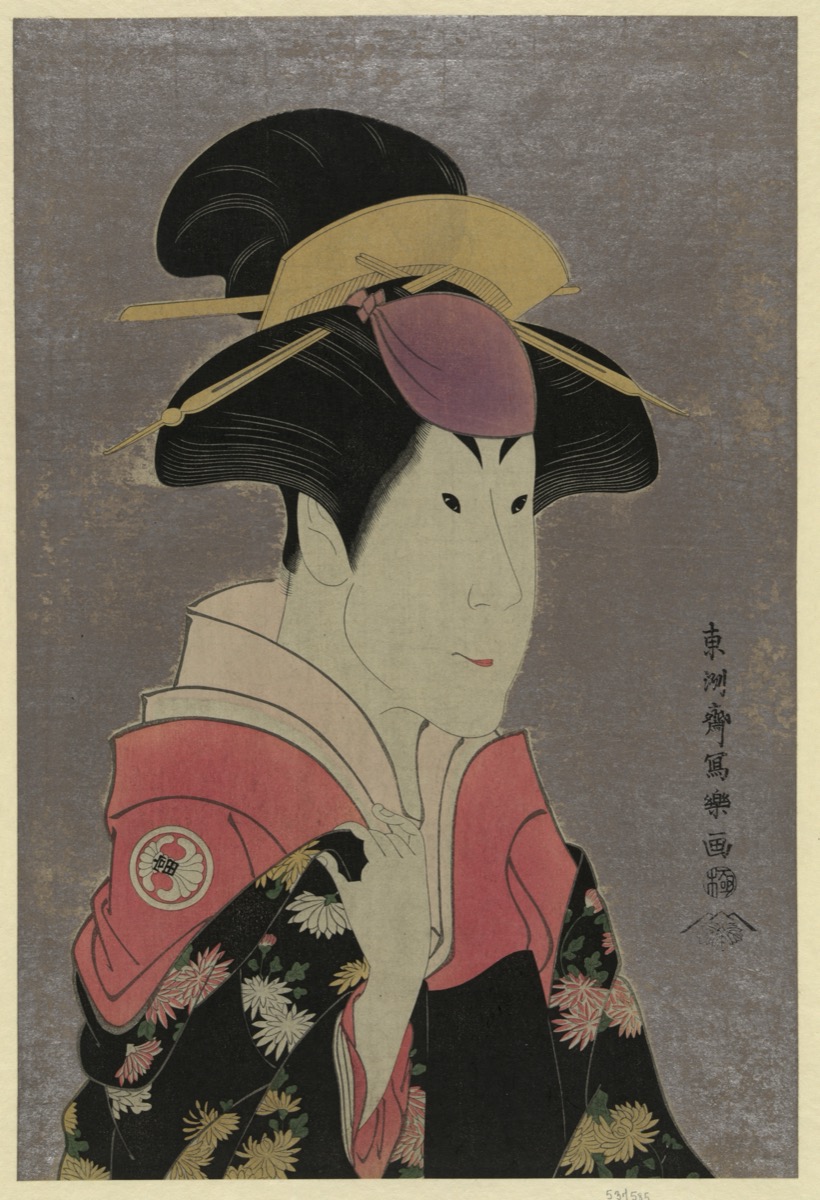
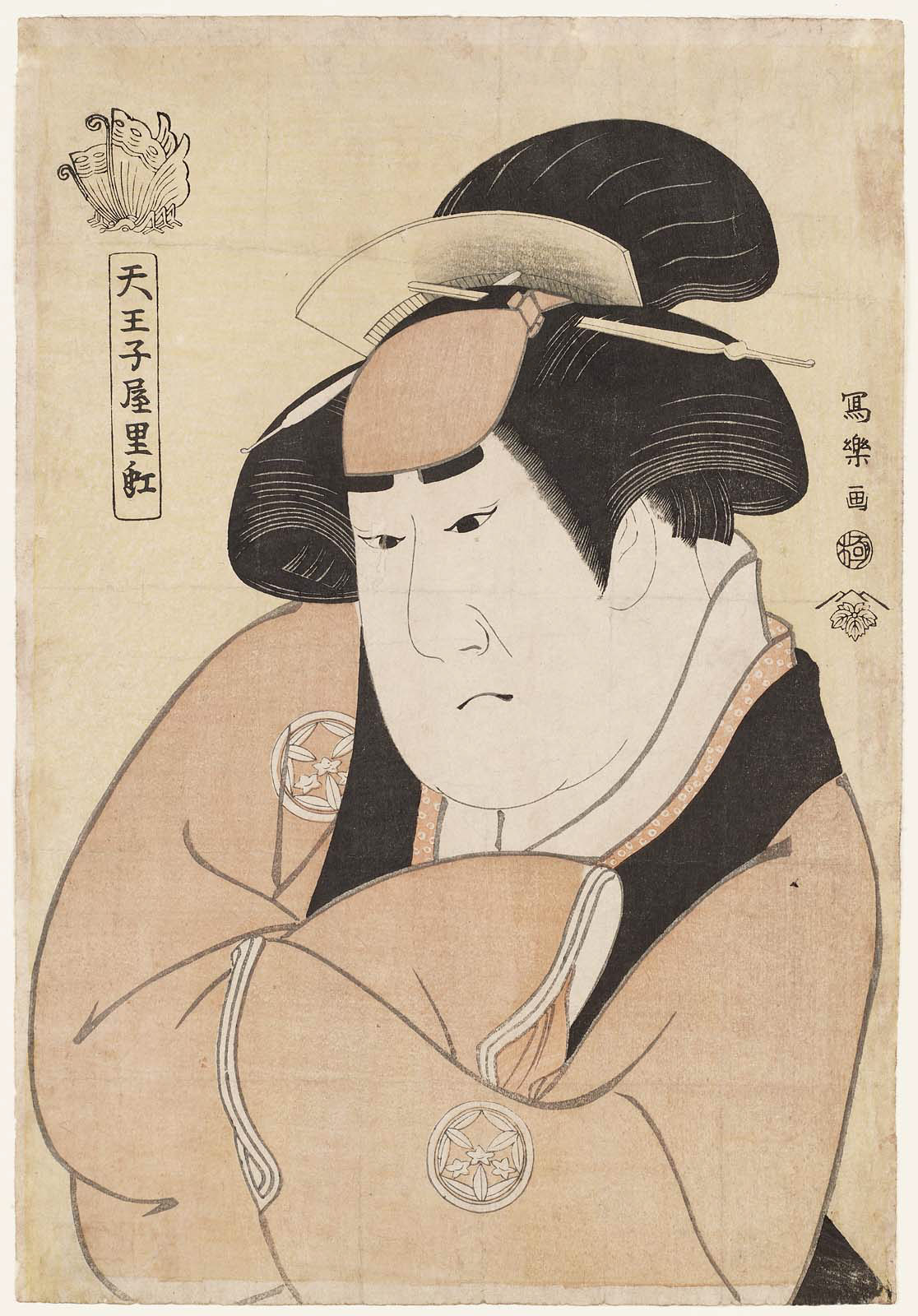
2. The Mystery That Never Resolved
Ten months after a dazzling debut, Sharaku vanished. Why? And who was he in the first place? Even now, nobody knows the answers to either question with any certainty.
The most widely accepted theory for his disappearance is that his unflinching, exaggerated depictions angered the actors and theater promoters of his day. As for his identity, the most prominent theory names a Noh performer called Saitō Jūrōbei — a government-employed musician who may have made prints on the side, with some documentary traces to support the idea.
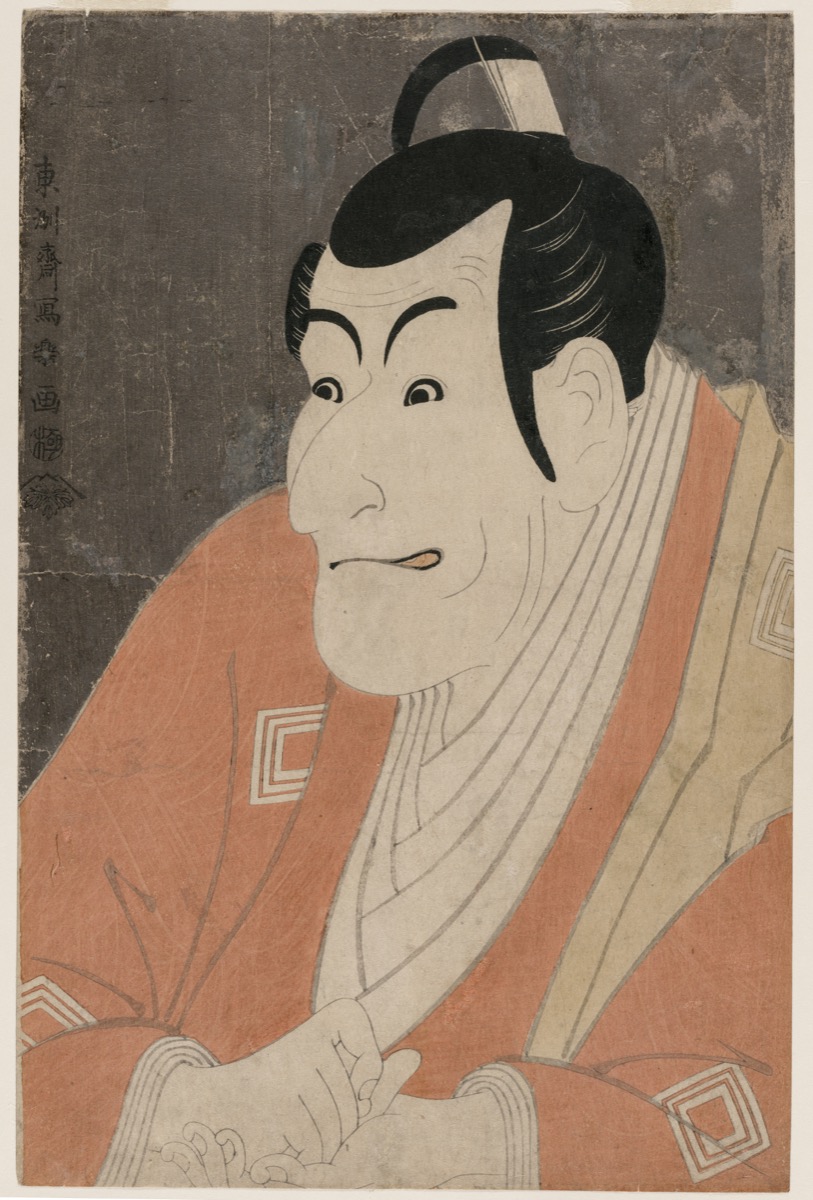
But nothing has ever been proven. “An alias of Hokusai,” “a collaboration between several artists,” “a foreigner” — scholars are still debating. And the mystery runs so deep that in Japan, popular culture has taken it and run: one recent creative interpretation imagined Sharaku as a limited-time collaborative project between the top creators of the era, a kind of Edo-period supergroup. The fact that nobody knows leaves the door open to any story you want to tell. Which is, honestly, kind of wonderful.
3. “One of the Three Great Portrait Artists in the World”
When Sharaku’s work reached Europe, it stopped people in their tracks.
In 1910, German art historian Julius Kurth placed Sharaku alongside Rembrandt and Velázquez as one of the three greatest portrait artists in history. A woodblock printer from Edo, measured against the giants of Western painting.
In capturing something essential about human expression — the thing beneath the surface — Sharaku’s work transcends time and culture. That judgment hasn’t changed.
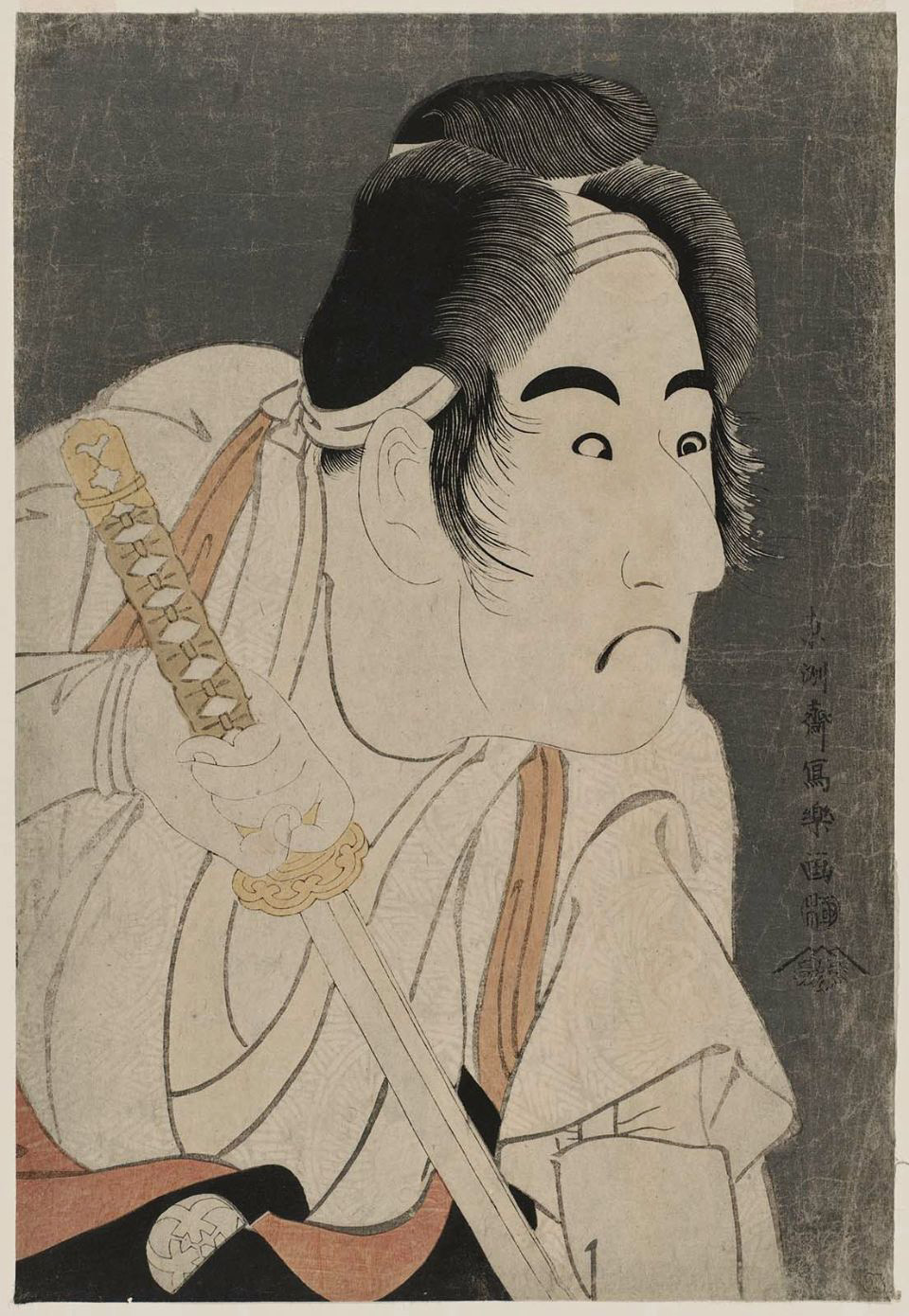
4. Where to See Sharaku’s Work
Sharaku’s prints are now scattered across collections around the world.
In Tokyo, the Ota Memorial Museum of Art (Harajuku) holds regular Sharaku exhibitions — one of the best chances to see a meaningful selection in one place. The Tokyo National Museum (Ueno) also holds significant works.
Internationally, the Museum of Fine Arts, Boston has one of the finest Sharaku collections anywhere, with high-resolution images freely available online. That’s a good place to start if you want to look before you travel.
A Final Thought
Sharaku worked for ten months.
And yet his prints are still talked about around the world, three hundred years later. There are works that last not because of their quantity, but because of their depth. Sharaku is quiet proof of that.
As for who he really was — nobody knows. Not yet.
References
- Julius Kurth, Sharaku, Munich, 1910
- Museum of Fine Arts, Boston, Sharaku collection — mfa.org
- Ota Memorial Museum of Art — ukiyoe-ota-muse.jp
Image Credits
- Cover & figure 1: Tōshūsai Sharaku, The Actor Ōtani Oniji III as Edobei, 1794 — Public domain via Wikimedia Commons (file: 012-buying-guide.jpg)
- Figure 2: Tōshūsai Sharaku, Sakata Hangorō III as the Villain Fujikawa Mizuemon, 1794 — Public domain via Wikimedia Commons
- Figure 3: Tōshūsai Sharaku, Nakayama Tomisaburō I as Miyagino, 1794 — Public domain via Wikimedia Commons
- Figure 4: Tōshūsai Sharaku, Segawa Tomisaburō as Yadorigi, 1794 — Public domain via Wikimedia Commons
- Figure 4b: Tōshūsai Sharaku, Yamashita Kinsaku II as the Maid Ebizō Okane, 1794 — Public domain via Wikimedia Commons
- Figure 5: Tōshūsai Sharaku, Ichikawa Ebizō as Takemura Sadanoshin, 1794 — CC0 Public Domain via Wikimedia Commons (Cleveland Museum of Art)
- Figure 6: Tōshūsai Sharaku, Bando Mitsugoro II as Ishii Genzo, 1794 — Public domain via Wikimedia Commons


_Nakayama_Tomisabur%C5%8D_I_as_Miyagino.jpg)
_Segawa_Tomisabur%C5%8D_as_yadorigi,_wife_of_Ogishi_Kurando.jpg)
_Yamashita_Kinsaku_II_as_the_maid_Ebiz%C5%8D_Okane,_actually_Iwate_Gozen,_wife_of_Abe_Sadat%C5%8D_(Tenn%C5%8Djiya_Rik%C5%8D).jpg)
_Bando_Mitsugoro_II_as_Ishii_Genzo.jpg)