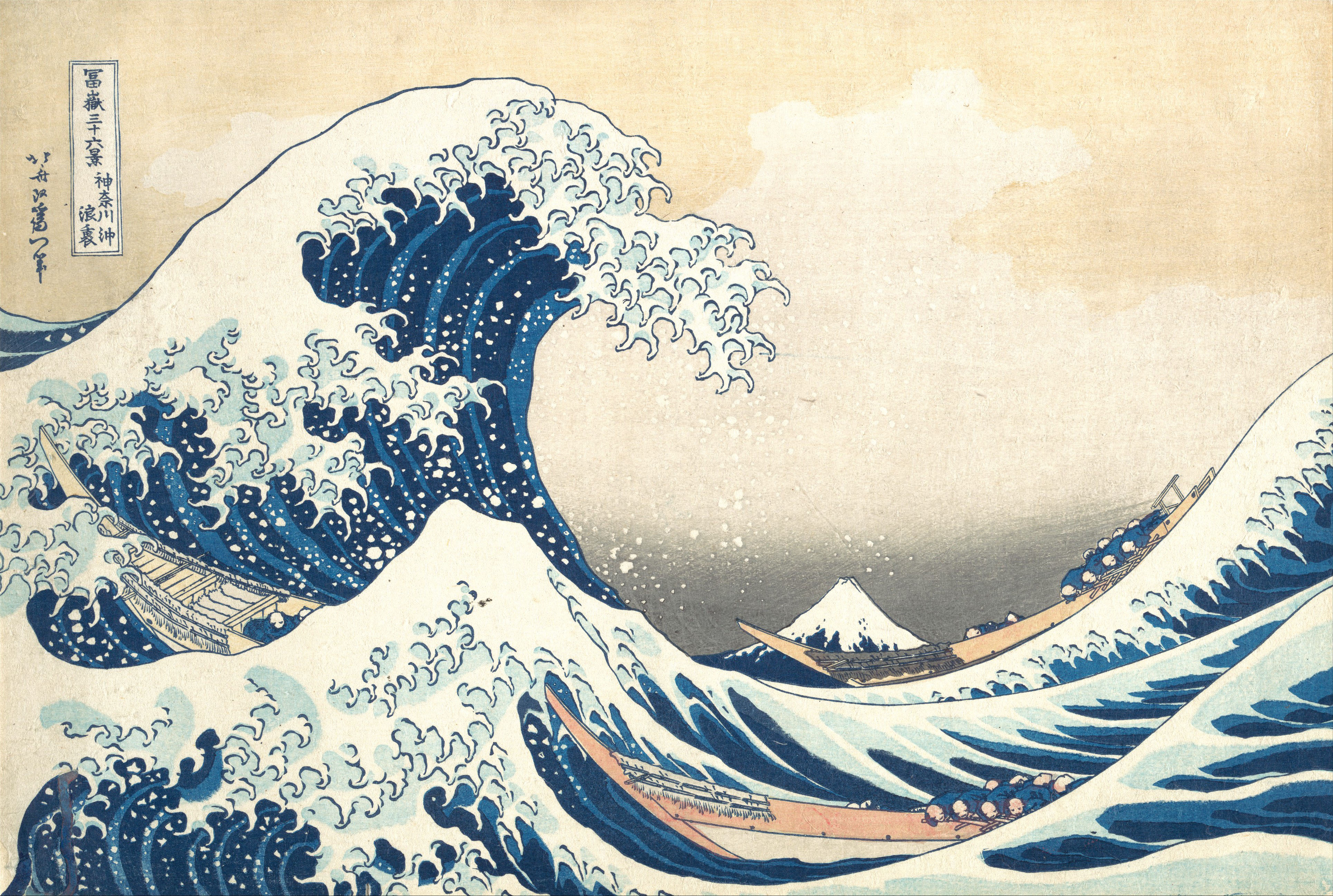
What is the most reproduced Japanese image in the world?
The answer is Katsushika Hokusai’s The Great Wave off Kanagawa. It’s on mugs, T-shirts, phone cases, tote bags, and the walls of museums from Tokyo to New York. That wave has worked its way into everyday life so thoroughly that most people feel they already know it.
But have you ever really looked at it?
The longer you spend with this print, the more you find. The mountain you might have missed. The people in the water. The story behind why it exists at all — and who made it, and when. Let me take you through all of it.
1. What’s Actually In the Picture
Start with the image itself.
A massive wave fills the frame, its crest breaking into claw-like fingers of white foam, surging toward you with unmistakable force. That wave tends to consume the viewer’s attention entirely — which is exactly why so many people miss what’s sitting quietly in the background.
Mount Fuji.
Look carefully toward the center-right of the image, and there it is: small, serene, perfectly triangular against a pale sky. The contrast couldn’t be more deliberate — a wave in violent motion, a mountain utterly still. Together they create something almost philosophical: the temporary and the permanent, the chaotic and the composed, held in a single frame.
And there’s one more thing. Tucked into the valleys between the waves are three long, narrow boats. The oarsmen are crouching low, pressing themselves against the hull, fighting to hold on. They’re not being swept away — they’re pushing back. That tension, so easy to overlook, is what keeps the whole image from tipping into despair.
2. What Hokusai Was Really Doing: Observation
Those claw-like tips of the wave — most people assume at first that they must be exaggerated. But Hokusai spent decades observing the sea and drawing it relentlessly. That shape was not invented. It was studied.
The wave in the picture is an offshore ocean swell — the kind that fishermen genuinely faced when they headed out to sea. The three boats nestled in the troughs are not being swept away; they are pressing back. What Hokusai captured may be less about the ocean’s force and more about the tension between the sea and the people who work it.
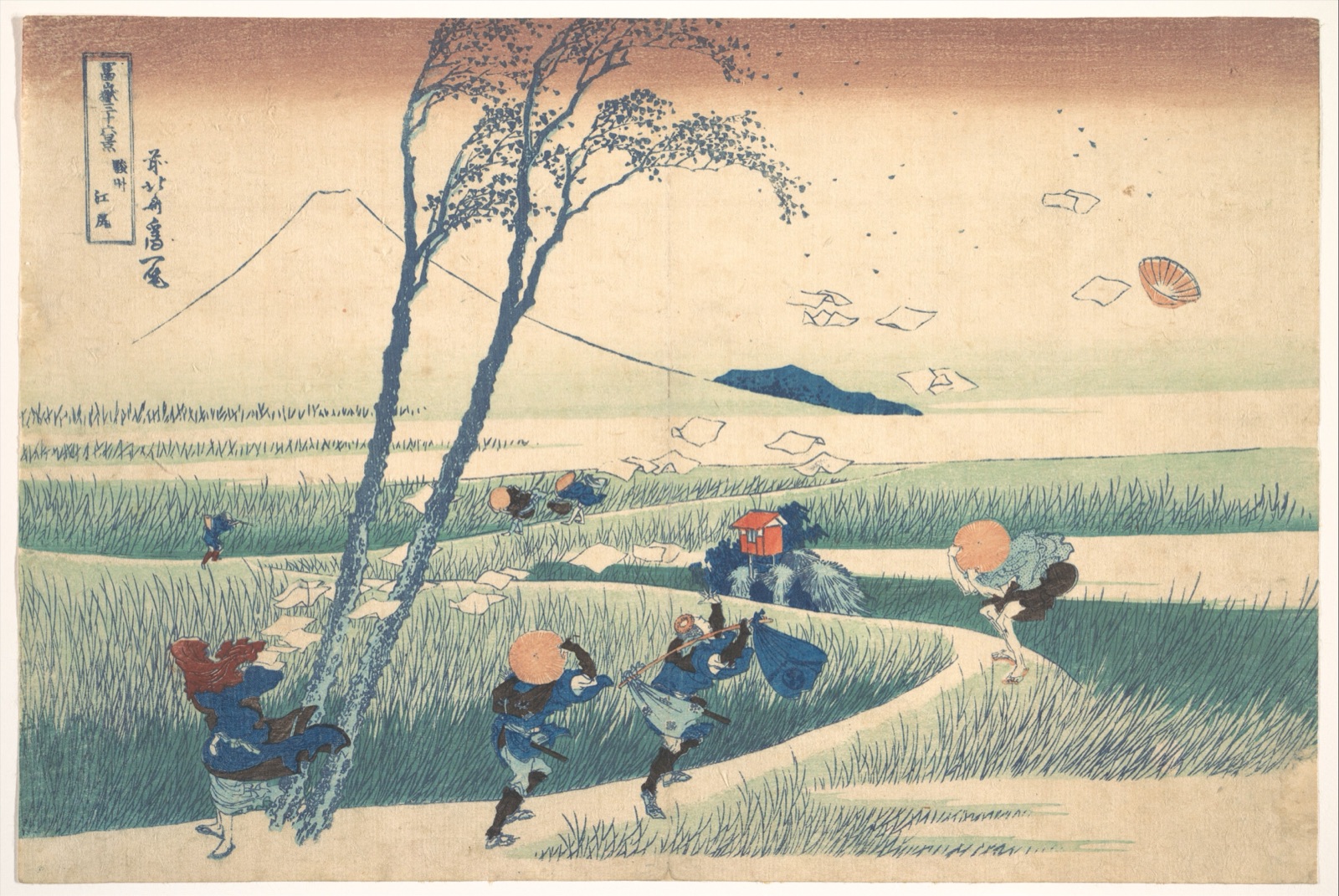
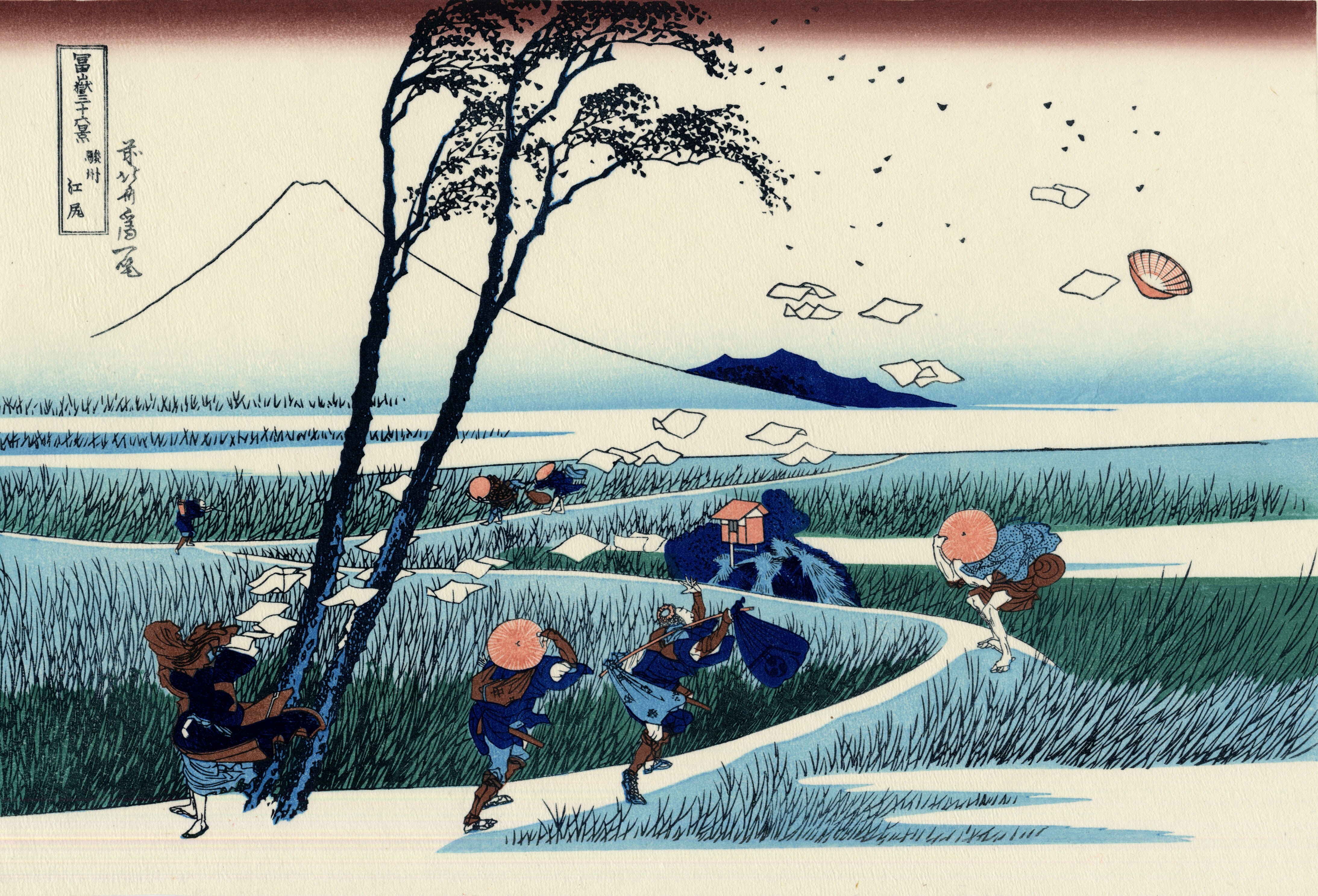
That same observing eye worked on land, too. In Ejiri in Suruga Province, another print from the same series, Hokusai painted a sudden gust of wind — papers torn from a traveler’s hands, a hat sailing into the sky, trees bending all at once. Wind itself is invisible. He painted it anyway, through the things it moves.
3. It’s One Print in a Series of Forty-Six
Here’s something that surprises most people: The Great Wave was never meant to stand alone.
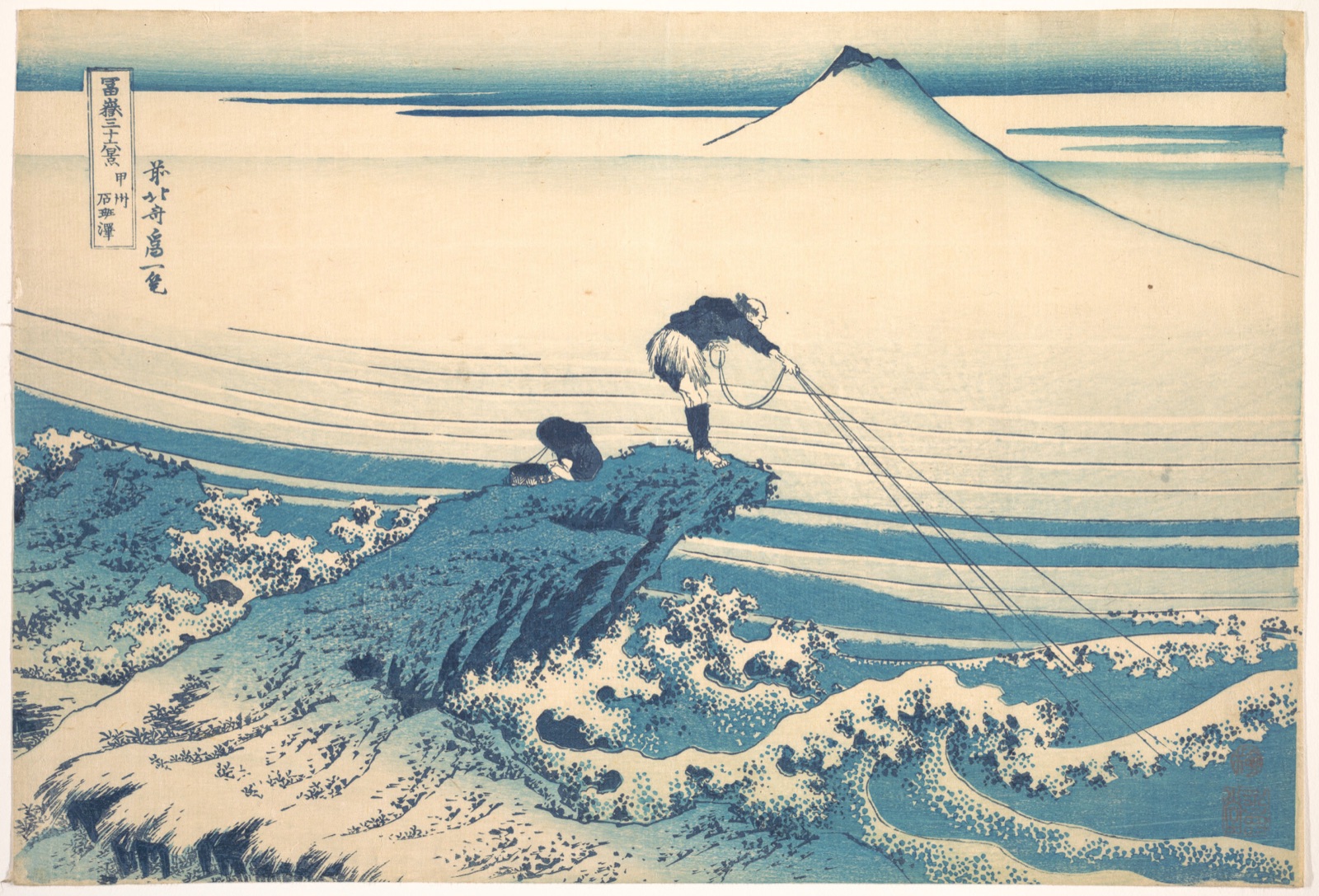
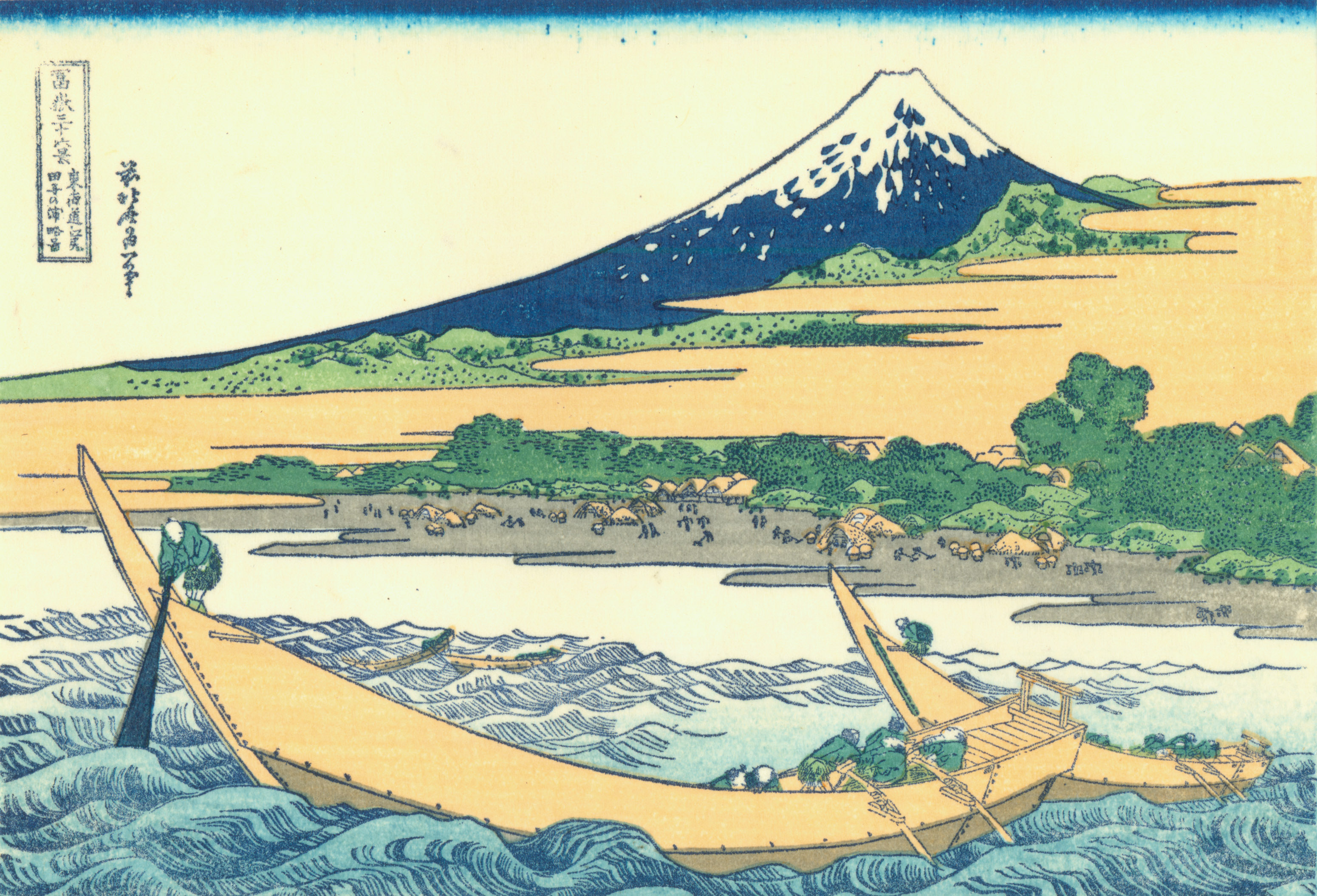
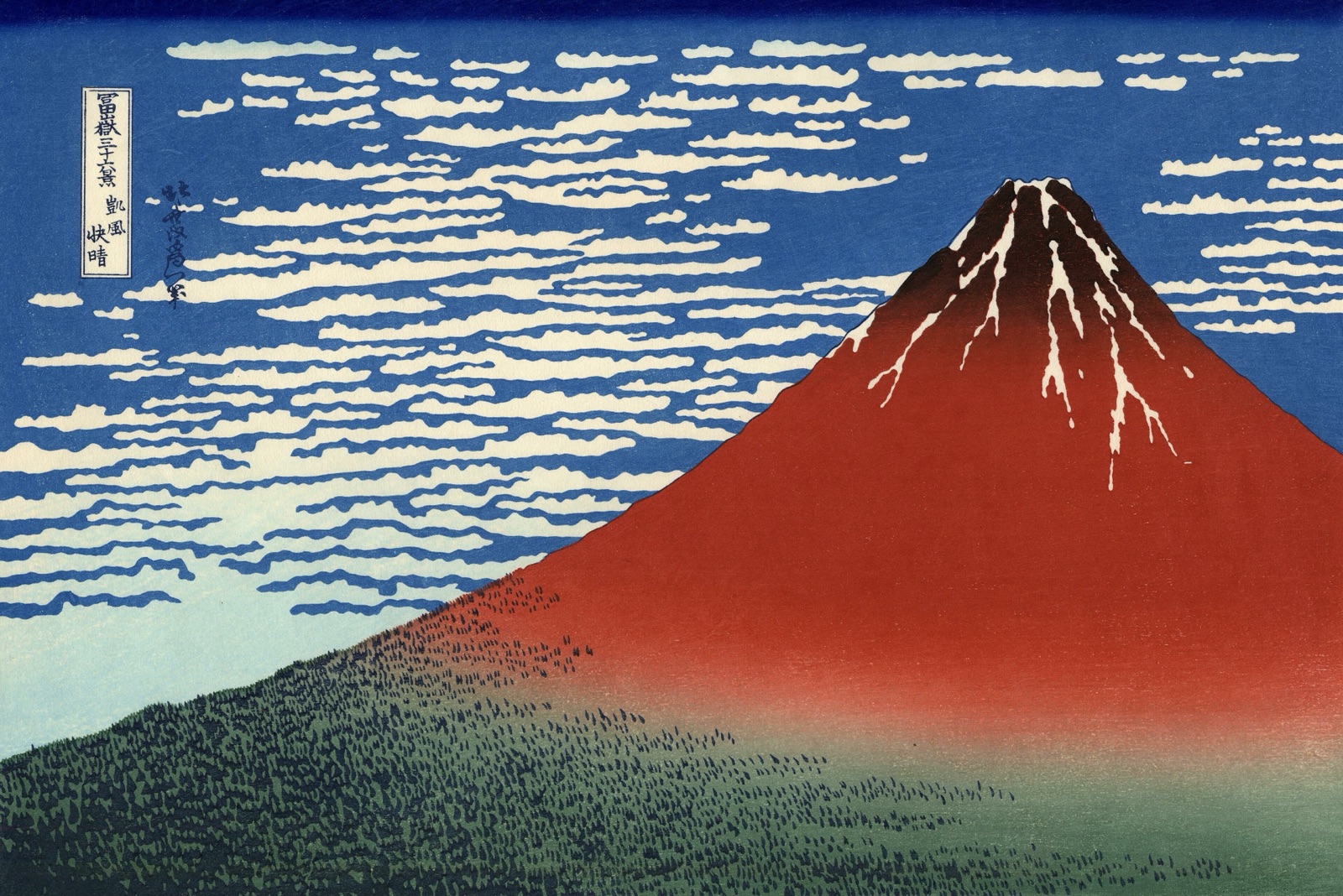
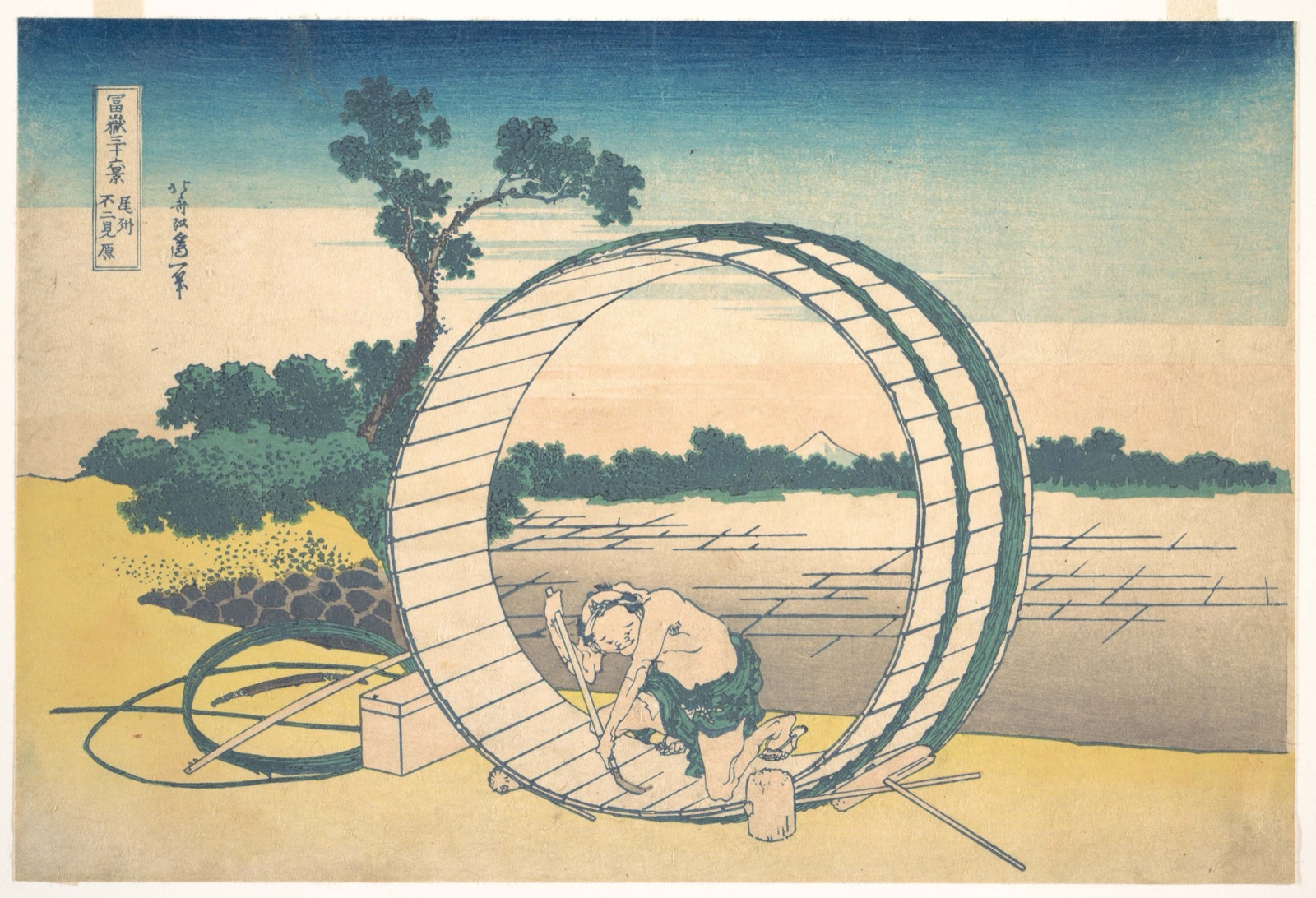
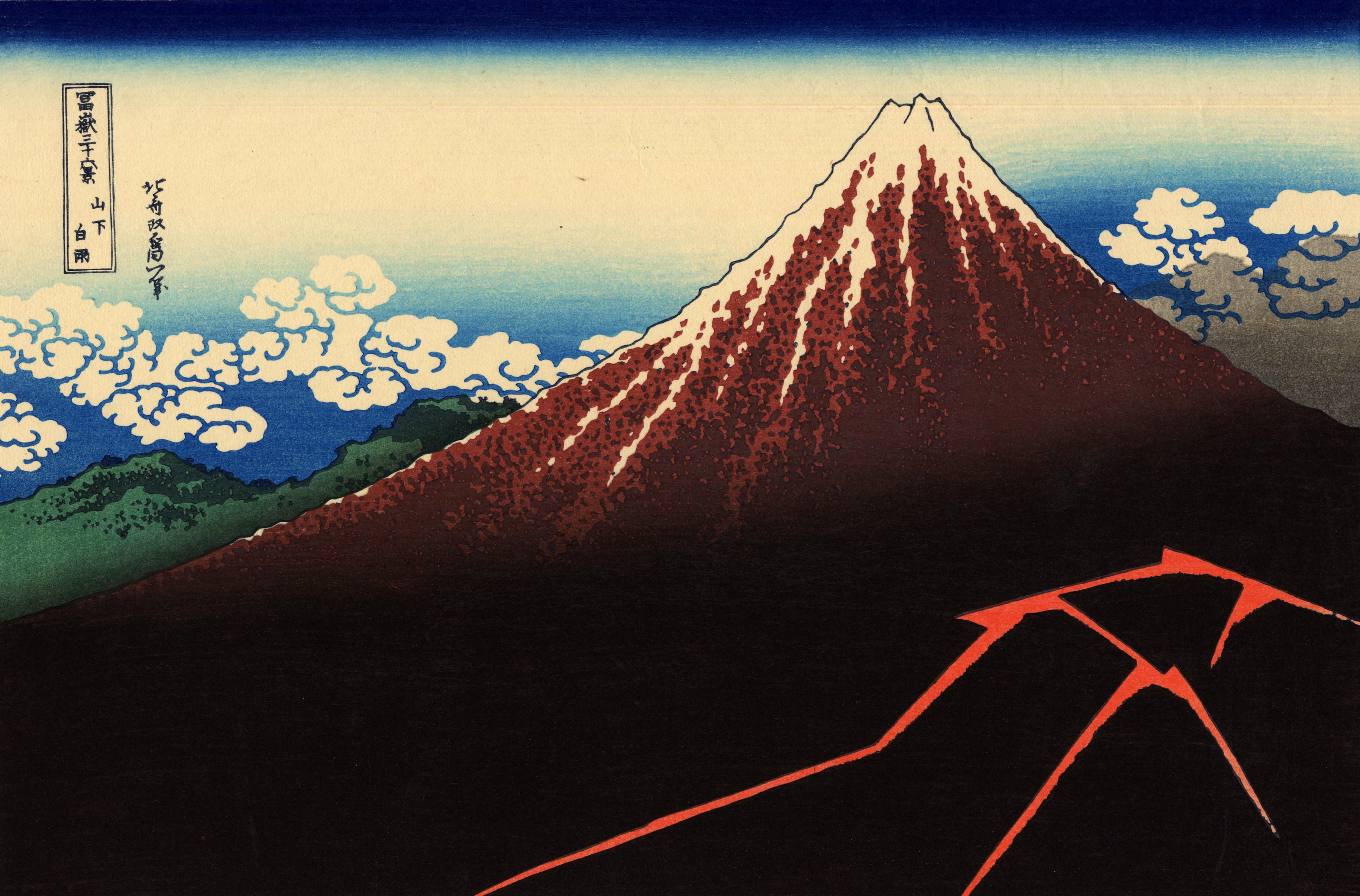
It’s the opening print of a series called Thirty-Six Views of Mount Fuji — a collection exploring Fuji from different locations, seasons, distances, and weather conditions. Spring and winter. Storm and clear sky. From the coast, from the mountains, from the middle of the city.
Here’s a small charming detail: the series was so popular that Hokusai added ten more prints beyond the original thirty-six. So Thirty-Six Views actually contains forty-six images. The title stayed. Nobody seemed to mind.
The Great Wave became the face of the series, but many of the other prints are extraordinary in their own right — and well worth finding.
Here are two of them. Fine Wind, Clear Morning — better known as Red Fuji — catches the mountain glowing red at dawn in late summer, a sight that lasts only minutes, rendered in just a handful of colors.
And in Fujimigahara in Owari Province, Hokusai frames the distant mountain inside the giant barrel a cooper is shaping — a perfect circle around a perfect triangle. Serene one moment, playful the next. That range is the series.
4. Hokusai Was in His Seventies When He Made It
This is my favorite fact about this print.
The Great Wave was made around 1831. Hokusai was in his early seventies.
He had been painting for over sixty years by then. Six decades of practice, observation, and refinement went into that image. And yet Hokusai, looking back at his life’s work, wrote this:
“Everything I produced before the age of seventy is not worth taking into account. At seventy-three, I began to grasp the structures of birds and beasts, insects and fish, and the way plants grow. If I go on trying, I will surely understand them still better by the time I am eighty-six.”
When I first read those words, something shifted in me. The person who made one of the most recognized images in human history thought, at seventy, that he was just getting started.
5. How One Print Changed Western Art
The Great Wave reached Europe in the decades following Japan’s opening to trade in the 1850s. What happened next is one of the most remarkable stories in art history.
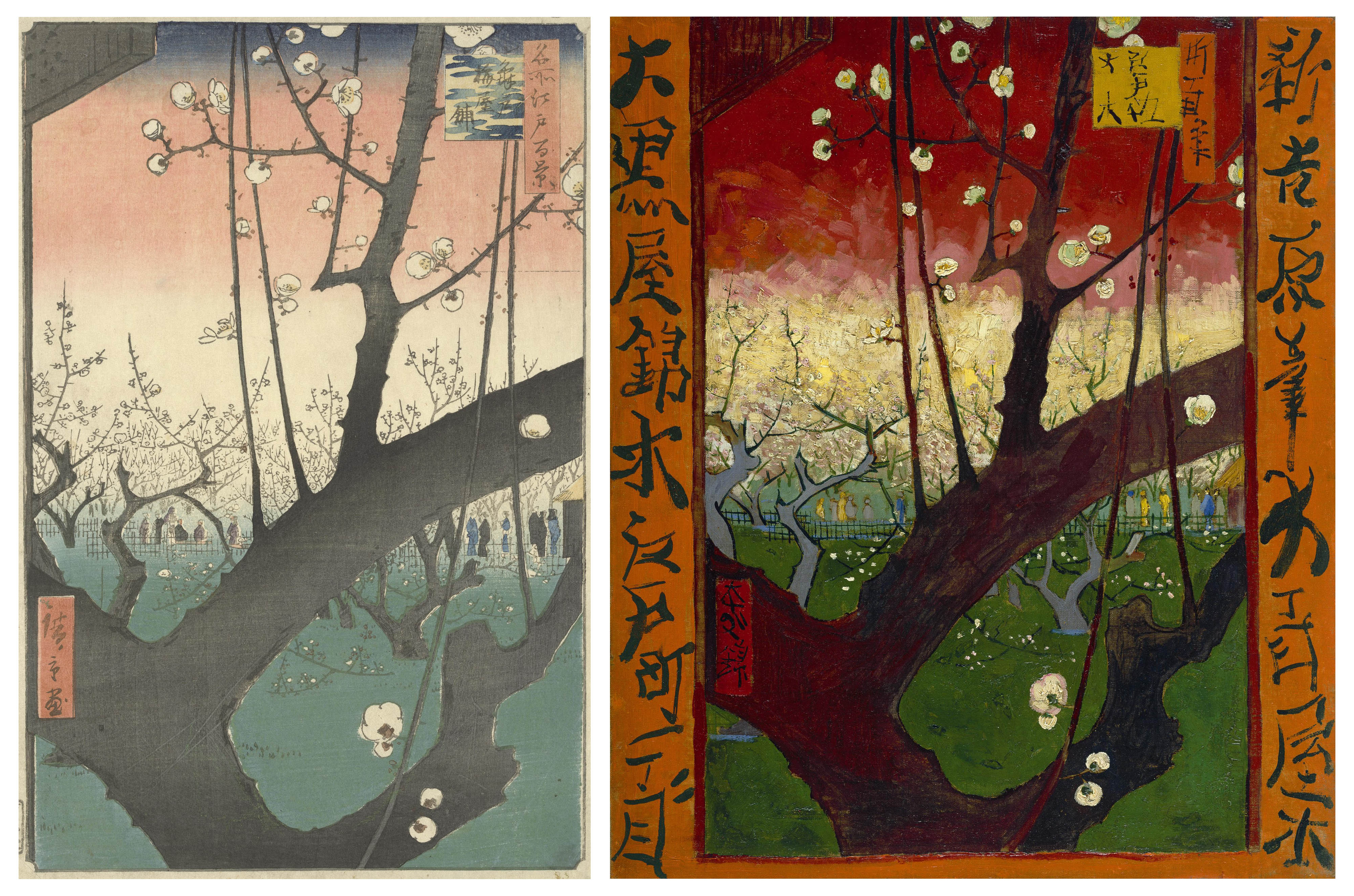
Western painters were stunned. Everything about Hokusai’s image contradicted the conventions of European academic art: the flat planes of color, the bold outlines, the radical compression of space, the sense of caught movement. It was a visual language they had never encountered — and it opened doors they hadn’t known existed.
- Van Gogh wrote to his brother Theo that Hokusai’s waves were “like claws,” and the influence runs throughout his later work — in the swirling skies, the bold outlines, the vibrating intensity of color
- Debussy kept a reproduction of The Great Wave beside him while composing La Mer (1905). He used the image on the cover of the first edition score, making the connection explicit
- Klimt and other Art Nouveau artists absorbed the decorative line quality and flattened forms of ukiyo-e into the foundations of their style
One woodblock print, and it sent ripples through painting, music, and design.
6. Is It a Painting? (A Question With a Surprising Answer)
If you’ve ever wondered where “the original” Great Wave hangs — here’s the twist: there is no single original.
The Great Wave is not a painting. It’s a woodblock print, designed from the start to be reproduced. Hokusai drew the design, professional carvers cut it into cherry-wood blocks, and printers pulled impression after impression — thousands of them, sold in Edo’s shops for about the price of a bowl of noodles.
That’s why “the original” exists in plural. The impressions that survive today rest in museums in Tokyo, London, New York, and Paris — each one printed from the same blocks in the 1830s, and each one entirely authentic.
And here’s the detail that surprises museum visitors most: the size. The Great Wave measures just 25.7 × 37.9 centimeters (about 10 × 15 inches) — smaller than a standard poster, closer to a large magazine page. People meeting it for the first time almost always say the same thing: “It’s so small.” Then they lean in closer. That’s when the wave gets you.
7. Where to See It
Original prints of The Great Wave are scattered across museum collections worldwide. Here’s where you can find them.
In Tokyo:
- Sumida Hokusai Museum (Sumida) — dedicated entirely to Hokusai; original prints shown in special exhibitions
- Ota Memorial Museum of Art (Harajuku) — ukiyo-e specialists with regular Hokusai exhibitions
Internationally:
- The British Museum (London) — holds a fine original impression
- The Metropolitan Museum of Art (New York) — owns multiple versions; high-resolution images free via their online collection
- Bibliothèque nationale de France (Paris) — holds an impression from Debussy’s era
The Great Wave is in the public domain, so reproductions are sold worldwide at every price point.
A Final Thought
The Great Wave is one of those rare images that reveals something new each time you look at it.
The wave is still moving — forever on the verge of breaking, never quite breaking. The oarsmen are still holding on. Fuji is still watching, unmoved. And somewhere in the folds of time, a man in his seventies was pressing a freshly inked block onto paper, thinking there was still so much left to learn.
Two hundred years later, that print is still arriving.
References
Primary Sources
- Katsushika Hokusai, postscript to One Hundred Views of Mount Fuji, Vol. 3 (1835)
- Claude Debussy, La Mer first edition score cover (1905) — Bibliothèque nationale de France
Museum & Institutional Resources
- The Metropolitan Museum of Art — metmuseum.org
- The British Museum — britishmuseum.org
- Sumida Hokusai Museum — hokusai-museum.jp
Further Reading
- Cynthia J. Bogel, Hokusai: Beyond the Great Wave, Thames & Hudson, 2017
- Timothy Clark ed., Hokusai: Beyond the Great Wave (British Museum), 2017
- Roger Keyes, Hokusai, Taschen, 2014
Image Credit
- Cover image: Katsushika Hokusai, The Great Wave off Kanagawa, from Thirty-Six Views of Mount Fuji, c. 1831 — Public domain via Wikimedia Commons
- Section 2: Katsushika Hokusai, Ejiri in Suruga Province (Sunshū Ejiri), c. 1831 — Public domain via The Metropolitan Museum of Art
- Section 3: Katsushika Hokusai, Gaifū Kaisei (Red Fuji), c. 1831 — Public domain via Wikimedia Commons; Katsushika Hokusai, Fujimigahara in Owari Province, c. 1831 — Public domain via The Metropolitan Museum of Art