Showing Posts From

Japonisme
The Great Wave Explained: Everything Behind Hokusai's Most Famous Print

The Great Wave Explained: Everything Behind Hokusai's Most Famous Print

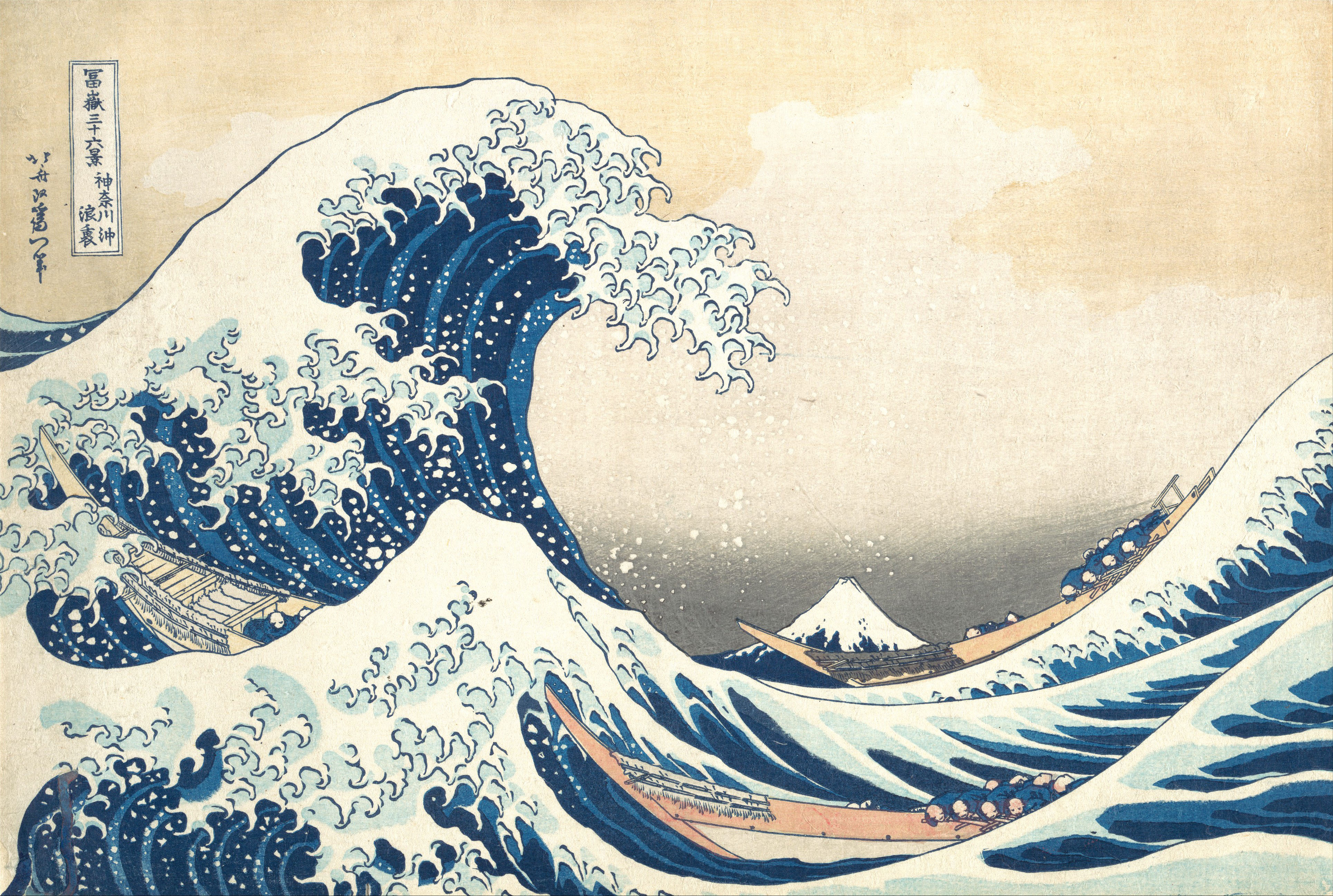
What is the most reproduced Japanese image in the world? The answer is Katsushika Hokusai's The Great Wave off Kanagawa. It's on mugs, T-shirts, phone cases, tote bags, and the walls of museums from Tokyo to New York. That wave has worked its way into everyday life so thoroughly that most people feel they already know it. But have you ever really looked at it? The longer you spend with this print, the more you find. The mountain you might have missed. The people in the water. The story behind why it exists at all — and who made it, and when. Let me take you through all of it.1. What's Actually In the Picture Start with the image itself. A massive wave fills the frame, its crest breaking into claw-like fingers of white foam, surging toward you with unmistakable force. That wave tends to consume the viewer's attention entirely — which is exactly why so many people miss what's sitting quietly in the background. Mount Fuji. Look carefully toward the center-right of the image, and there it is: small, serene, perfectly triangular against a pale sky. The contrast couldn't be more deliberate — a wave in violent motion, a mountain utterly still. Together they create something almost philosophical: the temporary and the permanent, the chaotic and the composed, held in a single frame. And there's one more thing. Tucked into the valleys between the waves are three long, narrow boats. The oarsmen are crouching low, pressing themselves against the hull, fighting to hold on. They're not being swept away — they're pushing back. That tension, so easy to overlook, is what keeps the whole image from tipping into despair.2. What Hokusai Was Really Doing: Observation Those claw-like tips of the wave — most people assume at first that they must be exaggerated. But Hokusai spent decades observing the sea and drawing it relentlessly. That shape was not invented. It was studied. The wave in the picture is an offshore ocean swell — the kind that fishermen genuinely faced when they headed out to sea. The three boats nestled in the troughs are not being swept away; they are pressing back. What Hokusai captured may be less about the ocean's force and more about the tension between the sea and the people who work it.3. It's One Print in a Series of Forty-Six Here's something that surprises most people: The Great Wave was never meant to stand alone. It's the opening print of a series called Thirty-Six Views of Mount Fuji — a collection exploring Fuji from different locations, seasons, distances, and weather conditions. Spring and winter. Storm and clear sky. From the coast, from the mountains, from the middle of the city. Here's a small charming detail: the series was so popular that Hokusai added ten more prints beyond the original thirty-six. So Thirty-Six Views actually contains forty-six images. The title stayed. Nobody seemed to mind. The Great Wave became the face of the series, but many of the other prints are extraordinary in their own right — and well worth finding.4. Hokusai Was in His Seventies When He Made It This is my favorite fact about this print. The Great Wave was made around 1831. Hokusai was in his early seventies. He had been painting for over sixty years by then. Six decades of practice, observation, and refinement went into that image. And yet Hokusai, looking back at his life's work, wrote this:"Everything I produced before the age of seventy is not worth taking into account. At seventy-three, I began to grasp the structures of birds and beasts, insects and fish, and the way plants grow. If I go on trying, I will surely understand them still better by the time I am eighty-six."When I first read those words, something shifted in me. The person who made one of the most recognized images in human history thought, at seventy, that he was just getting started.5. How One Print Changed Western Art The Great Wave reached Europe in the decades following Japan's opening to trade in the 1850s. What happened next is one of the most remarkable stories in art history. Western painters were stunned. Everything about Hokusai's image contradicted the conventions of European academic art: the flat planes of color, the bold outlines, the radical compression of space, the sense of caught movement. It was a visual language they had never encountered — and it opened doors they hadn't known existed.Van Gogh wrote to his brother Theo that Hokusai's waves were "like claws," and the influence runs throughout his later work — in the swirling skies, the bold outlines, the vibrating intensity of color Debussy kept a reproduction of The Great Wave beside him while composing La Mer (1905). He used the image on the cover of the first edition score, making the connection explicit Klimt and other Art Nouveau artists absorbed the decorative line quality and flattened forms of ukiyo-e into the foundations of their styleOne woodblock print, and it sent ripples through painting, music, and design.6. Where to See It Original prints of The Great Wave are scattered across museum collections worldwide. Here's where you can find them. In Tokyo:Sumida Hokusai Museum (Sumida) — dedicated entirely to Hokusai; original prints shown in special exhibitions Ota Memorial Museum of Art (Harajuku) — ukiyo-e specialists with regular Hokusai exhibitionsInternationally:The British Museum (London) — holds a fine original impression The Metropolitan Museum of Art (New York) — owns multiple versions; high-resolution images free via their online collection Bibliothèque nationale de France (Paris) — holds an impression from Debussy's eraThe Great Wave is in the public domain, so reproductions are sold worldwide at every price point.A Final Thought The Great Wave is one of those rare images that reveals something new each time you look at it. The wave is still moving — forever on the verge of breaking, never quite breaking. The oarsmen are still holding on. Fuji is still watching, unmoved. And somewhere in the folds of time, a man in his seventies was pressing a freshly inked block onto paper, thinking there was still so much left to learn. Two hundred years later, that print is still arriving.References Primary SourcesKatsushika Hokusai, postscript to One Hundred Views of Mount Fuji, Vol. 3 (1835) Claude Debussy, La Mer first edition score cover (1905) — Bibliothèque nationale de FranceMuseum & Institutional ResourcesThe Metropolitan Museum of Art — metmuseum.org The British Museum — britishmuseum.org Sumida Hokusai Museum — hokusai-museum.jpFurther ReadingCynthia J. Bogel, Hokusai: Beyond the Great Wave, Thames & Hudson, 2017 Timothy Clark ed., Hokusai: Beyond the Great Wave (British Museum), 2017 Roger Keyes, Hokusai, Taschen, 2014Image CreditCover image: Katsushika Hokusai, The Great Wave off Kanagawa, from Thirty-Six Views of Mount Fuji, c. 1831 — Public domain via Wikimedia CommonsRecommended Books For a deeper understanding of The Great Wave and Hokusai's world:Hokusai: Beyond the Great Wave — Timothy Clark ed. (British Museum / Thames & Hudson) Hokusai — Gian Carlo Calza (Phaidon Press)This post contains affiliate links.

What is Ukiyo-e? A Complete Beginner's Guide

What is Ukiyo-e? A Complete Beginner's Guide

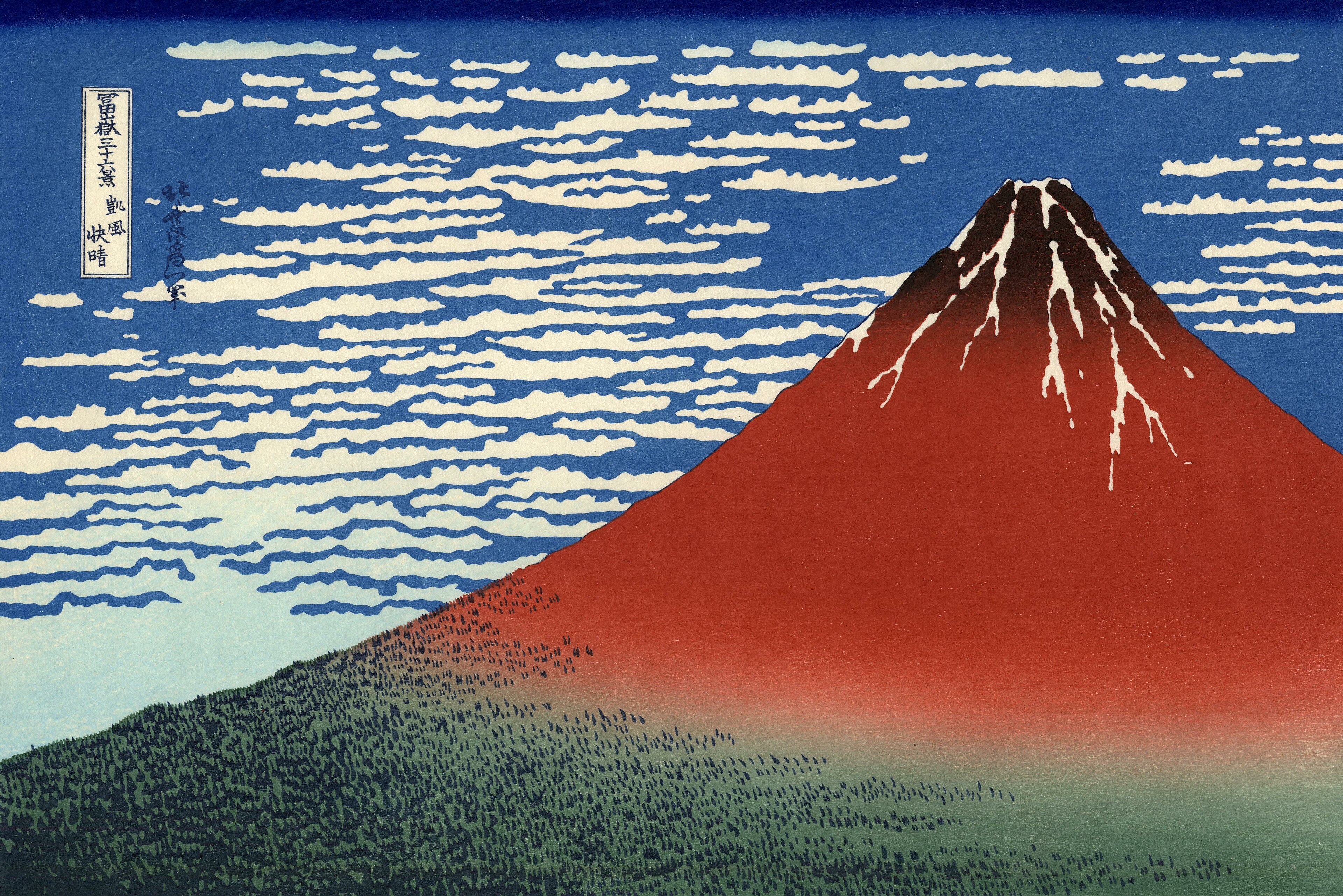
Have you ever seen The Great Wave off Kanagawa? That image of a towering wave about to crash, with Mount Fuji tiny in the background. Even if you've never set foot in an art museum, chances are you've come across it somewhere. What you may not know is that it's a woodblock print — one piece of a rich artistic tradition called ukiyo-e. But ukiyo-e is so much more than that single wave. For over two centuries, it was the heartbeat of everyday life in Japan. Then it crossed the ocean, stunned the likes of Van Gogh and Monet, and quietly rewired the course of Western art. Not bad for something that cost about as much as a bowl of noodles. Let me take you into this world from the very beginning.1. What Does "Ukiyo" Actually Mean? Let's start with the word itself. Ukiyo-e (浮世絵) literally means "pictures of the floating world." But to understand that, you first need to sit with the word ukiyo — because it carries a story of its own. Originally, the word was written as 憂き世 (uki-yo): a world of suffering, impermanence, and sorrow. A Buddhist concept, really — life as something fleeting and painful, something to be transcended rather than embraced. Then the Edo period arrived (1603–1868), and something shifted. The characters changed to 浮世, same pronunciation, entirely different feeling: a world to float through with pleasure, to enjoy right now, in this very moment. If life is going to be short anyway — why not make it beautiful? That small but radical reframing unleashed an entire culture. And ukiyo-e was born to capture it — the fashions, the faces, the fleeting moments of a city fully alive."To live in the moment, to savor the moon, the snow, the cherry blossoms — that is ukiyo." — Asai Ryōi, Tales of the Floating World (1661)2. Ukiyo-e Was Edo's Pop Culture Here's something that surprises almost everyone: ukiyo-e prints were not luxury items. A single print cost roughly the same as a bowl of soba noodles — the equivalent of maybe a few dollars today. Merchants, craftsmen, and ordinary townspeople could buy them, bring them home, and hang them on their walls. Think posters, or magazine spreads. That was ukiyo-e. What made this possible was a remarkably sophisticated division of labor:Eshi (絵師) — the artist who created the design Horishi (彫師) — the carver who transferred it onto wooden blocks Surishi (摺師) — the printer who applied ink and pressed paper Hanmoto (版元) — the publisher who financed and distributed everythingIt's not unlike a modern record label. The publisher scouted and signed talent, managed the production pipeline, and got the finished work into people's hands. The artist was the face. The system was the machine. Ukiyo-e is often described as "high art," and in retrospect, perhaps it is. But in its own time, it was something far more interesting — the vibrant, commercial, wonderfully populist media of its day.3. How the Themes Evolved: Beauty, Stage, Nature Over its long history, ukiyo-e kept reinventing itself. Follow the arc of its subjects and you start to feel the pulse of the Edo era itself. Early period — Bijin-ga (美人画): Portraits of beautiful women The art form found its first audience through images of courtesans, geisha, and fashionable townswomen. Artists like Suzuki Harunobu and Kitagawa Utamaro made their names here. These women were the celebrities of their age — and people collected their portraits with the same enthusiasm fans bring to idols today. Middle period — Yakusha-e (役者絵): Kabuki actor prints As kabuki theater grew into a cultural phenomenon, prints of beloved actors became must-haves. Imagine buying a poster of your favorite performer — that was the feeling. This is also when one of ukiyo-e's most enduring mysteries appeared: Tōshūsai Sharaku. He produced over 140 striking actor portraits — psychologically intense, almost unsettlingly perceptive — and then, after just ten months, vanished completely. His true identity has never been confirmed. Late period — Fūkeiga (風景画): Landscapes And then came the twist no one expected. Government censorship. The Tenpō Reforms of the 1840s banned images of kabuki actors and courtesans as morally corrupting. With their usual subjects off-limits, artists turned their gaze outward — to mountains, rivers, coastal roads, and open skies. That shift gave us The Great Wave. Censorship, of all things, pushed ukiyo-e toward its most celebrated work. History has a strange sense of humor.4. The Artists Worth Knowing You don't need to memorize every name. But these six shaped the art form — and each one is unforgettable in their own way. Suzuki Harunobu (1725–1770) The pioneer of nishiki-e, full-color woodblock printing using multiple blocks. Before Harunobu, prints were mostly two or three colors. He opened the door to everything that followed. Kitagawa Utamaro (1753–1806) The undisputed master of bijin-ga. His close-up portraits of women captured something beyond beauty — a sense of inner life, of thought and feeling. Even now, his figures hold your gaze. Tōshūsai Sharaku (active 1794–1795) Ten months. Over 140 prints. Then gone. No one knows who he really was. The mystery is part of the portrait. Katsushika Hokusai (1760–1849) Creator of The Great Wave and Thirty-Six Views of Mount Fuji. He kept working until he was 89, and reportedly said that he only began to truly understand nature at 70. A reminder that some artists take the long view. Utagawa Hiroshige (1797–1858) Where Hokusai was dramatic, Hiroshige was lyrical. His Fifty-three Stations of the Tōkaidō — all rain and mist and quiet melancholy — moved Van Gogh deeply enough to paint direct copies in oil. Utagawa Kuniyoshi (1797–1861) The rebel of the group. Known for bold warrior prints and wildly inventive compositions — including one famous image where dozens of tiny naked figures pile together to form the shape of Daruma. He pushed against censorship at every turn, with wit and barely concealed defiance.5. The Day Ukiyo-e Changed Western Art In 1853, Commodore Perry's ships arrived and Japan opened its ports after centuries of isolation. Among the goods that flowed westward in the years that followed: ukiyo-e prints. The effect on European artists was immediate and profound. Everything about ukiyo-e contradicted what European academic painting had trained them to value. Flat planes of color instead of careful shading. Bold outlines instead of blended transitions. Asymmetrical compositions, radical cropping, subjects caught mid-motion rather than posed. It was, for many of them, like seeing clearly for the first time.Van Gogh painted direct copies of Hiroshige's rain scenes in oil, and wrote to his brother: "These prints... are as refreshing as spring." Monet collected over 200 ukiyo-e prints and built a Japanese-style bridge in his garden at Giverny — the one he painted obsessively for the rest of his life. Degas borrowed ukiyo-e's off-center framing and unconventional angles for his scenes of dancers.This cultural current became known as Japonisme, and its influence runs through Impressionism, Art Nouveau, and the foundations of modern graphic design. There's a quiet irony in all of this: by the time ukiyo-e was transforming Paris, it had already fallen out of fashion in Japan. The Japanese had to learn the value of what they'd made from halfway around the world.6. Where to See Ukiyo-e Today Ukiyo-e isn't locked away in archives. You can stand in front of these works — and feel them. In Tokyo:Ota Memorial Museum of Art (Harajuku) — Japan's finest ukiyo-e specialist museum, with a rotating collection drawn from over 12,000 works. A quiet, intimate space that rewards slow looking. Sumida Hokusai Museum — dedicated entirely to Hokusai's life and work. The building itself, designed by architect Kazuyo Sejima, is worth seeing. Tokyo National Museum (Ueno) — one of the world's great collections, with ukiyo-e holdings that could take days to properly explore.Beyond Japan:The Metropolitan Museum of Art (New York) — over 5,000 Japanese prints, many accessible through their online collection. The British Museum (London) — exceptional holdings including rare early works and important pieces from every major period.A Final Thought Ukiyo-e came from a simple conviction: that fleeting moments are worth preserving. A wave. A woman caught adjusting her robe. An actor's face in the middle of a performance. These ordinary, passing things — someone decided they deserved to last. Centuries later, they still do. Whether you're encountering Hokusai for the first time, or looking for a way deeper into Japan's artistic soul — ukiyo-e is a door worth walking through. I hope this is a place you'll want to keep returning to.References Primary SourcesAsai Ryōi, Tales of the Floating World (Ukiyo Monogatari, 1661) Vincent van Gogh, letters to Theo van Gogh (1888) — Van Gogh MuseumMuseum & Institutional ResourcesThe Metropolitan Museum of Art, "Ukiyo-e" — metmuseum.org The British Museum, Japanese prints collection — britishmuseum.org Library of Congress, "The Floating World of Ukiyo-e" — loc.gov Ota Memorial Museum of Art — ukiyoe-ota-muse.jp Sumida Hokusai Museum — hokusai-museum.jp Tokyo National Museum — tnm.jpFurther ReadingFrederick Harris, Ukiyo-e: The Art of the Japanese Print, Tuttle Publishing, 2011 Gian Carlo Calza, Ukiyo-e, Phaidon Press, 2003 Sandy Kita et al., Floating World of Ukiyo-E: Shadows, Dreams and Substance, Abrams, 2001Image CreditCover image: Katsushika Hokusai, Gaifū Kaisei (Fine Wind, Clear Morning / Red Fuji), from Thirty-Six Views of Mount Fuji, c. 1831 — Public domain via Wikimedia CommonsRecommended Books If you'd like to explore ukiyo-e further, these books are excellent starting points:Ukiyo-e: The Art of the Japanese Print — Frederick Harris (Tuttle Publishing) Hokusai — Gian Carlo Calza (Phaidon Press) Floating World of Ukiyo-E: Shadows, Dreams and Substance — Sandy Kita et al. (Abrams)This post contains affiliate links.