Showing Posts From
Thirty six views
- NEW
- 25 Apr, 2026
- |
- |
-
Aiiro
Hokusai's Thirty-Six Views of Mount Fuji: A Visual Guide to All 46 Prints
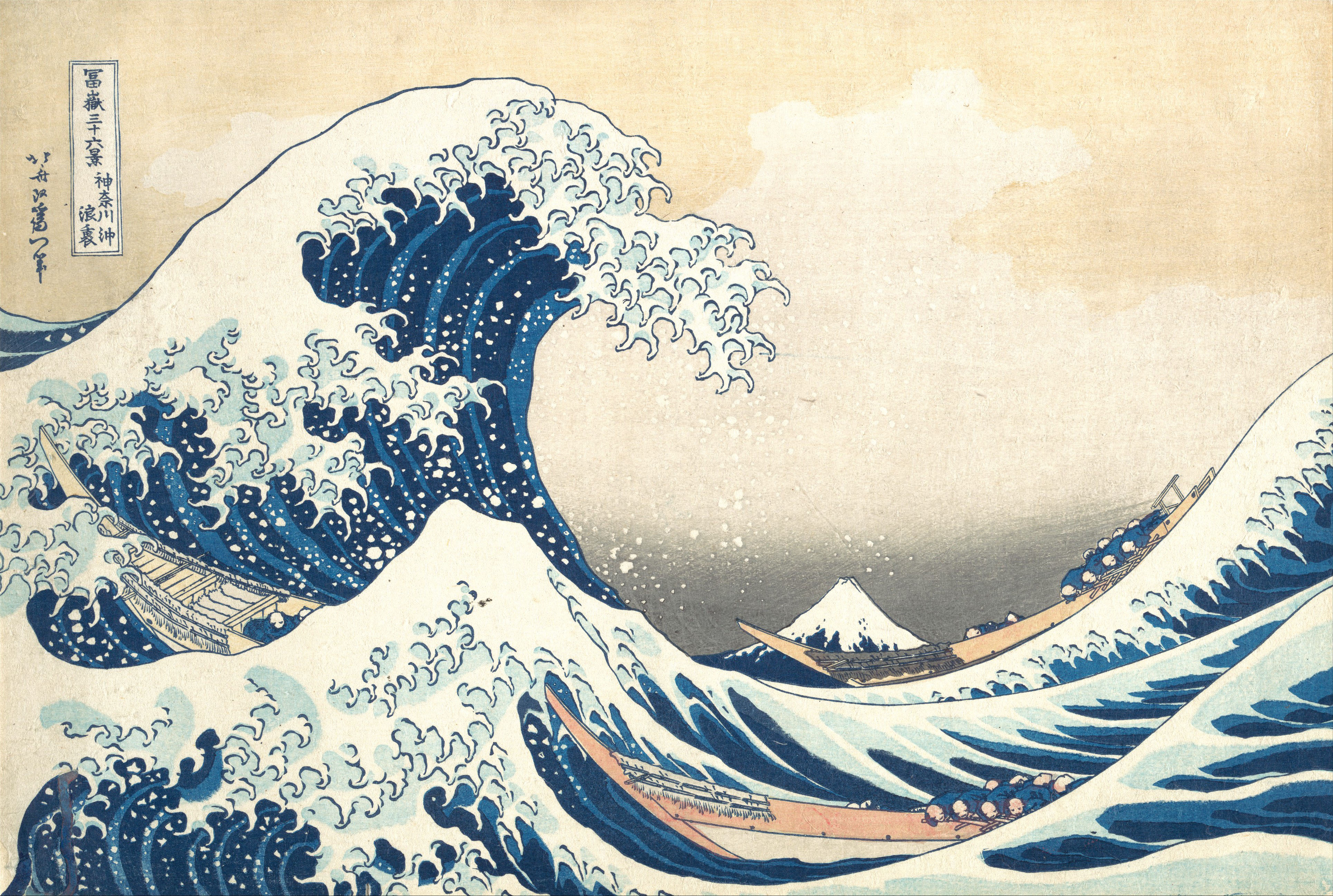
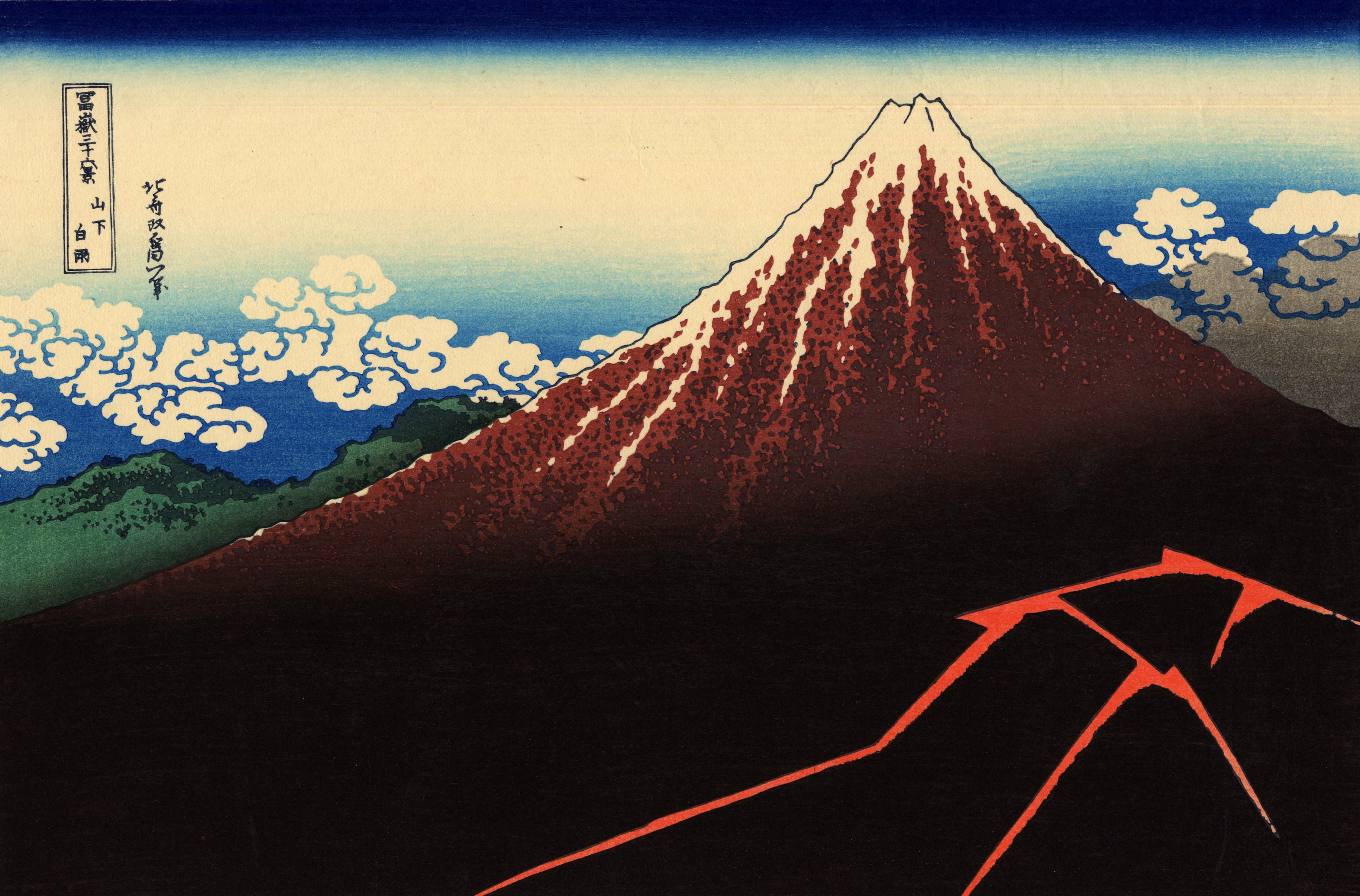
Most people who know The Great Wave don't know that it was the first print in a series of forty-six. Why was it chosen to open the series? Part of the answer lies in a color. Around 1831, when the series launched, a vivid imported pigment called bero-ai — Prussian blue, brought to Japan through Dutch trade — was sweeping through Edo. Its intensity and clarity far exceeded anything available in traditional Japanese pigments, and artists and craftspeople took to it immediately. Hokusai used this new blue to produce the color of that wave. Blue that stops the eye in an instant — The Great Wave was the perfect front cover for the series, designed to capture attention from the first moment. Thirty-Six Views of Mount Fuji is Hokusai's signature series: a collection of prints depicting the mountain from different locations, seasons, and conditions, published from 1831 onward. Today I'd like to walk through it, focusing on the prints that stay with you.1. How the Series Is Structured A quick overview before we look at individual works. The title says thirty-six views. The actual series contains forty-six prints. The first thirty-six were so popular that Hokusai added ten more — and the title stayed as it was. The two groups are known as Omote-Fuji ("Front Fuji") and Ura-Fuji ("Back Fuji"). The names come from the orientation of the mountain: the face of Fuji that Edo residents knew and recognized is the "front"; views from the other side are the "back." Omote-Fuji (the first 36 prints): Multi-color printing in bold blue and red. Strong compositions, strong colors. Ura-Fuji (the additional 10 prints): Predominantly quieter, blue-toned prints. A more subdued mood.2. Ten Prints Worth Knowing A selection from the series — the ones I keep coming back to. The Great Wave off Kanagawa — Motion and stillness The face of the series. Beneath a wave about to break, Mount Fuji sits small and still in the far distance. The contrast between the ocean's violence and the mountain's composure is as stark as it gets — and it holds. Gaifū Kaisei ("Fine Wind, Clear Morning") — Red Fuji Fuji at summer dawn, the mountain flushed red in the early light. Where The Great Wave is turbulent, this print is pure stillness. The mountain is simply there. That's enough. Sanka Hakuu ("Thunderstorm Beneath the Summit") — Black Fuji The peak in sunshine, the lower slopes in a thunderstorm. Two kinds of weather in one frame — a showcase of Hokusai's compositional intelligence. People in a storm Hats and parcels flying through the air, travelers chasing after them in the wind — a scene of comic chaos, with Fuji anchoring the background, utterly unmoved. Fuji from a riverbank A wide river, Fuji reflected and distant. The balance between the mirrored water and the hazy mountain is quietly beautiful. Fishermen and Fuji Fishermen setting nets in a river. The labor of daily life in the foreground, Fuji in the distance — a gentle comment on the relationship between human activity and the natural world. Fuji from the harbor Rooftops and boats in a fishing town, with a faint Fuji barely visible through the haze. The mountain dissolved into everyday life. The woodcutters' clearing Men working a massive tree. The closeness and scale of the timber against the smallness and distance of Fuji gives you a sense of nature's proportions. Fuji in winter with cranes A flock of cranes crossing a winter sky, Fuji standing in the stillness. A print from which all sound has been removed. Shojin Tozan (from Ura-Fuji) — Fuji from the inside Climbers ascending the mountain, seen from within — toward the dark opening of the crater. An unusually rare perspective: looking into the mountain from the inside. There's nothing else quite like it in the series.3. The Game of Finding Fuji Some prints in this series show almost no Fuji at all. A small shape in the corner of the frame, a faint outline through the haze — there are several prints where the mountain barely appears. Looking for it is its own game, and one Hokusai may have intended as a quiet joke. Try going through all forty-six with that in mind. The series takes on an extra dimension.4. Omote-Fuji and Ura-Fuji: What's the Difference? Omote-Fuji is Hokusai showing you the Fuji he wanted to show you: bold, vivid, compositionally daring. The Great Wave, Red Fuji, Black Fuji — all here. Ura-Fuji is quieter and more blue-toned — the feeling of encountering Fuji unexpectedly on a journey rather than standing before it. Less showy than Omote-Fuji, but worth the patience. Among collectors, the condition of the printing blocks and the quality of individual impressions are also points of interest across the two groups.5. How to Experience the Series In fact, seeing all forty-six prints at once is a rare opportunity. The series is spread across collections around the world, and only a portion tends to be on view at any given time. The most reliable place to start is online. The Metropolitan Museum of Art (New York) makes its holdings from Thirty-Six Views of Mount Fuji freely available in high resolution through their digital collection. The detail you can examine on screen is remarkable. For the real thing, check exhibition schedules first. The Sumida Hokusai Museum (Tokyo) and the Ōta Memorial Museum of Art (Tokyo) both show original prints from the series, but only when their exhibition programming calls for it. Always check what's on before you visit.A Final Thought Going through all forty-six prints, you sense something — a quiet, persistent compulsion to face the same mountain again and again, from every possible angle and in every possible light. Hokusai changed the season, changed the weather, changed the vantage point, placed different human lives in the foreground — and kept returning. And still, by his own account, felt he hadn't finished. You can look at any single print and find something worth holding. Or you can travel through all forty-six the way you'd travel a road — slowly, in order, watching the mountain change. Either way, the series meets you where you are.ReferencesThe Metropolitan Museum of Art, Thirty-six Views of Mount Fuji digital collection — metmuseum.org Sumida Hokusai Museum — hokusai-museum.jp Henry D. Smith II, Hokusai: One Hundred Views of Mt. Fuji, Braziller, 1988 Roger Keyes, Hokusai, Taschen, 2014Image CreditCover image: Katsushika Hokusai, Sanka Hakuu (Thunderstorm beneath the Summit / Black Fuji), from Thirty-Six Views of Mount Fuji, c. 1831 — Public domain via Wikimedia CommonsRecommended Books To go further with Hokusai's Fuji series:Hokusai: One Hundred Views of Mt. Fuji — Henry D. Smith II (Braziller) Hokusai: Beyond the Great Wave — Timothy Clark ed. (British Museum / Thames & Hudson)This post contains affiliate links.
- 10 Apr, 2026
- |
- |
-
Aiiro
The Great Wave Explained: Everything Behind Hokusai's Most Famous Print
What is the most reproduced Japanese image in the world? The answer is Katsushika Hokusai's The Great Wave off Kanagawa. It's on mugs, T-shirts, phone cases, tote bags, and the walls of museums from Tokyo to New York. That wave has worked its way into everyday life so thoroughly that most people feel they already know it. But have you ever really looked at it? The longer you spend with this print, the more you find. The mountain you might have missed. The people in the water. The story behind why it exists at all — and who made it, and when. Let me take you through all of it.1. What's Actually In the Picture Start with the image itself. A massive wave fills the frame, its crest breaking into claw-like fingers of white foam, surging toward you with unmistakable force. That wave tends to consume the viewer's attention entirely — which is exactly why so many people miss what's sitting quietly in the background. Mount Fuji. Look carefully toward the center-right of the image, and there it is: small, serene, perfectly triangular against a pale sky. The contrast couldn't be more deliberate — a wave in violent motion, a mountain utterly still. Together they create something almost philosophical: the temporary and the permanent, the chaotic and the composed, held in a single frame. And there's one more thing. Tucked into the valleys between the waves are three long, narrow boats. The oarsmen are crouching low, pressing themselves against the hull, fighting to hold on. They're not being swept away — they're pushing back. That tension, so easy to overlook, is what keeps the whole image from tipping into despair.2. What Hokusai Was Really Doing: Observation Those claw-like tips of the wave — most people assume at first that they must be exaggerated. But Hokusai spent decades observing the sea and drawing it relentlessly. That shape was not invented. It was studied. The wave in the picture is an offshore ocean swell — the kind that fishermen genuinely faced when they headed out to sea. The three boats nestled in the troughs are not being swept away; they are pressing back. What Hokusai captured may be less about the ocean's force and more about the tension between the sea and the people who work it.3. It's One Print in a Series of Forty-Six Here's something that surprises most people: The Great Wave was never meant to stand alone. It's the opening print of a series called Thirty-Six Views of Mount Fuji — a collection exploring Fuji from different locations, seasons, distances, and weather conditions. Spring and winter. Storm and clear sky. From the coast, from the mountains, from the middle of the city. Here's a small charming detail: the series was so popular that Hokusai added ten more prints beyond the original thirty-six. So Thirty-Six Views actually contains forty-six images. The title stayed. Nobody seemed to mind. The Great Wave became the face of the series, but many of the other prints are extraordinary in their own right — and well worth finding.4. Hokusai Was in His Seventies When He Made It This is my favorite fact about this print. The Great Wave was made around 1831. Hokusai was in his early seventies. He had been painting for over sixty years by then. Six decades of practice, observation, and refinement went into that image. And yet Hokusai, looking back at his life's work, wrote this:"Everything I produced before the age of seventy is not worth taking into account. At seventy-three, I began to grasp the structures of birds and beasts, insects and fish, and the way plants grow. If I go on trying, I will surely understand them still better by the time I am eighty-six."When I first read those words, something shifted in me. The person who made one of the most recognized images in human history thought, at seventy, that he was just getting started.5. How One Print Changed Western Art The Great Wave reached Europe in the decades following Japan's opening to trade in the 1850s. What happened next is one of the most remarkable stories in art history. Western painters were stunned. Everything about Hokusai's image contradicted the conventions of European academic art: the flat planes of color, the bold outlines, the radical compression of space, the sense of caught movement. It was a visual language they had never encountered — and it opened doors they hadn't known existed.Van Gogh wrote to his brother Theo that Hokusai's waves were "like claws," and the influence runs throughout his later work — in the swirling skies, the bold outlines, the vibrating intensity of color Debussy kept a reproduction of The Great Wave beside him while composing La Mer (1905). He used the image on the cover of the first edition score, making the connection explicit Klimt and other Art Nouveau artists absorbed the decorative line quality and flattened forms of ukiyo-e into the foundations of their styleOne woodblock print, and it sent ripples through painting, music, and design.6. Where to See It Original prints of The Great Wave are scattered across museum collections worldwide. Here's where you can find them. In Tokyo:Sumida Hokusai Museum (Sumida) — dedicated entirely to Hokusai; original prints shown in special exhibitions Ota Memorial Museum of Art (Harajuku) — ukiyo-e specialists with regular Hokusai exhibitionsInternationally:The British Museum (London) — holds a fine original impression The Metropolitan Museum of Art (New York) — owns multiple versions; high-resolution images free via their online collection Bibliothèque nationale de France (Paris) — holds an impression from Debussy's eraThe Great Wave is in the public domain, so reproductions are sold worldwide at every price point.A Final Thought The Great Wave is one of those rare images that reveals something new each time you look at it. The wave is still moving — forever on the verge of breaking, never quite breaking. The oarsmen are still holding on. Fuji is still watching, unmoved. And somewhere in the folds of time, a man in his seventies was pressing a freshly inked block onto paper, thinking there was still so much left to learn. Two hundred years later, that print is still arriving.References Primary SourcesKatsushika Hokusai, postscript to One Hundred Views of Mount Fuji, Vol. 3 (1835) Claude Debussy, La Mer first edition score cover (1905) — Bibliothèque nationale de FranceMuseum & Institutional ResourcesThe Metropolitan Museum of Art — metmuseum.org The British Museum — britishmuseum.org Sumida Hokusai Museum — hokusai-museum.jpFurther ReadingCynthia J. Bogel, Hokusai: Beyond the Great Wave, Thames & Hudson, 2017 Timothy Clark ed., Hokusai: Beyond the Great Wave (British Museum), 2017 Roger Keyes, Hokusai, Taschen, 2014Image CreditCover image: Katsushika Hokusai, The Great Wave off Kanagawa, from Thirty-Six Views of Mount Fuji, c. 1831 — Public domain via Wikimedia CommonsRecommended Books For a deeper understanding of The Great Wave and Hokusai's world:Hokusai: Beyond the Great Wave — Timothy Clark ed. (British Museum / Thames & Hudson) Hokusai — Gian Carlo Calza (Phaidon Press)This post contains affiliate links.