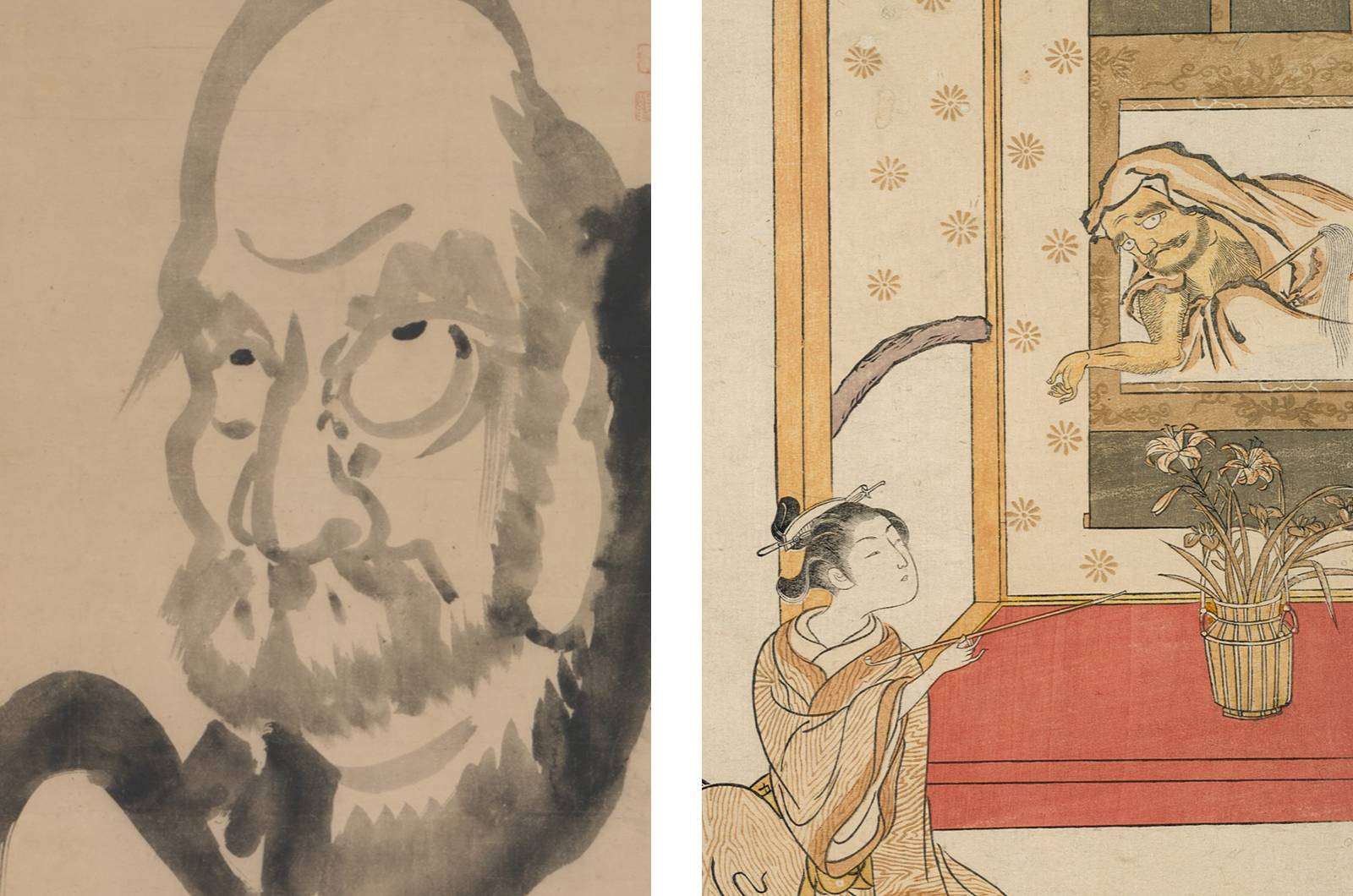
You know Zen. Everyone does, by now. Meditation. Mindfulness. A quiet garden of stone and raked sand.
But zenga?
Zenga are paintings made by Zen monks to pass on the teachings of Zen. Not painted to be sold. Not painted to decorate a room. If you love Zen, these are the paintings to know about.
And here is the thing about them: zenga belong to the same era as ukiyo-e.
In 1765, the year the full-color nishiki-e — the “brocade print” — was born in Edo, present-day Tokyo, a seventy-nine-year-old monk was painting Bodhidharma in nothing but black ink, at a temple along the great road between Edo and Kyoto. Around the time Hokusai sent that wave out into the world, a monk past eighty was painting a circle, a triangle, and a square in Hakata.
Paintings made to be sold, and paintings that were never for sale. Paintings that pushed technique to its limit, and paintings that didn’t treat technique as the point at all. Two opposites, in the same country, in the same years — and neither one withering.
I had assumed zenga would be quiet and solemn. That assumption was pleasantly wrong, and by the end it had changed the way I see ukiyo-e as well. But that part comes later.
Let’s start with ukiyo-e.
1. Chasing the Word Ukiyo
Ukiyo — the “floating world” of ukiyo-e. A strange word, isn’t it, once you stop and look at it.
It was originally written with different characters: 憂き世, uki-yo, “the world of sorrow.” The phrase came out of the Buddhist view that this world is full of suffering. Life is fleeting, and it rarely goes the way you want it to. That was uki-yo.
Then the Edo period arrived, and the meaning flipped clean over.
If it’s all fleeting anyway, let’s enjoy it. Live tonight, live today, as fully as we can.
That mood spread through the townspeople, the characters changed along with it, and 憂き世 became 浮き世 — the “floating world.” The sound stayed exactly the same. Only the inside was turned upside down. (Words do this, apparently.)
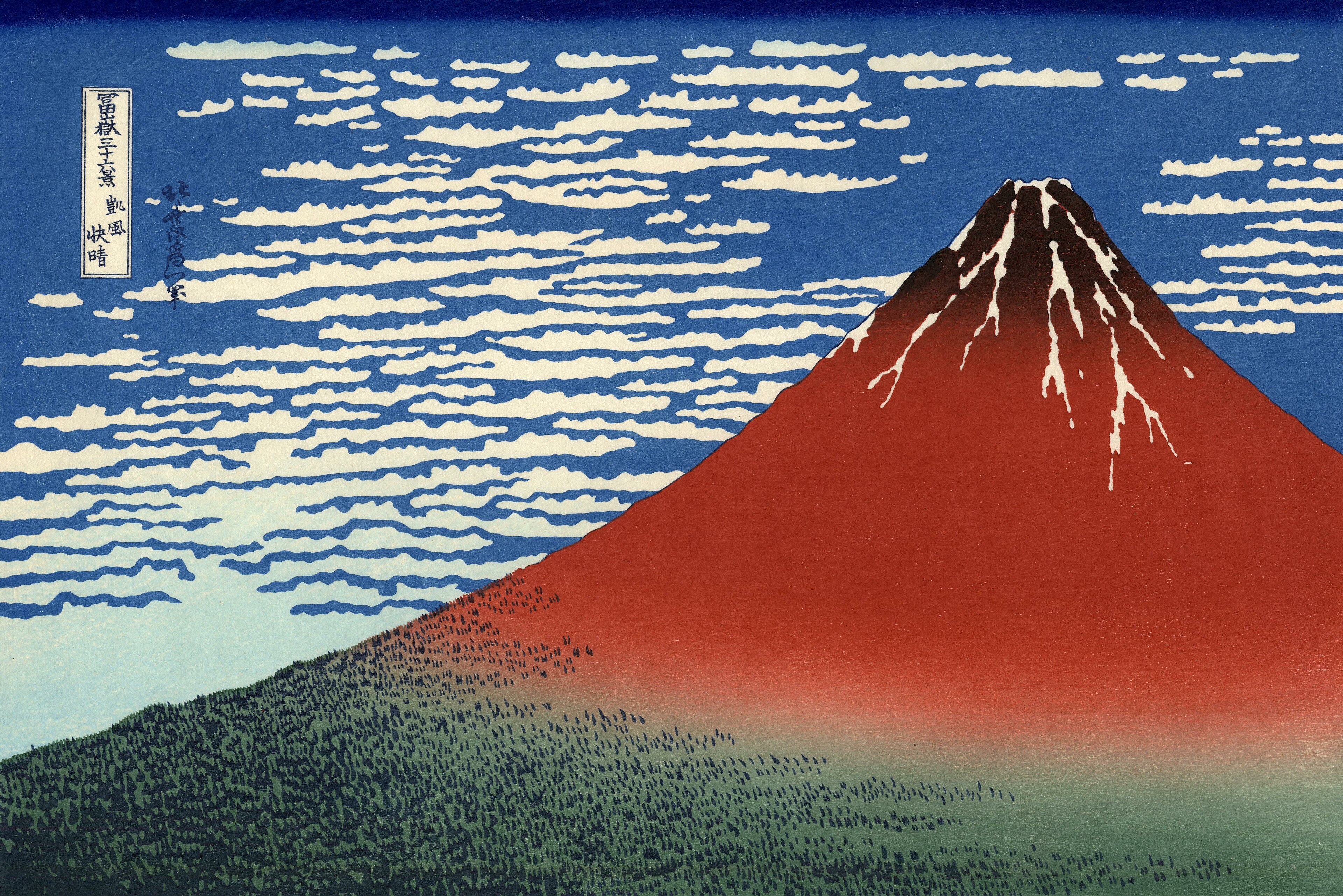
Ukiyo-e are pictures of precisely that floating world: courtesans of the Yoshiwara, Edo’s licensed entertainment quarter; kabuki actors; waves; Mount Fuji; parties beneath the cherry blossoms — the shine of being alive, packed in without restraint.
A single print cost about as much as a bowl of noodles. People in Edo bought them the way we buy posters and magazines, pinned them up in their rooms, and showed them off to friends.
A worldview that said life is fleeting turned, in the streets of Edo, into energy that said so let’s enjoy it now. That is what produced ukiyo-e.
2. Zenga — The Paintings That Were Never for Sale
While the streets of Edo were busy painting now, there were people holding brushes somewhere else entirely.
Monks.
The tradition of painting Zen subjects in ink is very old. It crossed the sea from China during the Kamakura period (1185–1333), arriving together with Zen Buddhism itself. But the paintings people know and love today as zenga are a little different from that refined, high-formal ink painting — looser, plainer, freer. And they were painted during the Edo period (1603–1868).
So zenga is not some distant ancestor of ukiyo-e. It’s a neighbor, living in the same years.
They start from completely different places.
Ukiyo-e doesn’t exist unless it sells. There was a publisher, a designer, a carver, a printer — an industry with a crowd of professionals in it. Plan a print, carve it, press it, send hundreds of identical copies out into the world. Which means someone had to make something the market would accept.
Zenga carried none of that.
A monk picks up a brush and paints as he pleases. It isn’t merchandise. It doesn’t need to catch on. And because nothing is printed, the same painting never happens twice.
So what was it for? For getting something across. For taking something that has no shape of its own — the state of awakening, say — and making it visible. If you can’t read, a picture still reaches you.
If ukiyo-e was a painting to be bought, zenga was a painting to be handed over.
And here is what I find remarkable: they were trying to reach the same people. (The ones receiving paintings from monks were townspeople — the same sort of people who were buying prints in Edo.)
Hakuin Ekaku and Sengai Gibon. Sixty-four years separate their births, and both of them lived right in the middle of ukiyo-e.
3. Hakuin Ekaku — Ink Alone, in the Age of Color
In 1765, the nishiki-e was born in Edo.
It started with a calendar exchange. Wealthy townspeople were making elaborate picture-calendars to show off to one another, the competition kept escalating, and the technique of printing color over color over color came together all at once. (Technology arriving out of a game. I love that.)
At the center of it was Suzuki Harunobu. Slender, graceful lines; fragile-looking young women; pale colors laid one over another, print after print, so delicate they make you exhale. It was the moment ukiyo-e became an art of color.
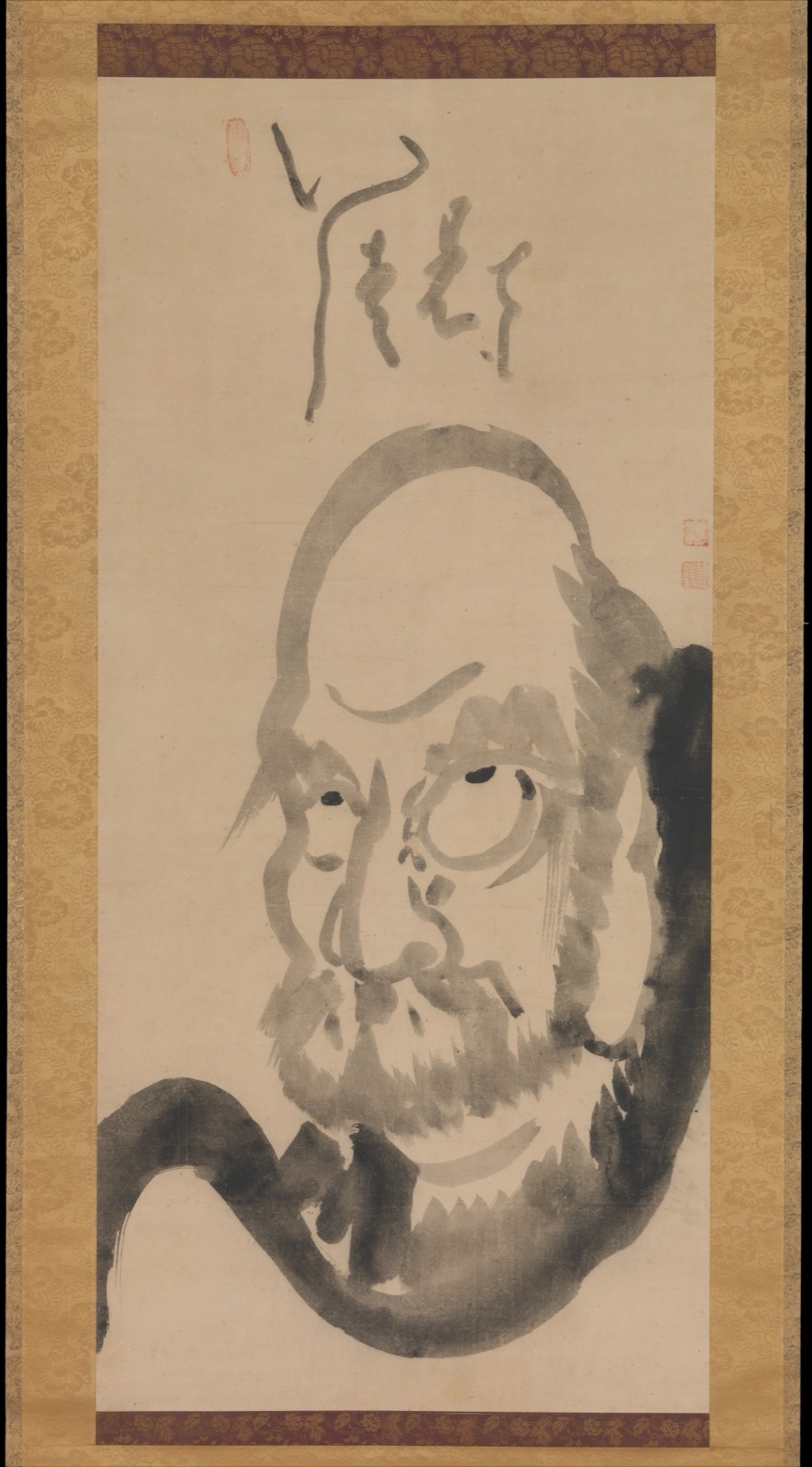
Around that same time, in Hara — a post town on the Tōkaidō, the great road linking Edo and Kyoto — a seventy-nine-year-old monk was painting in nothing but ink.
Hakuin Ekaku (1686–1769).
A Rinzai Zen monk of the Edo period, later remembered as the man who brought Rinzai Zen back to life in Japan. (His family ran a business. Born into a house that sold things, he became a man who painted things that were not for sale.)
The first time I saw Hakuin’s Bodhidharma, I’ll admit it: I flinched a little.
Those glaring eyes. Those thick strokes of ink. It is less a beautiful picture than a picture that is looking straight at you.
Bodhidharma — Daruma in Japanese — is the figure said to have carried Zen to China, and legend has him sitting nine years facing a wall. Nine years of will seemed to be seeping out of those rough lines.
Harunobu painted that same Bodhidharma.
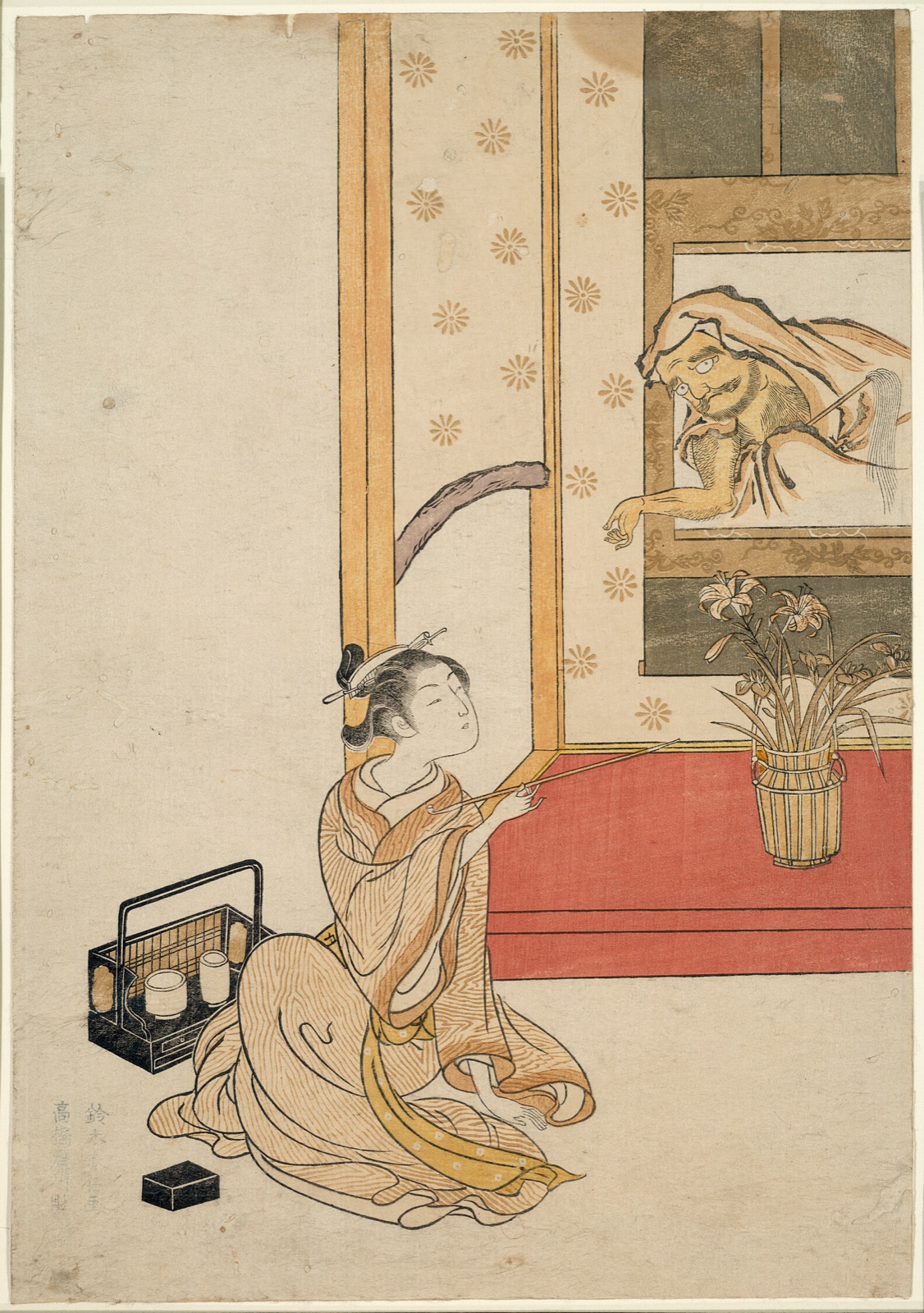
A young woman holds out a long pipe, and the Bodhidharma inside the hanging scroll leans out over the edge of his own picture to take it. (Offering Daruma a smoke. The nerve of it.)
But look at the scroll on the wall. That is a zenga — the same kind of painting Hakuin was making in those same years, further down the Tōkaidō. Zenga was hanging on walls in Edo, and ukiyo-e was making jokes about it. And the fact that this particular joke worked as a product tells you how familiar a Daruma scroll must have been.
What Hakuin gave his life to was taking a Zen that had gone formal and lifeless and making it a living teaching again.
Painting was one of the methods he chose.
And he only began painting in earnest in his sixties. Bodhidharma, Hotei the laughing monk, Kannon the bodhisattva of compassion — almost none of it was merchandise. It was handed to disciples and lay followers. Something closer to a letter: look at this, and think it over.
These are not paintings arranged by skill. But there is a spirit in them. The sense that you are the one being questioned is, I suspect, not your imagination.
Hakuin died in 1769. Harunobu died the following year, in 1770.
One man layered color as far as it would go; the other never used any. They set down their brushes within a few years of each other.
4. Sengai Gibon — The Zen That Laughs
Now move the clock forward a few decades.
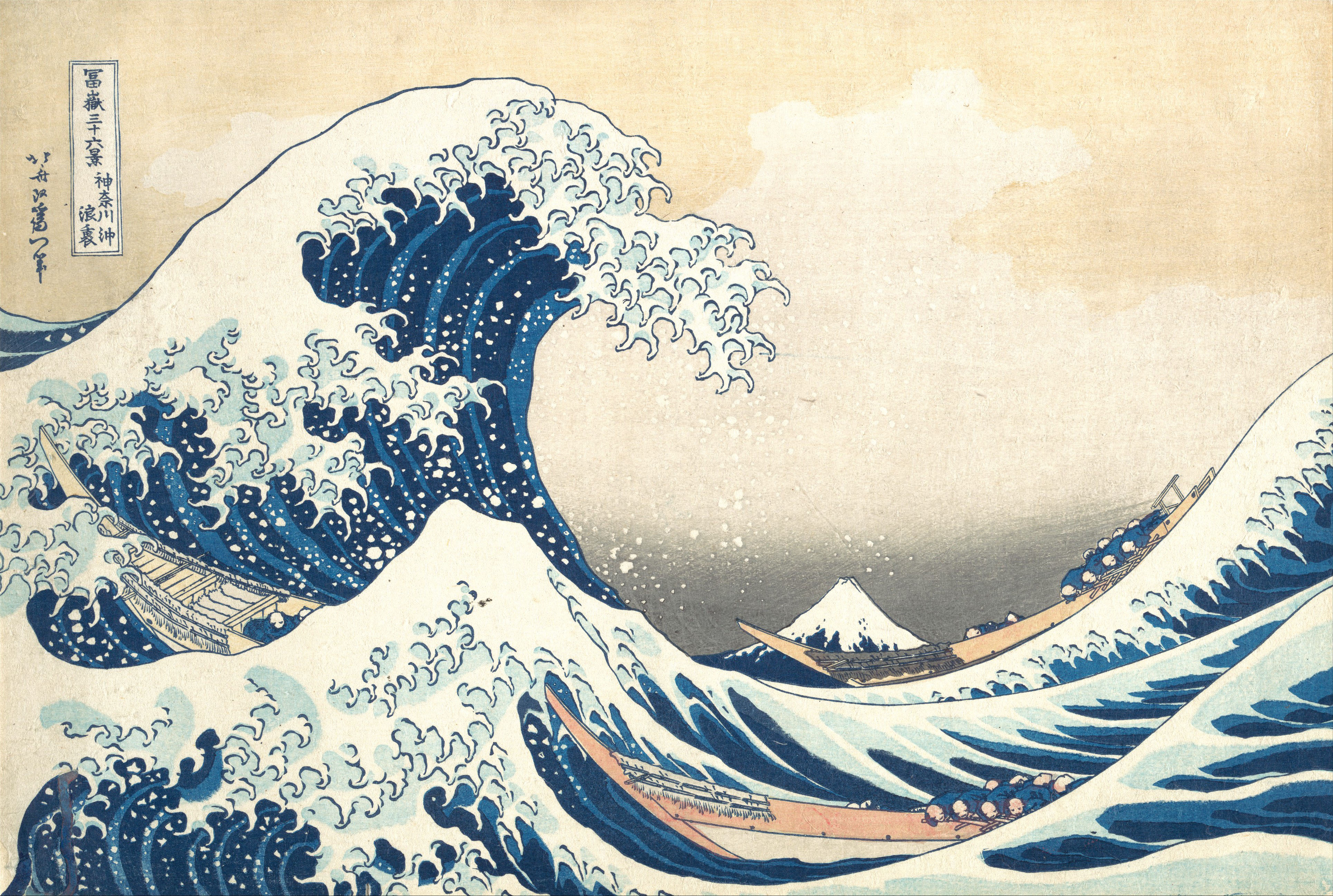
Hokusai sent The Great Wave off Kanagawa out into the world around 1831. Hiroshige’s Fifty-three Stations of the Tōkaidō followed about two years later. This is ukiyo-e at its most dazzling.
And in Hakata — a bustling merchant port on Kyushu, the southwestern island, some 900 kilometers from Edo — a monk past eighty was holding a brush.
Sengai Gibon (1750–1837).
He served twenty-two years as abbot of Shōfuku-ji, a Zen temple in Hakata, and retired in 1811. It was only after that retirement that he began painting in earnest. Which means Sengai’s peak as a painter overlaps, entirely, with the peak of Hokusai and Hiroshige.
In Edo they were printing waves. In Hakata a man was painting a circle, a triangle, and a square. Same country, same years.
Late in life he announced that he was finished with painting, and people kept asking anyway, and he kept quietly painting — there are stories like that about him. He was, in other words, a man whose pictures people wanted.
I had expected Zen painting to be quiet and solemn.
It isn’t.
He’s laughing.
A painting made by a monk, with its mouth wide open, laughing.
The two figures in Kanzan and Jittoku are a pair of gloriously unorthodox Zen monks said to have lived in Tang-dynasty China — Hanshan and Shide, as they are known in Chinese. They were remembered as men who were always laughing, and in Sengai’s hands they are laughing hard enough to burst off the paper.
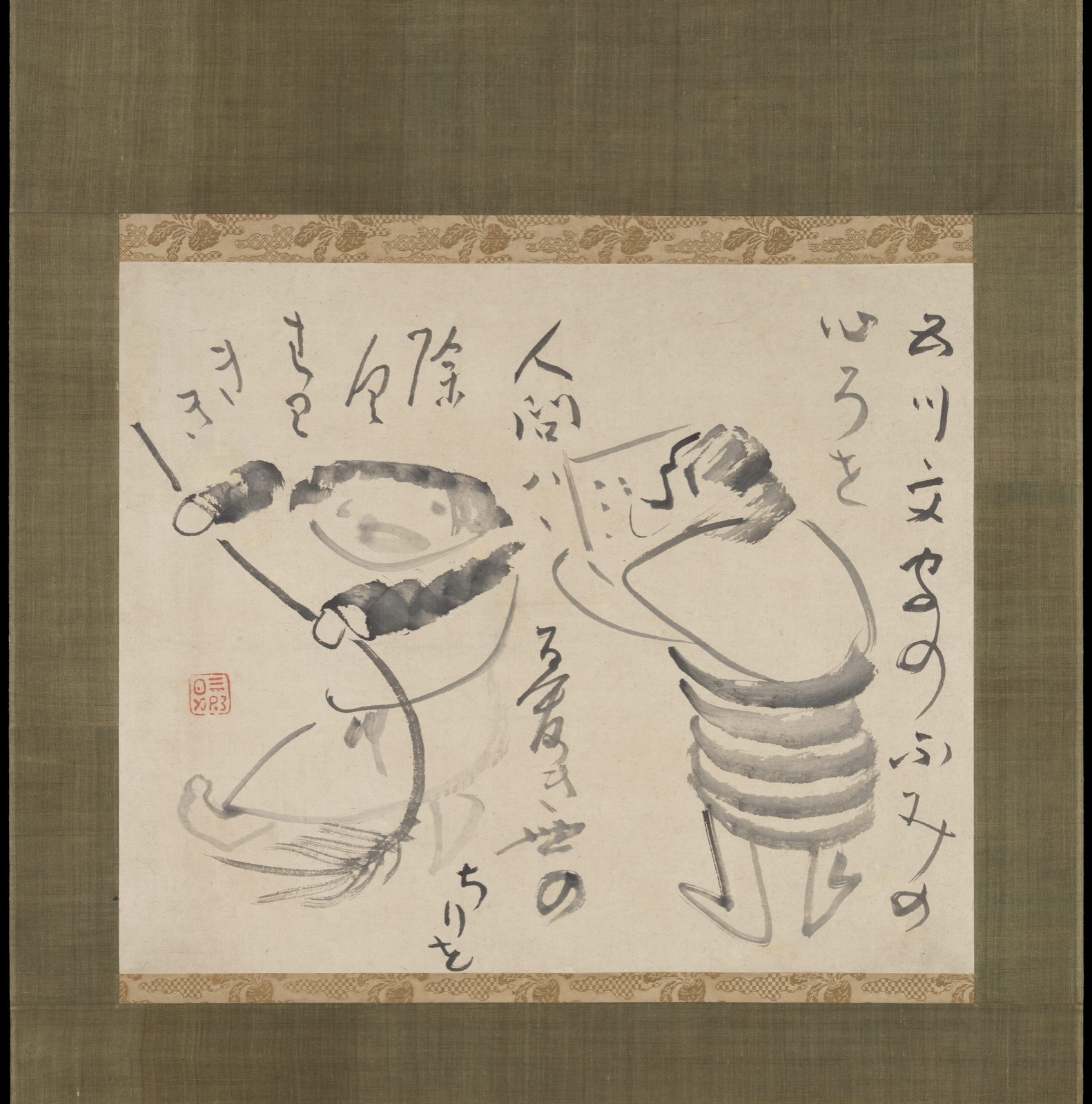
Authority doesn’t matter. Form doesn’t matter. Just two people laughing. Sengai painted them again and again, I suspect, because he thought that freedom was exactly what Zen was.
“Tenmangū,” Sugawara no Michizane as Tenjin Traveling to China is Sengai through and through.
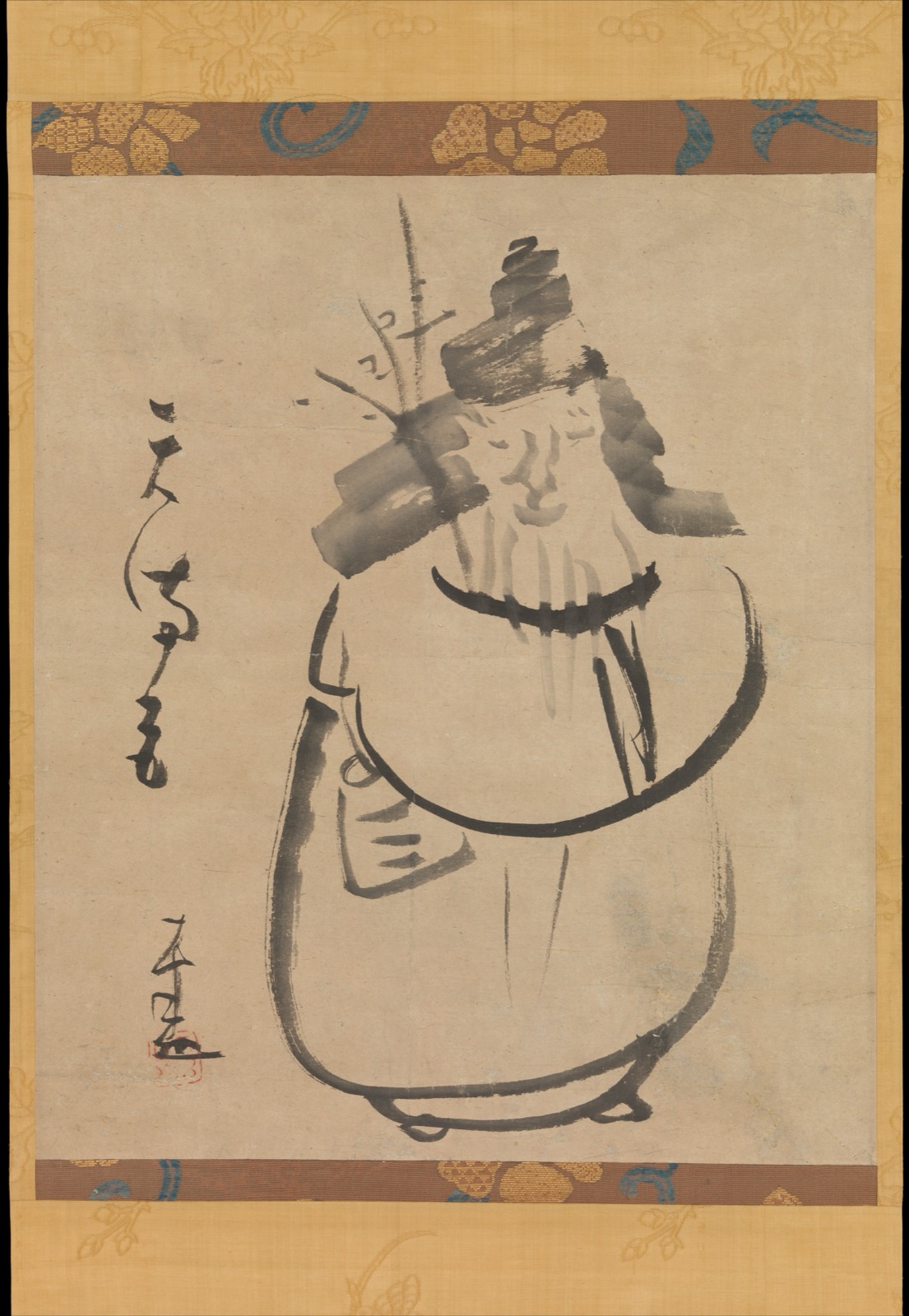
The figure is Sugawara no Michizane, a Heian-period scholar known in Japan as Tenjin, the god of learning — students still pray to him before their exams today.
And there is a strange legend attached to him. After his death, the story goes, his spirit crossed the sea to China in a single night, studied Zen under the eminent Southern Song monk Wuzhun Shifan, and was granted a monk’s robe. A legend that leaps over both centuries and borders, which is quite a lot to ask of anyone. (The god of learning, going abroad to study. Of course he does.)
Zen monks had been painting this subject for generations because of it.
But Sengai’s Tenjin has no dignity whatsoever. Loose, deadpan, weightless lines. An exalted subject, drawn with a shrug. That’s Sengai.
And then there is one of his most famous works: Circle, Triangle, Square.
A circle, a triangle, a square. That’s all.
I can’t show it to you here, which I regret — the painting itself is at the Idemitsu Museum of Arts in Tokyo. (I’ll explain why at the end of this chapter.)
One reading goes: the angular self — the square — is trying to become round, and is still at the triangle stage, one corner shed. Which is a satisfying thought.
But nobody has established that this is the answer.
And that’s fine. The fact that the answer never settles is what makes it a zenga. The painting doesn’t hand you a meaning; the person looking works it out. That stretch of time may be the question Zen is actually asking.
Follow the link and look at it once. What do you see?
If Hakuin was a Zen that stares, Sengai is a Zen that laughs. They look like opposites, but the root is the same.
The wish to paint well, and the wish to look venerable — both of them let go of. What remains after the letting go is a kind of lightness, and that lightness is the air around Sengai’s paintings.
I’ll admit something.
The best paintings Sengai made are not in this article.
A frog sitting in meditation. A circle drawn in a single stroke. A circle, a triangle, and a square. All of them inside Japanese museums, and none of them able to reach you through a screen.
This may be me reaching, but I’ve come to feel that isn’t such a bad thing.
Zenga were handed over. Not merchandise — pictures made to be put into the hands of the person standing in front of you: look at this, and think it over. That they can’t be handed out through a screen may simply mean the original nature of these paintings has survived two hundred years intact.
The people who were handed these paintings two hundred years ago had their own uncertain days. Zenga were pictures made for their hands.
They are also, it turns out, paintings that are hard to meet.
The Idemitsu Museum of Arts in Tokyo, which holds both Circle, Triangle, Square and the meditating frog, is closed for an extended period while its building is rebuilt. The largest gathering of Sengai’s work is in Hakata, where he lived — at the Fukuoka Art Museum. But old ink on old paper is fragile, and the number of weeks a year it can be shown is very small. Going does not guarantee meeting.
So if you ever come to Japan, go on to Kyushu and see which paintings happen to be out. If you meet one, count yourself lucky.
Holds the largest collection of Sengai’s work, in the city where he lived.
1-6 Ohorikoen, Chuo-ku, Fukuoka
Idemitsu Museum of Arts, Moji
While the Tokyo museum is closed, its Sengai collection is shown here, in the retro port district of Mojiko.
2-3 Higashiminatomachi, Moji-ku, Kitakyushu, Fukuoka
Works on display are rotated at both museums, and old ink paintings can only be shown for a few weeks each year. Please check with the museum before your visit.
And someday, when you do stand in front of those three shapes: what you see there will probably differ from person to person. I think that’s how it should be.
5. Side by Side, in the Same Era
Ukiyo-e was made to be sold. A publisher planned it, a designer drew it, a carver carved it, a printer pressed it. Hundreds of identical copies went out into the world and ended up on the walls of townspeople’s rooms for the price of a bowl of noodles.
Zenga was made to be handed over. A monk held the brush alone, painted as he pleased, and put the result into the hands of the person in front of him. The same painting never happened twice.
Opposites. And yet they were reaching for the same people — ordinary people, living in town.
Ukiyo-e went in the direction of perfecting technique. Kewari, the carving of hair strand by strand. Bokashi, the soft gradation that makes a sky fade out. Craftsmen competed with one another, and the skill kept climbing with no ceiling in sight.
Zenga went the other way. Whether a painting was skillful was never the question. Lines that don’t quite line up. A circle gone lopsided. No fear at all of looking clumsy.
Paintings that perfect technique, and paintings that throw technique away — made at the same time, in the same country. That is the part I find most interesting of all.
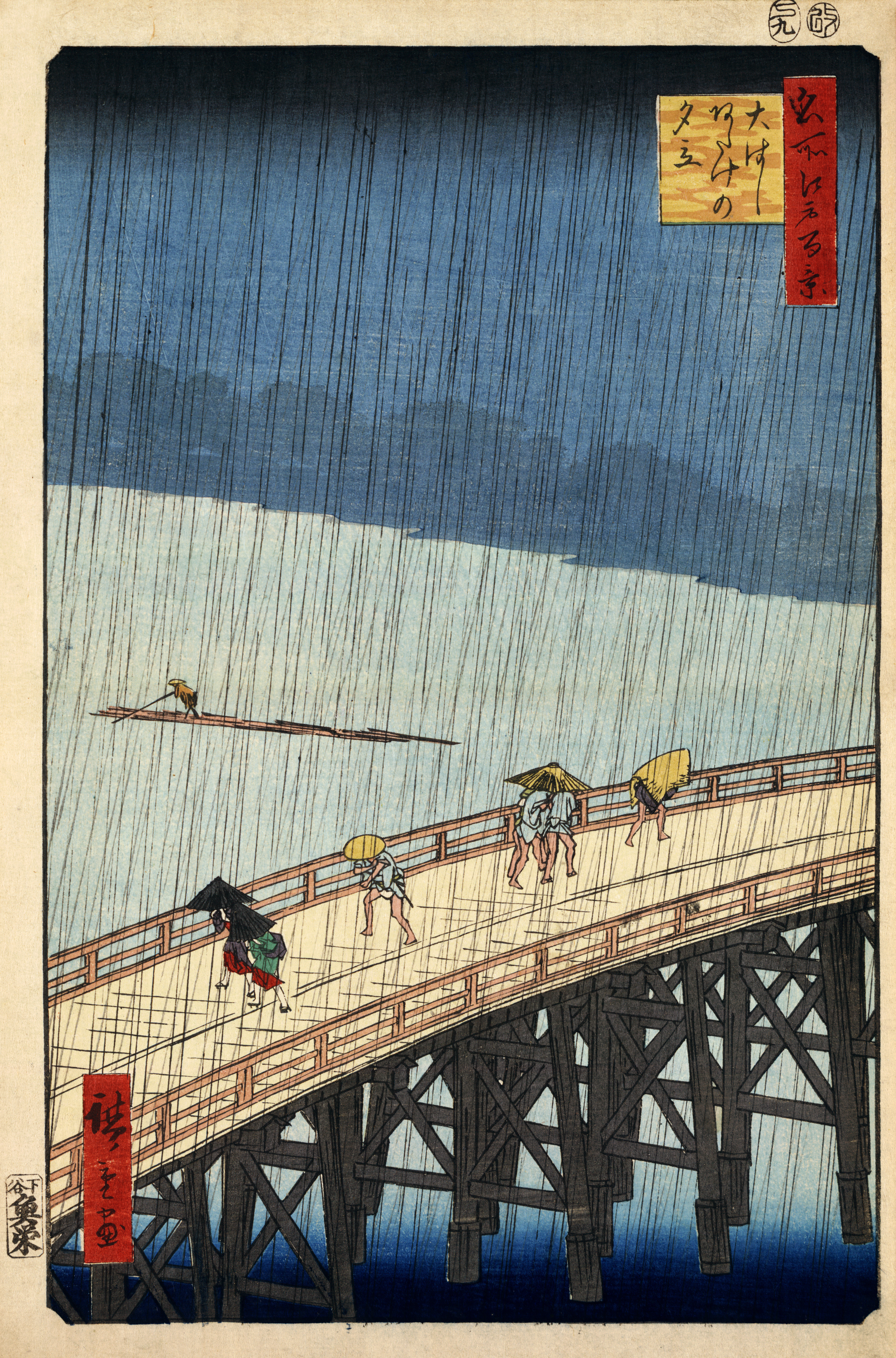
This is what I meant in the opening, about ukiyo-e looking different to me now.
Put zenga beside it, and ukiyo-e’s skill stops being a given.
A single hair, carved. The beauty of a gradation. I had always looked at those and thought, well, that’s simply what ukiyo-e is. But right next door, in the same years, there were paintings that wanted no skill at all. The moment I knew that, all that precision stopped looking like something that had simply happened and started looking like a value someone had chosen.
The beauty of ukiyo-e was the result of effort — and also a decision.
Opposite paintings went on living side by side, in the same country, in the same era. Zenga stayed zenga, ukiyo-e stayed ukiyo-e. Neither drove the other out, and more than two hundred years later both are still drawing people in, each in its own museum, each in its own way.
This was not a country with one answer to a question.
That’s the kind of country Japan is.
A Final Thought
I’ll confess one more thing.
I used to think ukiyo-e was far away from me, too. Born and raised in Japan, and still convinced these were pictures from some other world, nothing to do with mine. (These days I like them enough to write a blog about them.)
Zenga is probably the same. It stays far away for as long as you think it’s far away. Go closer, and it might be laughing.
Ukiyo-e is not just a beautiful picture. That skill was chosen.
Look at that wave again with this in mind — doesn’t it look a little different?
References
- The Metropolitan Museum of Art, Portrait of Bodhidharma by Hakuin Ekaku — metmuseum.org
- The Art Institute of Chicago, Giving Daruma a Smoke by Suzuki Harunobu — artic.edu
- The Metropolitan Museum of Art, “Tenmangū,” Sugawara no Michizane as Tenjin Traveling to China by Sengai Gibon — metmuseum.org
- Los Angeles County Museum of Art, Kanzan and Jittoku by Sengai Gibon — lacma.org
- Idemitsu Museum of Arts, Sengai collection — idemitsu-museum.or.jp
- Fukuoka Art Museum, collection highlights — fukuoka-art-museum.jp
- Shōfuku-ji, chronology of Sengai Gibon — shofukuji.or.jp
- Cultural Heritage Online, Agency for Cultural Affairs, Tosō Tenjin — bunka.go.jp
Image Credits
- Cover & Section 3: Hakuin Ekaku, Portrait of Bodhidharma, mid-18th century — Public domain via The Metropolitan Museum of Art
- Cover & Section 3: Suzuki Harunobu, Giving Daruma a Smoke, 1765 — CC0 via The Art Institute of Chicago
- Section 4: Sengai Gibon, Kanzan and Jittoku, Edo period, late 18th–mid 19th century — Public domain via Los Angeles County Museum of Art, gift of Murray Smith, www.lacma.org
- Section 4: Sengai Gibon, “Tenmangū,” Sugawara no Michizane as Tenjin Traveling to China, early 19th century — Public domain via The Metropolitan Museum of Art