Cat people exist everywhere, in every era.
Cats fill the internet, take over social media timelines, draw queues outside cat cafés. The affection humans feel for cats crosses borders and centuries with remarkable ease.
In Edo, there was one artist whose love of cats exceeded everyone else’s by a considerable margin. Utagawa Kuniyoshi. And that love — absolute, uncomplicated, entirely visible in print after print — produced some of the most delightful images in the history of ukiyo-e.
1. A Life Lived with Cats
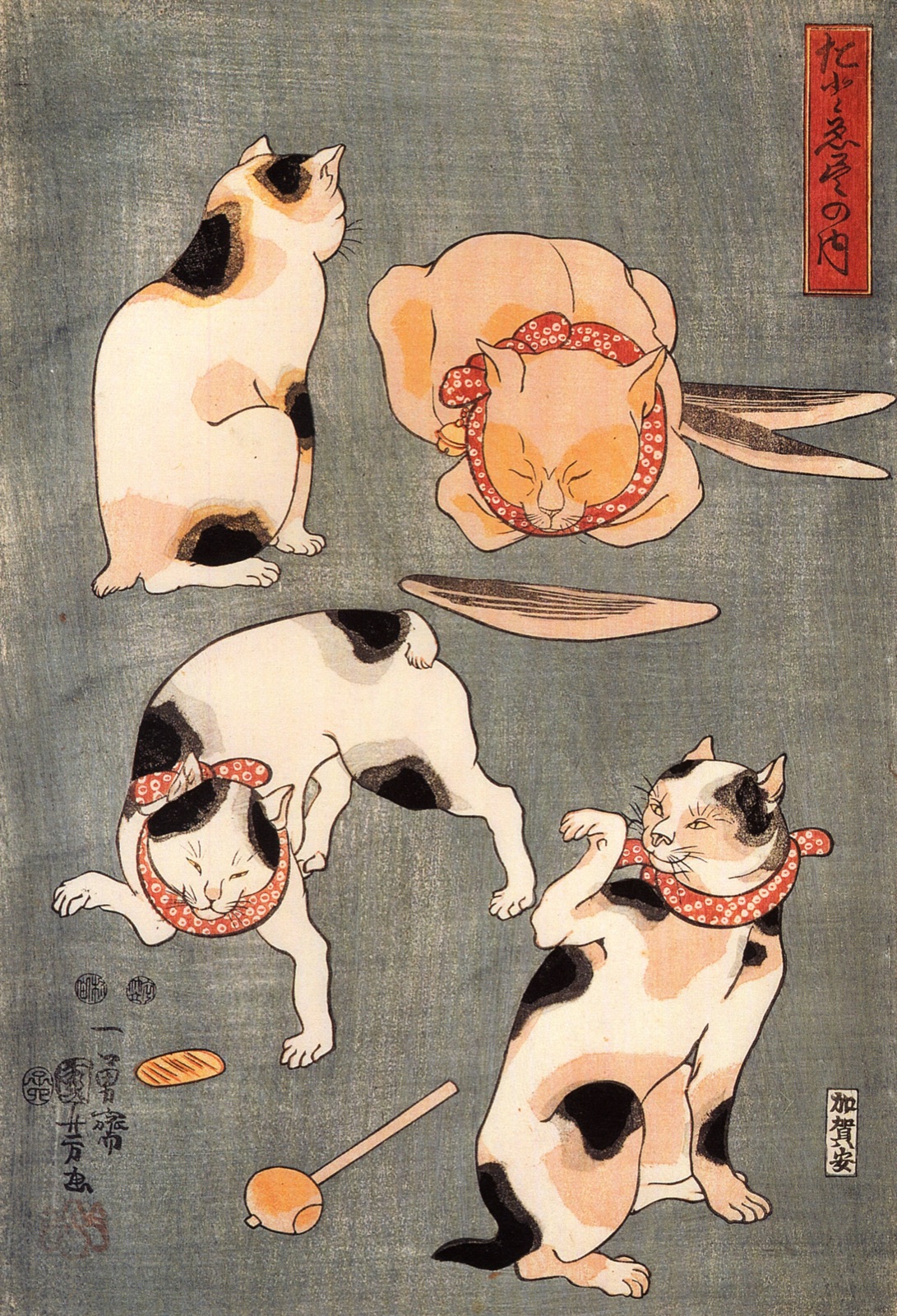
The accounts of Kuniyoshi’s studio all tell the same story: cats, everywhere, always.
Kittens tucked into the sleeves of his kimono while he worked. Cats in his lap as he painted. Cats at his meals. His apprentices remembered that the animals were a constant presence, and a constant interruption — a situation Kuniyoshi seems to have found entirely acceptable. By any measure, he was what we would now call completely cat-obsessed.
The love shows in the work. Kuniyoshi’s cats are not background decoration or charming afterthoughts. They have expressions. They have intentions. They appear to be thinking about something, and you find yourself wondering what. They exist in his prints with the full weight of personality — as present and individual as any human subject he depicted.
2. When Cats Become People
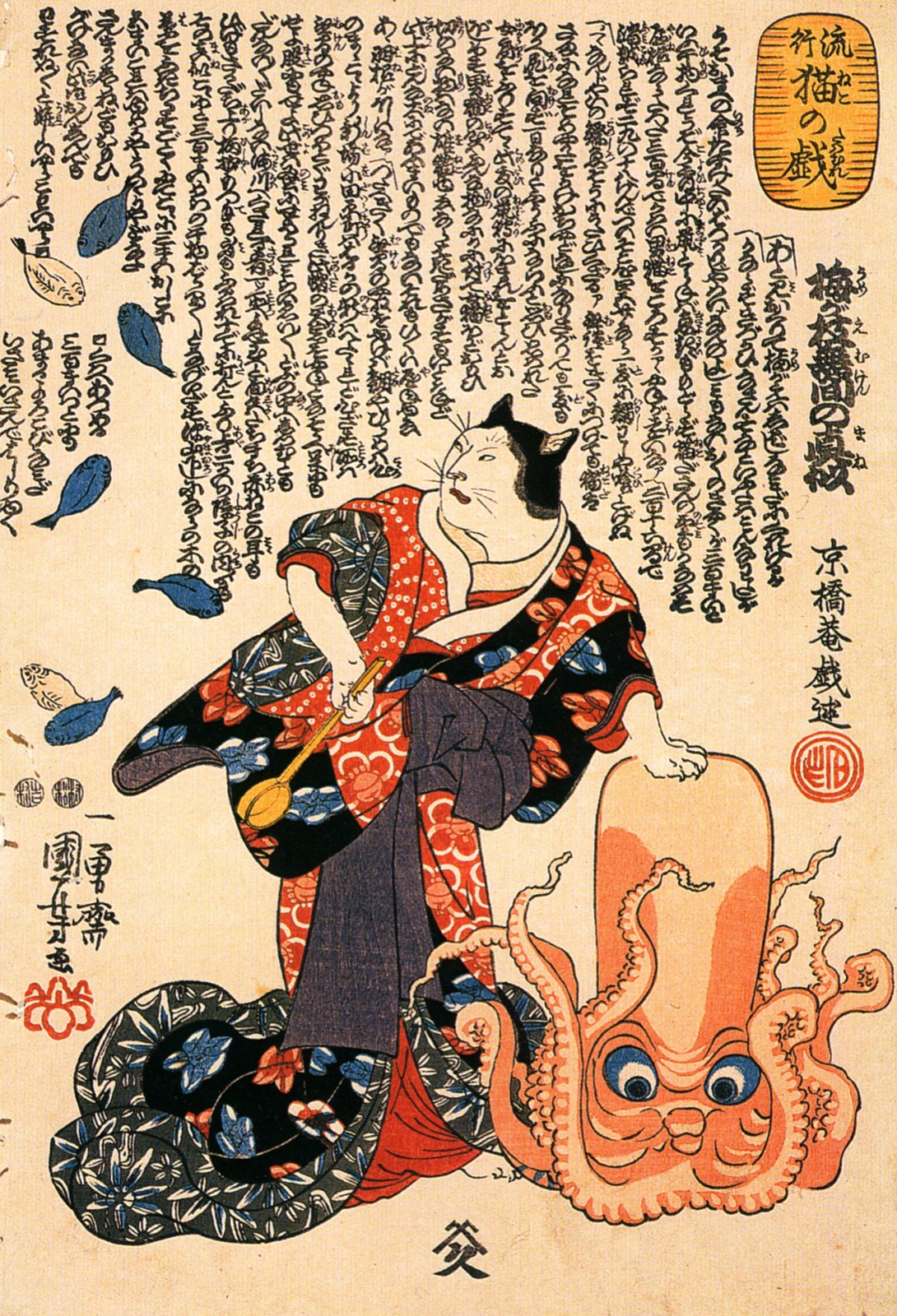
The prints that tend to delight cat lovers most are the ones where Kuniyoshi’s cats take on human roles entirely.
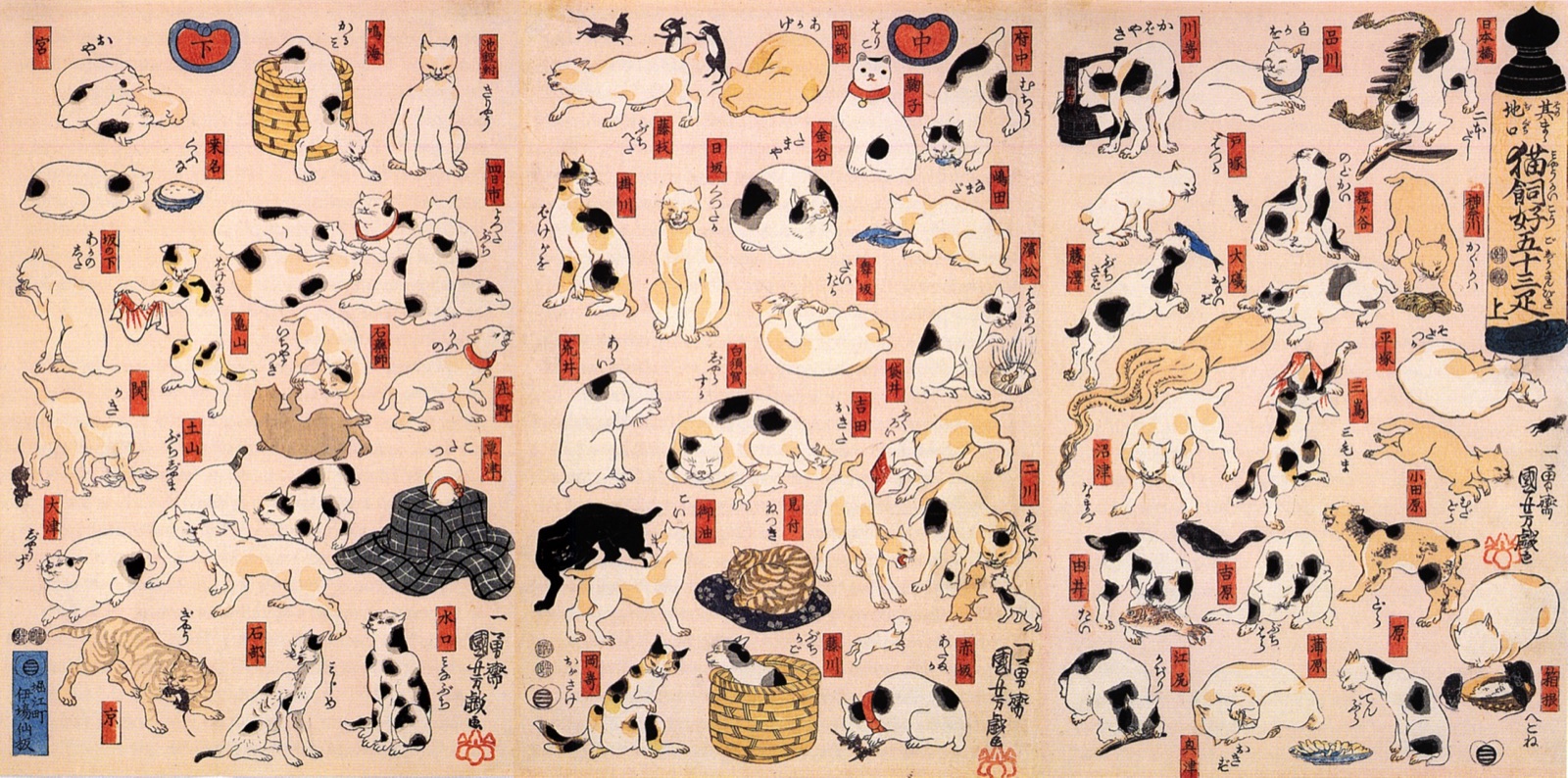
Fifty-Three Stations of the Tōkaidō, as Cats — The famous post road that connected Edo to Kyoto provided Kuniyoshi with fifty-three opportunities for wordplay. Each station’s name is echoed in the image through visual and verbal puns, with cats performing the action that fits the sound. The humor is specific to Japanese, but the cats’ expressions are universal — and Edo audiences apparently found the whole thing extremely funny. Looking at the prints now, it’s not hard to see why.
Cats Performing Kabuki — Cats in full theatrical makeup, cats striking dramatic poses, cats deep in the stylized emotion of a climactic scene. Kuniyoshi knew kabuki and actor portraiture intimately, and the precision with which he renders his feline performers — the conviction in their expressions, the accuracy of the gesture — makes these images both genuinely funny and quietly impressive.
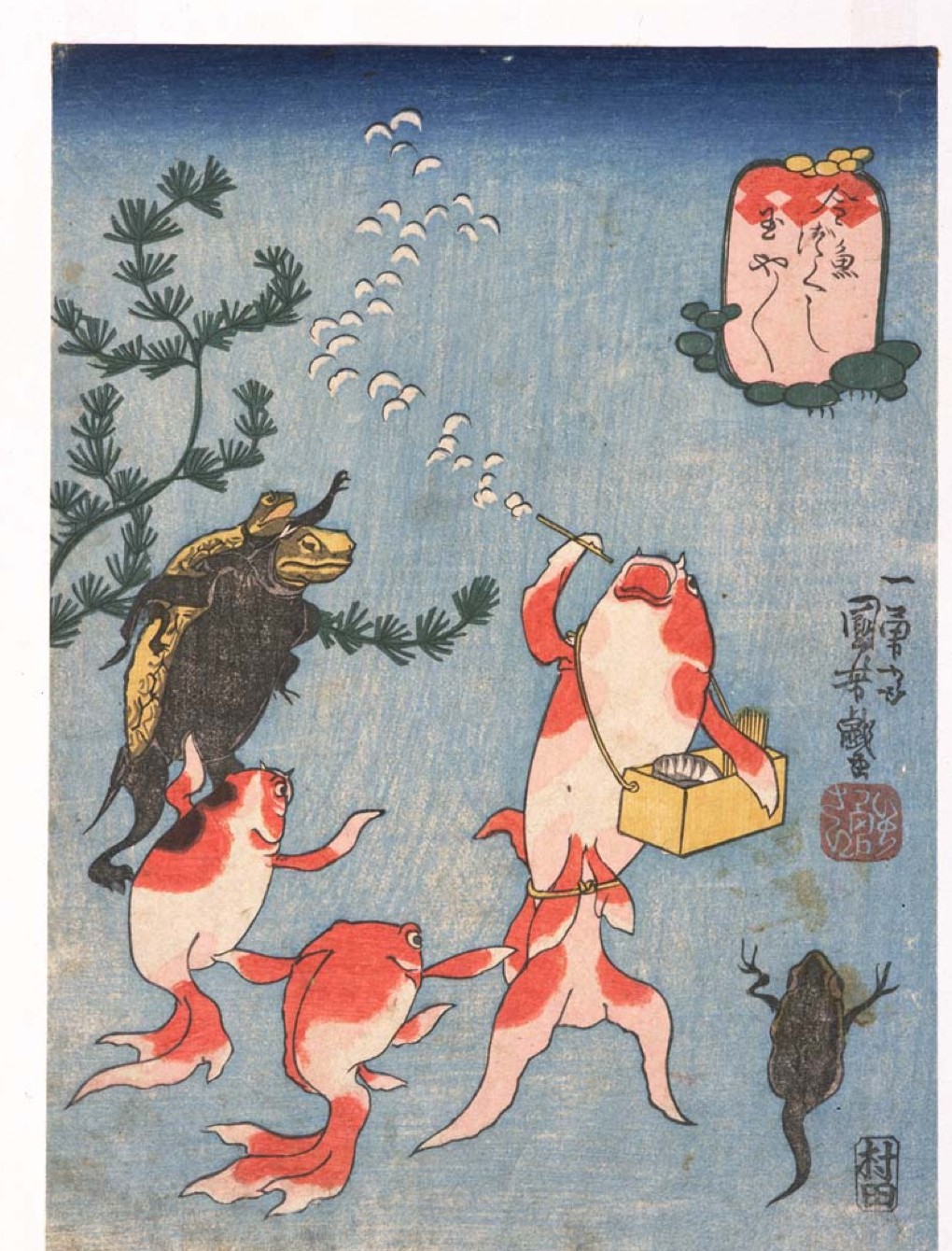
Cats Running a Fish Stall — Cats at work, selling fish with complete professional seriousness. The absurdity of the premise (cats, famously, eat fish) goes entirely unacknowledged. Kuniyoshi treats it as simply what is happening, and somehow that makes it funnier.
3. Cats as Political Cover
Kuniyoshi’s cat prints are not always as innocent as they appear.
During the Tenpō Reforms of 1841–43, the shogunate tightened its restrictions on popular publishing — actor prints limited, beauty prints restricted, anything deemed socially disruptive suppressed. Kuniyoshi found a way through.
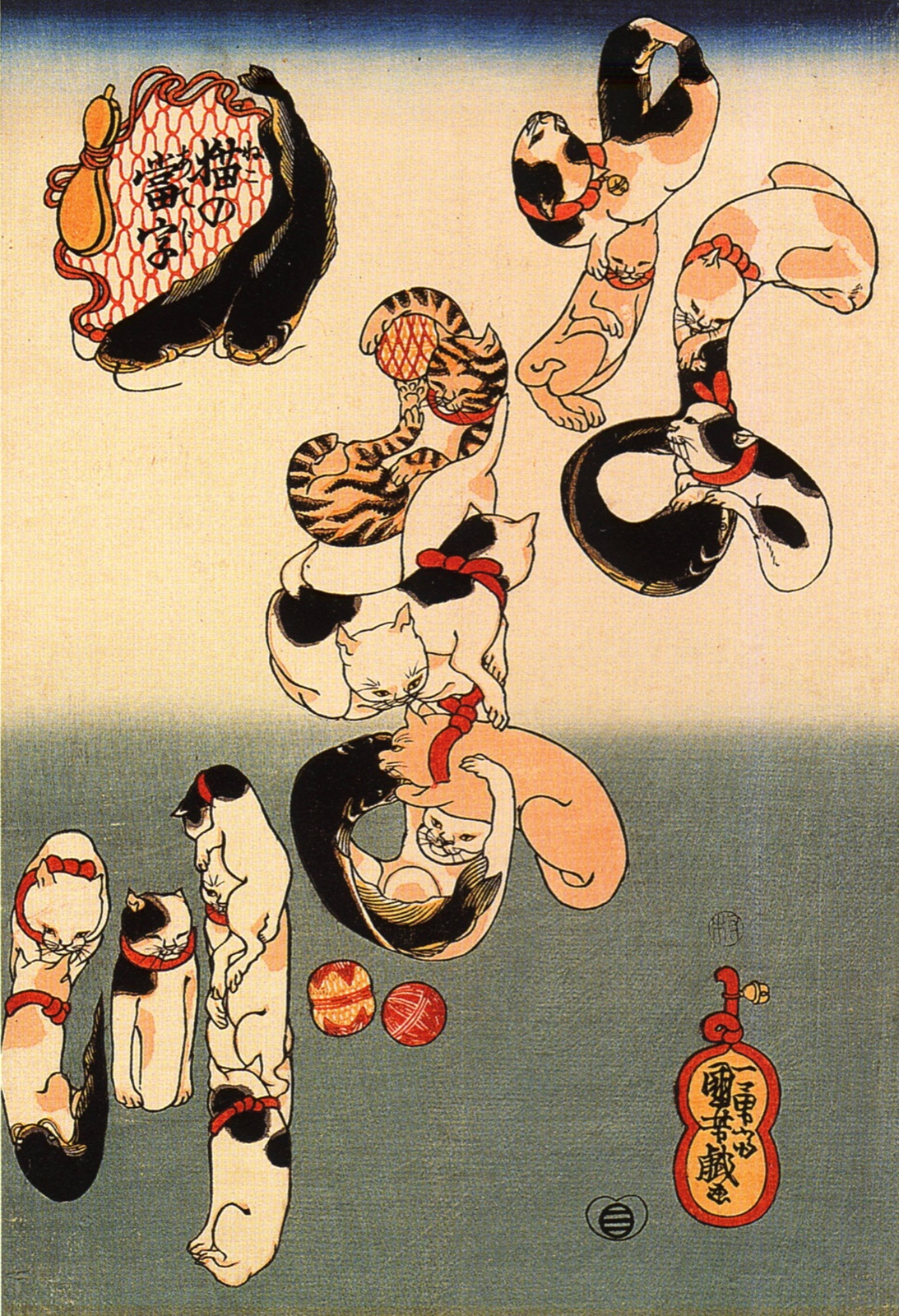
In several celebrated prints, an assemblage of cats is arranged to form a human face. Contemporaries understood the face to be that of a powerful official Kuniyoshi had no other way to criticize directly. If you can’t say it plainly, say it so that only those who need to understand will understand — as cats.
The shogunate attempted prosecution. The case didn’t hold. It was, after all, just cats.
The wit here runs in two directions at once: the image is genuinely charming, and it’s also something else entirely. That doubling — the warmth and the sharpness coexisting — is what makes Kuniyoshi’s cat prints more than just affectionate novelties.
4. Cats in Edo
Kuniyoshi’s devotion was exceptional, but cats themselves were everywhere in Edo.
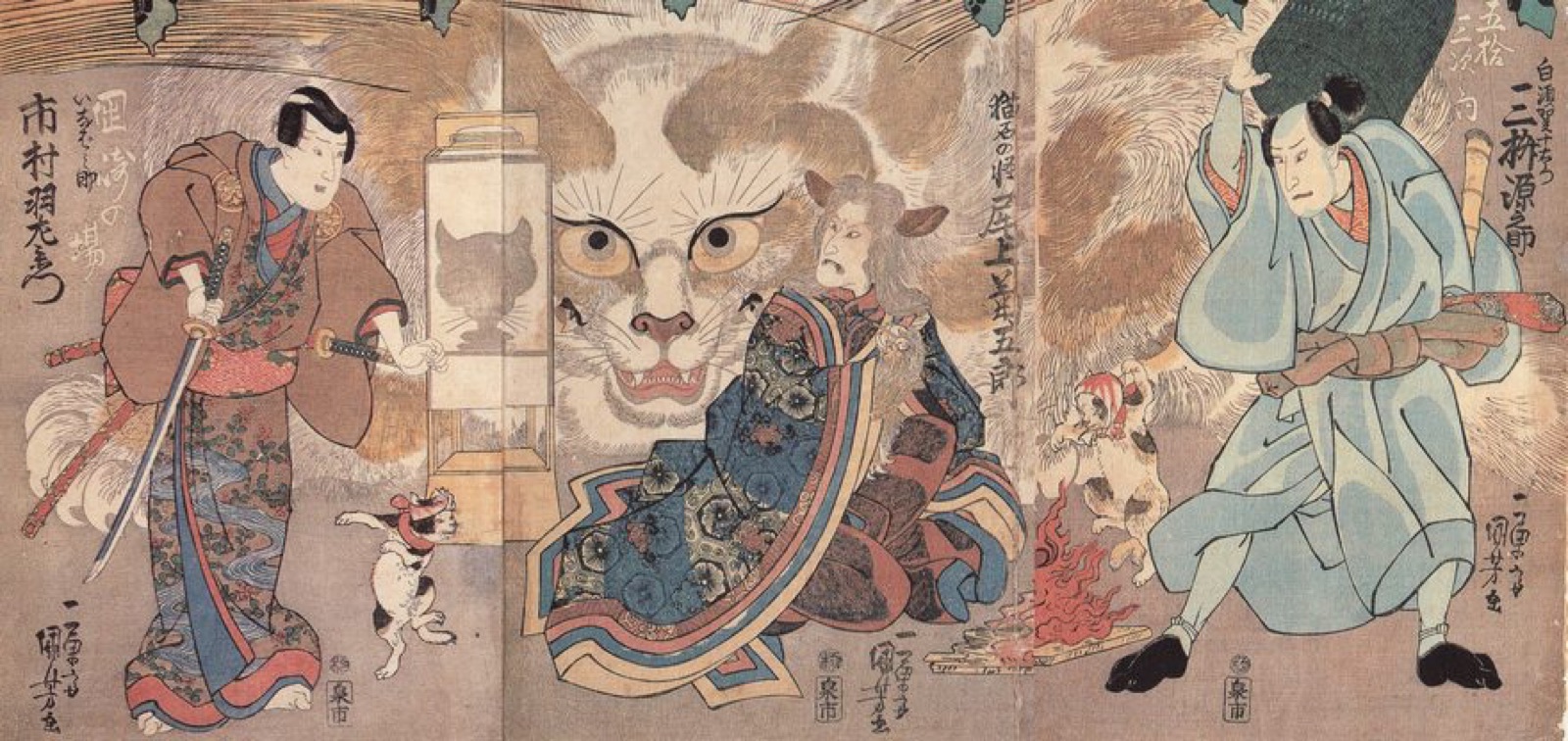
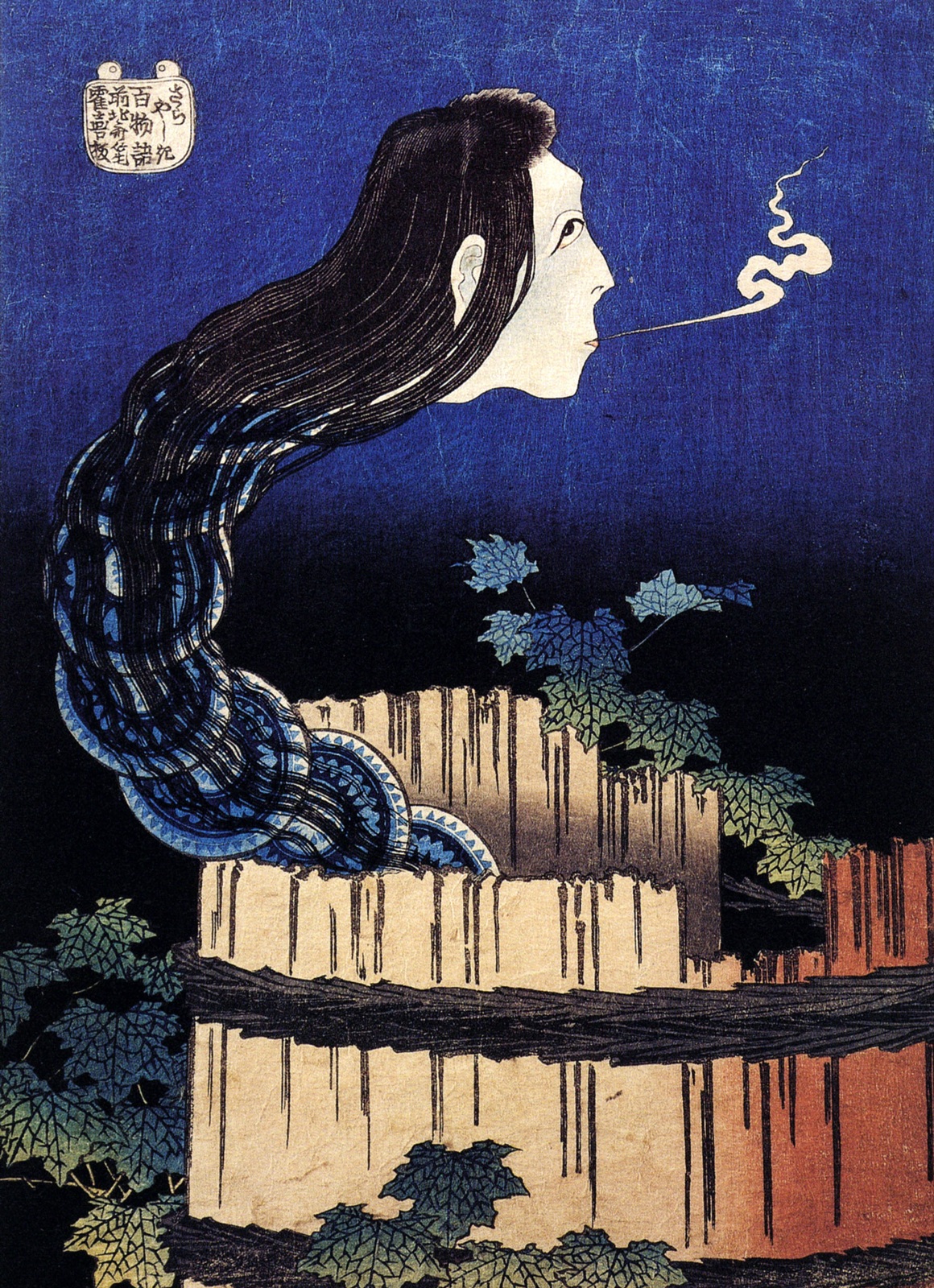
They kept the rodent population in check — a practical function that made them valued household presences — and they were kept as companions. Bakeneko (monster cats) and nekomata (cat spirits) appeared in kabuki and ghost stories. Cats showed up in prints by Hiroshige, Hokusai, and others. The Edo relationship with cats had texture and range.
But in terms of sheer concentrated affection, expressed across print after print across an entire career, no one came close to Kuniyoshi.
5. Why These Prints Still Work
More than 160 years after Kuniyoshi’s death, his cat prints appear on tote bags and phone cases and museum shop shelves around the world, shared by people who have never heard his name but recognize something immediately in what they’re seeing.
The reason is simple enough: the feeling that makes someone stop scrolling for a cat video is the same feeling that made Edo audiences stop at a print shop window. Cats have not changed. Neither has the human response to them. Kuniyoshi understood both, and his prints carry that understanding across the distance without any effort at all.
Where to See Them
The Ota Memorial Museum of Art in Harajuku, Tokyo, holds regular Kuniyoshi exhibitions — occasionally with a dedicated focus on the cat prints, which is worth checking for.
The Metropolitan Museum of Art’s online collection includes representative cat works viewable in high resolution, free of charge. Search “Kuniyoshi” and set aside some time. You will lose track of it.
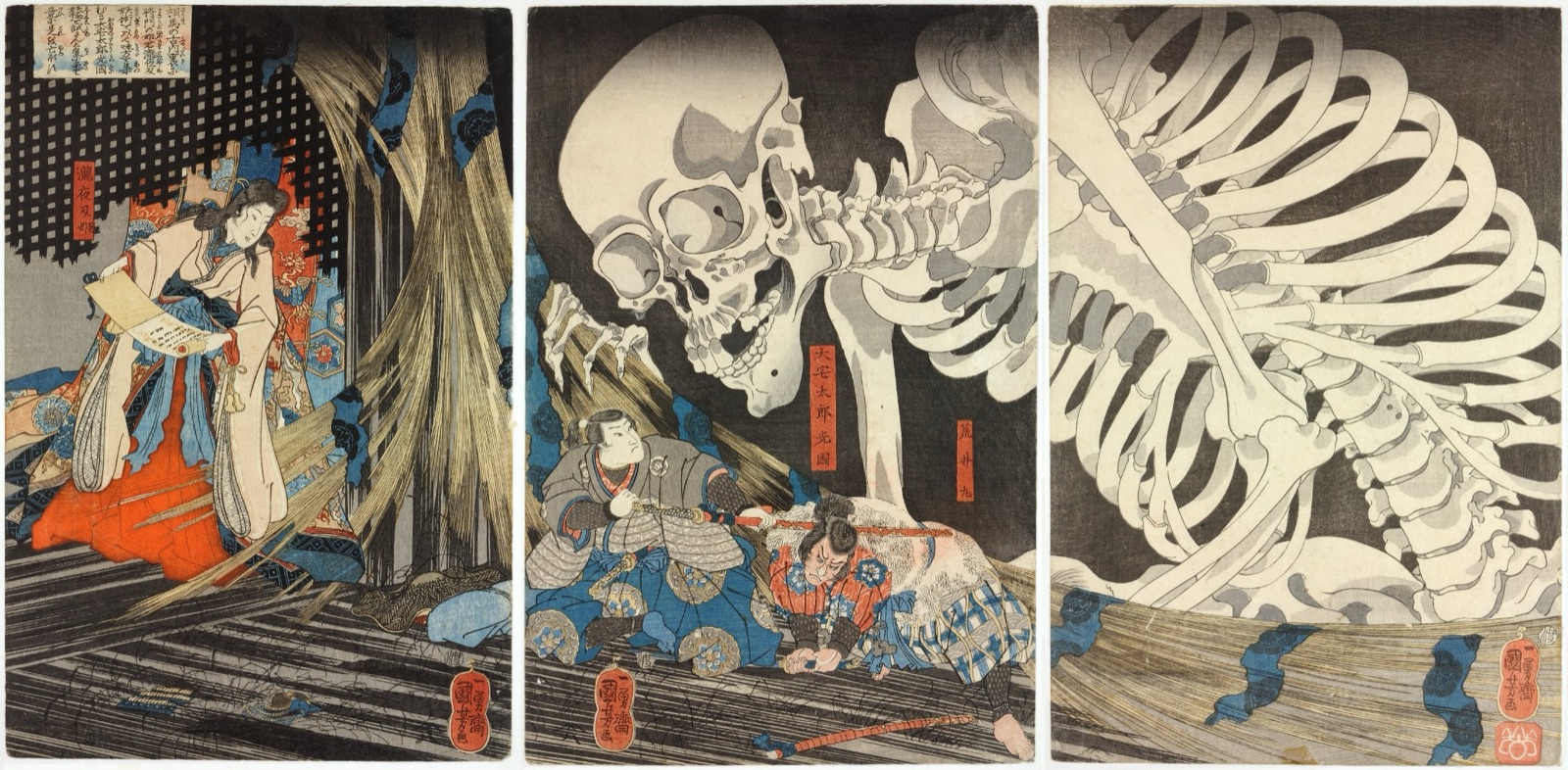
The cats are only one corner of Kuniyoshi’s world. If you want the rest of him — the warrior prints, the building-sized skeleton, the satire he slipped past the censors — I’ve written a fuller portrait here: Kuniyoshi: Cats, Skeletons, and Satire.
A Final Thought
Kuniyoshi lived with cats and painted them for his entire career.
Two hundred years later, cat lovers around the world encounter these prints and laugh, and look more closely, and save the image. Something is being transmitted across that gap — not needing translation, not requiring historical context. Just the cat, and the feeling it produces.
Kuniyoshi’s cats are still in the prints, thinking about something. Still waiting for whoever comes next.
Image Credits
- Cover / Section 2: Utagawa Kuniyoshi, Fifty-Three Cats as Puns for the Stations of the Tōkaidō, c. 1848 — Public domain via Wikimedia Commons
- Section 1: Utagawa Kuniyoshi, Proverbs Illustrated by Cats (Tatoe zukushi no uchi), c. 1852 — Public domain via Wikimedia Commons
- Section 2 (kabuki parody): Utagawa Kuniyoshi, A Cat Dressed as a Woman Tapping the Head of an Octopus (Ryūkō neko no tawamure), c. 1847 — Public domain via Wikimedia Commons
- Section 4: Utagawa Kuniyoshi, Ume no haru gojūsantsugi, 1835 — Public domain via Wikimedia Commons
- Section 5: Utagawa Kuniyoshi, Cats Forming the Characters for Catfish (Neko no ateji), c. 1841–43 — Public domain via Wikimedia Commons (Izumi City Kuboso Memorial Museum of Arts)